Best Days Ever: A Day With Rob Stoner

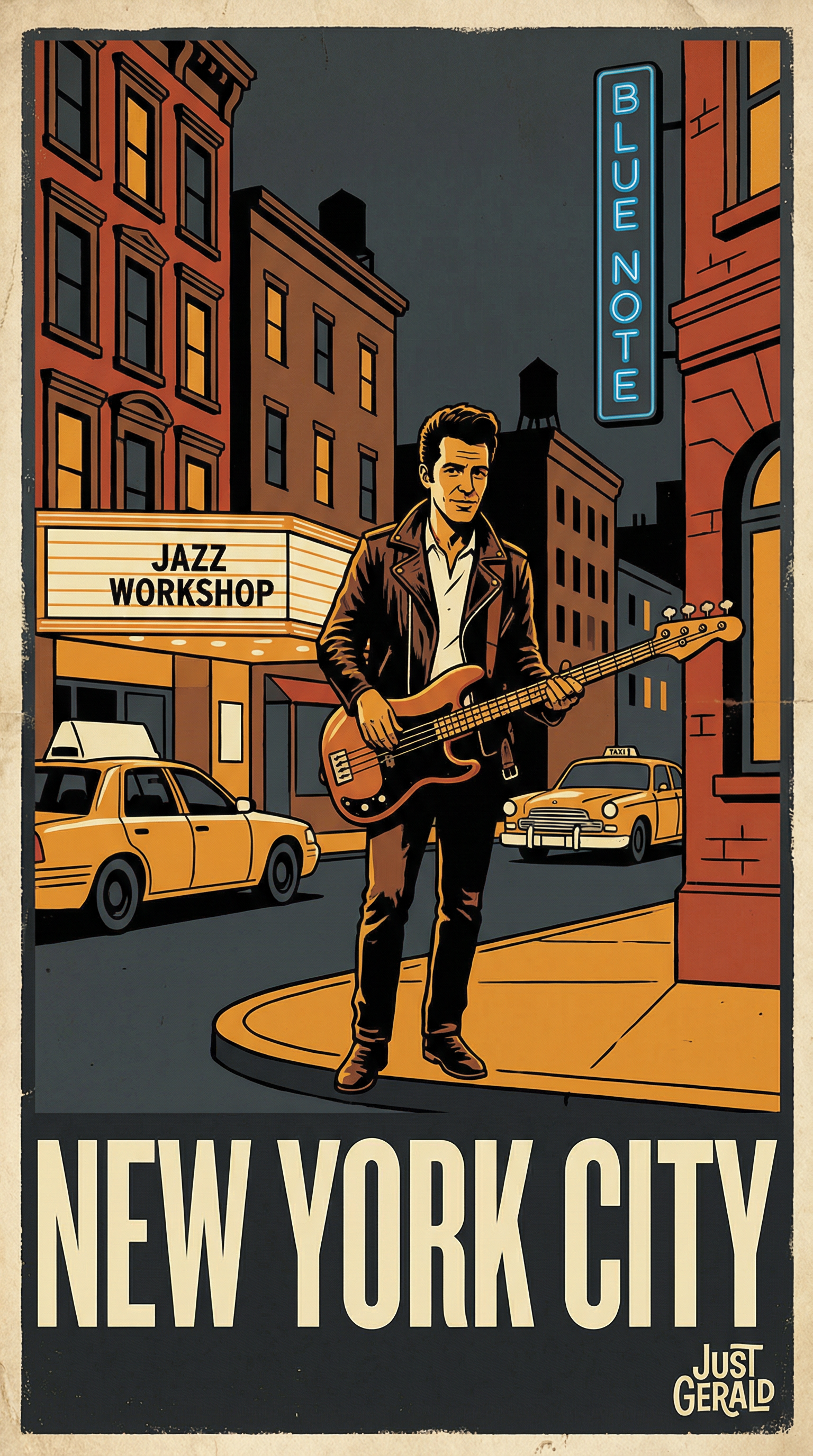
Just Gerald Magazine — Issue No. 08 — New York City

Best Days
Ever

A Day With

Rob Stoner

Greenwich Village, the Lower East Side, and the bars where the music actually happened. Dylan's bassist. Arthur Rothstein's son. The man who made Rolling Thunder work.

08

A Look Magazine Legacy

Arthur Rothstein photographed America for Look Magazine and the FSA. His son Rob Stoner played bass for Bob Dylan. This edition is filed under both.

1937 — 2025

Rothstein — New York

About This Issue

"Rob Stoner was Dylan's bassist and musical director for the Rolling Thunder Revue. His father Arthur Rothstein photographed the Dust Bowl for Look Magazine. Both men knew how to find the truth in a room."

Issue 08 takes Just Gerald to Greenwich Village, New York — specifically to the neighbourhood that Rob Stoner has called home for decades. We walk the streets his father's colleagues photographed in the 1930s. We find the café where Dylan sat. We drink at the White Horse Tavern where Dylan Thomas didn't quite make it. We talk about the Nikon F, the camera that connects Arthur Rothstein's world to Rob's, and to ours. And we end the evening at Smalls, where the music is still happening. This is the Best Day Ever: New York City.

EDITOR'S LETTER4 min read

Editor's Letter: Issue No. 8

On bass guitars, Look Magazine, and the Nikon F that connects three generations.

Some editions of Just Gerald start with a destination. This one starts with a camera. Specifically, a Nikon F — the professional 35mm SLR that Nikon introduced in 1959 and that became, almost immediately, the instrument of record for the photographers who documented the second half of the twentieth century. Arthur Rothstein used one. His son Rob Stoner's father used one. And so, it turns out, do I.
Editor's Letter: Issue No. 8

The Rothstein Thread

Arthur Rothstein was one of the great American documentary photographers. He joined the Farm Security Administration in 1935, at the age of nineteen, and spent the next several years photographing the Dust Bowl, the Depression, the faces of people who had lost everything and were still, somehow, going on. His photograph of a farmer and his sons walking through a dust storm in Cimarron County, Oklahoma — taken in 1936 — is one of the defining images of the twentieth century. He went on to become the director of photography at Look Magazine, the picture-driven biweekly that rivalled Life for thirty years before closing in 1971. Look's photographers carried Nikon Fs. They went to Vietnam, to the civil rights marches, to the moon launch, to every major story of the era. The camera was the tool of the serious professional — precise, reliable, built to last. Arthur Rothstein's son is Rob Stoner. Rob grew up in that world — surrounded by photographs, by the visual language of mid-century documentary journalism, by the understanding that a camera is not just a device but a way of paying attention. He became a musician instead of a photographer, but the eye stayed.

"He became a musician instead of a photographer, but the eye stayed."

The Connection

I came across Rob Stoner the way most people do — through Bob Dylan. Rob was Dylan's musical director and bass player for the Rolling Thunder Revue in 1975 and 1976, one of the most celebrated concert tours in rock history. He was also, it emerged, a serious stage manager — the person who actually made the Rolling Thunder circus work night after night across two continents. We connected online. I asked him about his father's work at Look Magazine. I asked him about the Nikon F. He told me that his mother was also a photographer, and that the camera had been part of the household in the way that a piano is part of some households — always present, always in use, always a way of seeing. I mentioned that I shoot with a Nikon F too. The conversation got considerably more interesting after that. This edition is about spending a day in New York with someone who knows it the way Rob Stoner knows it — not as a tourist, not as a visitor, but as a person who has been playing its rooms and walking its streets for sixty years. The restaurants, the bars, the venues, the corners. The New York that exists underneath the New York that everyone photographs.

"The New York that exists underneath the New York that everyone photographs."

The Verdict

Load the Nikon F. This one requires a different kind of attention.
CULTURE8 min read

Arthur Rothstein: The Man Who Photographed America

From the Dust Bowl to Look Magazine — the life and legacy of one of the great American documentary photographers, and what his son carries forward.

In 1936, a twenty-year-old photographer named Arthur Rothstein drove to Cimarron County, Oklahoma, and made a photograph that would define an era. A farmer and his two sons, bent against a dust storm, walking toward a shed that offered no real shelter. The sky behind them was black. The ground was bare. The image ran in newspapers across America and became the visual shorthand for the Dust Bowl — the human cost of drought, displacement, and the failure of the land.
Arthur Rothstein: The Man Who Photographed America

The FSA Years

Rothstein had been recruited by Roy Stryker to the Farm Security Administration's photography unit — a New Deal programme designed to document rural poverty and build public support for government relief programmes. The unit's photographers included Dorothea Lange, Walker Evans, Gordon Parks, and Ben Shahn. They were, collectively, the most important group of documentary photographers in American history. Rothstein was the youngest. He was also, by many accounts, the most technically precise. He understood light in a way that was almost scientific — the angle, the quality, the way it revealed or concealed. His photographs of the Dust Bowl are not just documents. They are composed images, made with the same care that a painter brings to a canvas. The Nikon F didn't exist yet in 1936 — Rothstein was shooting with a Contax and a 4x5 view camera. But when the Nikon F arrived in 1959, it became the camera that his generation of professionals adopted immediately. Precise. Reliable. Built to last. The same qualities that defined Rothstein's photography.

"He understood light in a way that was almost scientific — the angle, the quality, the way it revealed or concealed."

Look Magazine

Look Magazine was founded in 1937 by Gardner Cowles Jr., who had watched Life's success and decided that America needed another picture magazine. Look was different from Life in one important respect: it was biweekly rather than weekly, which gave its photographers more time and its editors more space. The photographs in Look were bigger, the stories longer, the visual ambition higher. Rothstein joined Look in 1940 and became its director of photography. He held the position for over thirty years, through the Second World War, the civil rights movement, the space race, Vietnam, and the social upheavals of the 1960s. The photographers he hired and directed — carrying their Nikon Fs through every major story of the era — produced some of the most important photojournalism of the twentieth century. Look closed in 1971, a victim of television and the declining economics of print. Rothstein continued to work and teach until his death in 1985. His archive is at the Library of Congress. His photographs are in the permanent collections of the Metropolitan Museum of Art and the Museum of Modern Art. His son grew up watching all of this. And then picked up a bass guitar.

"His son grew up watching all of this. And then picked up a bass guitar."

The Nikon F: A Note

The Nikon F was introduced in 1959 and remained in production until 1974. It was the first Japanese camera to be widely adopted by professional photojournalists, and it changed the industry permanently. Before the Nikon F, professionals used German cameras — Leicas, Contaxes, Rolleiflexes. The Nikon F was more durable, more versatile, and significantly less expensive. The photographers who carried Nikon Fs into Vietnam — Eddie Adams, Nick Ut, David Douglas Duncan — made the images that changed public opinion about the war. The camera was present at every major event of the 1960s and 1970s. It is, in the truest sense, the camera that documented the second half of the twentieth century. There is something about the Nikon F that resists obsolescence. It is a mechanical camera — no batteries required, no electronics to fail. It works in extreme cold, in rain, in dust. It works the same way today as it did in 1959. The photographers who still use it are not nostalgists. They are people who understand that some tools are simply correct.

"Some tools are simply correct. The Nikon F is one of them."

Just Gerald Says

Introduced1959 — Nikon's first professional SLR
In production1959–1974
Notable usersArthur Rothstein, Eddie Adams, Nick Ut, David Douglas Duncan
Why it enduresFully mechanical — no batteries, no electronics. Works in any condition.

The Verdict

Arthur Rothstein photographed America at its most desperate and its most hopeful. His son plays bass. Both of them paid attention.

Partners & Advertisers
ADVERTISE WITH JUST GERALD
Joe Coffee
ISSUE 8

SPECIALTY COFFEE · WEST VILLAGE, NEW YORK

Joe Coffee

"New York's original specialty coffee."

Where the day starts before the city wakes up.

Advertise in Issue 8
ADVERTISE WITH JUST GERALD
The Spotted Pig
ISSUE 8

GASTROPUB · WEST VILLAGE, NEW YORK

The Spotted Pig

"The gastropub that defined a neighbourhood."

The chargrilled burger that made the West Village famous for food.

Advertise in Issue 8

Spec placements — contact [email protected] to claim your space

MUSIC9 min read

Rolling Thunder: The View From the Stage

Everyone writes about the musicians. Nobody writes about the person who made the Rolling Thunder Revue actually work. Rob Stoner was that person.

The Rolling Thunder Revue toured North America in 1975 and 1976. Bob Dylan was the headliner. Joan Baez was there. Roger McGuinn, Ramblin' Jack Elliott, Joni Mitchell, Allen Ginsberg. It was the most celebrated concert tour of the decade — a travelling circus of folk, rock, and poetry that played small venues and changed the way people thought about what a concert could be. Rob Stoner was Dylan's musical director and bass player. He was also, in the most practical sense, the person who made it all happen.
Rolling Thunder: The View From the Stage

The Musical Director

The title 'musical director' covers a lot of ground. In the Rolling Thunder context, it meant that Rob Stoner was responsible for the musical coherence of a show that featured a rotating cast of performers, a setlist that changed every night, and a bandleader who was constitutionally opposed to rehearsal. Dylan's genius is inseparable from his spontaneity. He changes arrangements mid-song, drops verses, adds verses, changes keys. The musicians around him have to be good enough to follow and secure enough not to panic. Stoner's job was to find those musicians, rehearse them to the point where they could follow anything, and then hold the whole thing together from the bass position — the instrument that, more than any other, determines whether a band sounds like a band or a collection of individuals. He was very good at it. The Rolling Thunder recordings — particularly the 1975 leg — are among the finest live recordings Dylan ever made. The band is tight without being rigid, loose without being sloppy. That's a difficult balance to achieve. It's the musical director's job to achieve it.

"The band is tight without being rigid, loose without being sloppy. That's a difficult balance. It's the musical director's job to achieve it."

The Stage Manager

Beyond the music, Stoner was a stage manager in the most literal sense — the person responsible for the physical logistics of the show. The Rolling Thunder Revue was a travelling operation: equipment, crew, performers, schedules, venues, sound checks, catering, travel. In 1975, before the era of professional touring infrastructure, this required someone who could think operationally as well as musically. This is the part of the Rolling Thunder story that gets the least attention. The mythology focuses on Dylan, on the performances, on the films that Scorsese eventually made. The operational reality — the fact that the show happened every night, in a different city, with a different configuration of performers, and that it sounded as good as it did — is the result of work that doesn't photograph well. Rob Stoner photographed it anyway. He carried a camera on the tour. Some of those photographs exist. They show the backstage reality of the Rolling Thunder Revue: the dressing rooms, the equipment cases, the moments between performances. They look like his father's photographs — documentary, precise, attentive to the human detail that the official record misses.

"He carried a camera on the tour. The photographs look like his father's work — documentary, precise, attentive to the human detail that the official record misses."

After Rolling Thunder

After the Rolling Thunder Revue, Stoner continued to work as a musician, producer, and bandleader. He played with Neil Young, Ramblin' Jack Elliott, and dozens of others. He led his own bands — Rob Stoner & the Saddletramps, billed on the Hot Klub flyer from October 1980 as 'Rock-A-Billy at its best,' sharing a bill with The Stranglers and Brave Combo. The Hot Klub flyer is a document of a particular moment in New York music: the post-punk, pre-MTV era when the city's clubs were booking everything from rockabilly to British post-punk to Texas polka on the same monthly calendar. Rob Stoner was part of all of it — not as a star, but as a working musician who knew every room and had played most of them. He still plays. He still posts photographs on Facebook — including, recently, his father's 1937 photograph of job seekers on 6th Avenue, outside the Hippodrome Employment Agency. The image is extraordinary: men in hats, backs to the camera, reading the job listings posted in the window. It looks like a photograph from another world. It was taken eighty-nine years ago, four miles from where Rob Stoner lives now.

"His father's 1937 photograph of job seekers on 6th Avenue. It looks like a photograph from another world. It was taken eighty-nine years ago, four miles from where Rob Stoner lives now."

The Verdict

The Rolling Thunder Revue happened because someone made it happen. That someone was Rob Stoner.

NEIGHBOURHOOD GUIDE8 min read

Greenwich Village: The Neighbourhood That Made the Music

Bleecker Street, MacDougal Street, the Village Vanguard, and the coffee shops where the folk revival happened. A guide to the New York that Rob Stoner knows.

Greenwich Village is the neighbourhood that produced the American folk revival, the Beat Generation, the New York punk scene, and more significant music per square mile than anywhere else in the country. It is also, increasingly, a very expensive place to live. The music venues that defined it are mostly gone. The coffee shops where Dylan played before anyone knew who he was are now boutiques. But the streets are the same streets, and if you know what you're looking at, the history is still there.
Greenwich Village: The Neighbourhood That Made the Music

Bleecker Street: The Main Artery

Bleecker Street runs through the heart of the Village and was, in the early 1960s, the centre of the American folk revival. The Bitter End is still there — at 147 Bleecker Street, where it has been since 1961. It's the oldest rock club in New York City. Dylan played there. Joni Mitchell played there. Bill Cosby did his early stand-up there. The room is small, the sound is good, and the booking policy still leans toward singer-songwriters who are trying to become something. Café Wha? is also still there, at 115 MacDougal Street. Dylan played his first New York gig there in January 1961. Jimi Hendrix played there. Richard Pryor. The room has been renovated several times but the address is the address, and the stage is roughly where it always was.

"The Bitter End has been at 147 Bleecker Street since 1961. Dylan played there. The room is small, the sound is good."

Just Gerald Says

The Bitter End147 Bleecker Street — still booking live music nightly
Café Wha?115 MacDougal Street — Dylan's first New York stage
Best time to visitEvening — the neighbourhood comes alive after dark

The Village Vanguard: The Serious Room

The Village Vanguard opened in 1935 and has been presenting jazz continuously ever since. It is, by any measure, the most important jazz club in the world. Miles Davis recorded there. John Coltrane recorded there. Bill Evans recorded there. The recordings made at the Vanguard are among the most significant documents in American music. The room is underground, accessed by a narrow staircase from 178 7th Avenue South. It holds about 123 people. The stage is small. The sight lines are not always ideal. None of this matters. The sound in the room is extraordinary — the low ceiling, the brick walls, the decades of music absorbed into the space. The Village Vanguard sounds like nowhere else. Monday nights are the Vanguard Jazz Orchestra — a big band that has been playing every Monday since 1966. If you're in New York on a Monday, go.

"The Village Vanguard sounds like nowhere else. The decades of music are absorbed into the space."

Essential

Just Gerald Says

Address178 7th Avenue South
Monday nightsVanguard Jazz Orchestra — every Monday since 1966
BookingEssential — sells out regularly
DoorsUsually 7:30pm for 8pm show

The Bottom Line: A Note on What's Gone

The Bottom Line was at 15 West 4th Street, in the basement of a building that is now part of NYU. It opened in 1974 and closed in 2004. In its thirty years, it presented Bruce Springsteen's first major New York shows, Lou Reed, Patti Smith, Talking Heads, and — in 1978 — Rob Stoner with Wray, Fig, and Gordon. The photograph from that night shows Stoner with a bass guitar, at the Bottom Line, in the year that punk was becoming new wave and new wave was becoming something else. The room is gone. The building is a university facility. But the photograph exists, and the people in it remember the night. This is what New York does: it erases its own history and then mourns it. The Village Vanguard survives because it has always been the Village Vanguard. The Bottom Line is gone because the economics of a mid-size music venue in Manhattan are brutal and have been for decades. The music that happened there is in the recordings, in the memories, and in the photographs that people like Rob Stoner's father taught people like Rob Stoner to take.

"New York erases its own history and then mourns it. The music that happened there is in the recordings, in the memories, and in the photographs."

The Verdict

Greenwich Village is not what it was. What it was is still there, if you know where to look.

Partners & Advertisers
ADVERTISE WITH JUST GERALD
Village Vanguard
ISSUE 8

JAZZ CLUB · GREENWICH VILLAGE, NEW YORK

Village Vanguard

"The room where jazz history lives."

Every legend has played here. Tonight, someone else will become one.

Advertise in Issue 8
ADVERTISE WITH JUST GERALD
White Horse Tavern
ISSUE 8

HISTORIC BAR · WEST VILLAGE, NEW YORK

White Horse Tavern

"Dylan Thomas drank here. So should you."

The oldest bar in the Village and still the best reason to stay out late.

Advertise in Issue 8

Spec placements — contact [email protected] to claim your space

FOOD & DRINK7 min read

Eating and Drinking in the Village: The Working Musician's Guide

Not the Michelin guide. The guide to the places that have fed musicians, writers, and photographers for decades.

The Village has always had good food. Not expensive food — the neighbourhood's creative class has never been wealthy — but good food: Italian-American red sauce joints, Jewish delis, diners that have been open since before anyone in the room was born. The gentrification of the last twenty years has changed the economics but not entirely the character. Here is where to eat.
Eating and Drinking in the Village: The Working Musician's Guide

Minetta Tavern: The Room That Survived

Minetta Tavern opened in 1937 — the same year Arthur Rothstein photographed those job seekers on 6th Avenue. It has been at 113 MacDougal Street ever since, and it remains one of the great New York rooms: dark wood, red leather banquettes, photographs of the Village's literary and artistic past covering every wall. Hemingway drank here. E.E. Cummings. Joe Gould. The kitchen is now run by Keith McNally, who bought the place in 2009 and elevated the food without changing the room. The Black Label Burger is the most talked-about burger in New York — dry-aged beef, caramelised onions, on a brioche bun. It is, in fact, excellent. The steak frites are better. The côte de boeuf for two is the thing to order if you're celebrating. Book ahead. Minetta Tavern is full every night.

"Hemingway drank here. E.E. Cummings. Joe Gould. The room has not changed. The food has gotten better."

Essential

Just Gerald Says

Address113 MacDougal Street
Order thisCôte de boeuf for two — or the Black Label Burger if you're alone
BookingEssential — book at least a week ahead
AtmosphereDark, warm, full of history. The correct New York room.

Joe's Pizza: The Non-Negotiable

Joe's Pizza at 7 Carmine Street has been making New York pizza since 1975. It is, by consensus, the best slice in the city. The crust is thin, the sauce is simple, the cheese is applied with restraint. A slice costs $3.50. It takes about ninety seconds to eat standing up on the pavement outside. Do not eat it sitting down. Do not eat it with a knife and fork. Fold it in half lengthwise, hold the folded end, and eat it while walking. This is the correct method.

"Do not eat it sitting down. Fold it, hold the folded end, and eat it while walking. This is the correct method."

Essential

Just Gerald Says

Address7 Carmine Street
Order thisOne slice, plain. Nothing else.
Price$3.50 a slice
Hours10am–4am daily

White Horse Tavern: The Literary Bar

The White Horse Tavern at 567 Hudson Street opened in 1880 and has been a literary bar since the 1950s, when Dylan Thomas drank himself to death there — or near enough. Jack Kerouac was a regular. Norman Mailer. Hunter S. Thompson. The bar has been trading on this history ever since, which is both understandable and slightly unfortunate. The beer is good. The food is pub food — burgers, fish and chips, nothing remarkable. The reason to go is the room itself: the long bar, the dark wood, the sense that the people who shaped American literature sat in these seats and argued about things that mattered. The White Horse is not the best bar in New York. It is, however, a bar that deserves to be visited once.
Recommended

Just Gerald Says

Address567 Hudson Street
Order thisA pint of whatever's on tap. The food is secondary.
Best forOne drink and the history — not an evening

The Verdict

Minetta Tavern for dinner. Joe's for the slice. White Horse for the history. In that order.

BEST DAY EVER8 min read

The Best Day Ever: A Day With Rob Stoner in New York

Greenwich Village, the Village Vanguard, Minetta Tavern, and the streets where the music happened. A day built around the New York that Rob Stoner knows.

This is a day built around a person who knows a city the way that only a lifetime of living and working in it can teach. Rob Stoner has been playing New York's rooms since the early 1970s. He knows which bars are still worth going to and which ones are trading on a reputation they no longer earn. He knows where to eat, where to listen, and where to stand to get the photograph that the tourists miss. This is that day.
The Best Day Ever: A Day With Rob Stoner in New York

9:00am — Bleecker Street Coffee

Start on Bleecker Street. There are several good coffee options in the Village — Stumptown at 30 W 8th Street is the most reliable. Order a double espresso and walk. The Village is best experienced on foot, at a pace that allows you to read the plaques, look up at the buildings, and notice the details that the people walking fast miss.

Just Gerald Says

Stumptown Coffee30 W 8th Street — reliable espresso, good space

9:30am — The Walk: MacDougal to Bleecker

Walk MacDougal Street from Houston to Bleecker. Stop at 115 MacDougal — Café Wha?, where Dylan played his first New York gig in January 1961. The room is open during the day. Go in. Look at the stage. Think about what it meant to be twenty years old in New York in 1961, with a guitar and a harmonica and a head full of Woody Guthrie. Continue to 147 Bleecker — the Bitter End. The venue is closed during the day but the door is often open. If it is, go in. The room is smaller than you expect. The stage is lower than you expect. This is where it happened.

11:00am — The Arthur Rothstein Walk

Take the subway to 6th Avenue and 34th Street. Walk north on 6th Avenue to 42nd Street. This is the stretch that Arthur Rothstein photographed in 1937 — the employment agencies, the men in hats, the Depression-era New York that his son posts on Facebook eighty-nine years later. The buildings are different. The Hippodrome Employment Agency is long gone. But 6th Avenue is still 6th Avenue, and the light in the morning — the way it comes between the buildings and hits the pavement — is the same light that Rothstein's Nikon F would have caught. If you have a camera, this is where to use it.

Just Gerald Says

NoteBring the Nikon F if you have one. Or whatever camera you shoot with. This stretch rewards attention.

1:00pm — Joe's Pizza, Carmine Street

Walk back downtown to 7 Carmine Street. One slice, plain. Fold it, eat it standing up. This is not optional.

Just Gerald Says

Address7 Carmine Street
OrderOne slice, plain. $3.50.

2:00pm — The Village Vanguard

Walk to 178 7th Avenue South. The Vanguard is closed during the afternoon, but stand outside for a moment. The staircase down to the room is visible from the street. The sign has not changed since 1935. Think about the recordings made in that room — Miles Davis, Coltrane, Bill Evans — and the fact that the room still exists, still presents music every night, still sounds the way it sounds because the room has been the room for ninety years.

3:00pm — The White Horse Tavern

Walk to 567 Hudson Street. Order a pint. Sit at the bar. Read the plaques. Think about Dylan Thomas, who drank here until he couldn't anymore. Think about Kerouac, who wrote about New York the way Rothstein photographed it — with the understanding that the city was always changing and always the same.

Just Gerald Says

Address567 Hudson Street
OrderA pint. Whatever's on tap.

7:00pm — Minetta Tavern

You booked Minetta Tavern ahead of time. Arrive at 7pm. Sit at the bar if you're alone, at a table if you're not. Order the côte de boeuf if you're with someone. Order the Black Label Burger if you're alone. Order a bottle of something good from the wine list. Eat slowly. Look at the photographs on the walls — the writers, the musicians, the people who made the Village what it was. You've spent the day walking in their footsteps.

Just Gerald Says

Address113 MacDougal Street
OrderCôte de boeuf for two, or Black Label Burger solo. A bottle of Burgundy.

9:30pm — The Village Vanguard, Evening Show

Walk back to the Vanguard. You booked tickets ahead of time. Go down the stairs. Find your seat. The show starts at 10pm. The room goes quiet in a way that rooms rarely go quiet anymore — not silent, but attentive. The musicians come on stage. The music starts. This is the day. This is New York. This is what Rob Stoner's father photographed and what Rob Stoner played and what the Nikon F was made to document: the human moment, in a room, when something real is happening.

Just Gerald Says

Address178 7th Avenue South
BookingEssential — book tickets at villagevanguard.com
Show time10pm — arrive by 9:30pm

The Verdict

This is the New York that exists underneath the New York that everyone photographs. It's still there. You just have to know where to look.

Partners & Advertisers

Spec placements — contact [email protected] to claim your space

From the Newsstand

More Best Days Ever