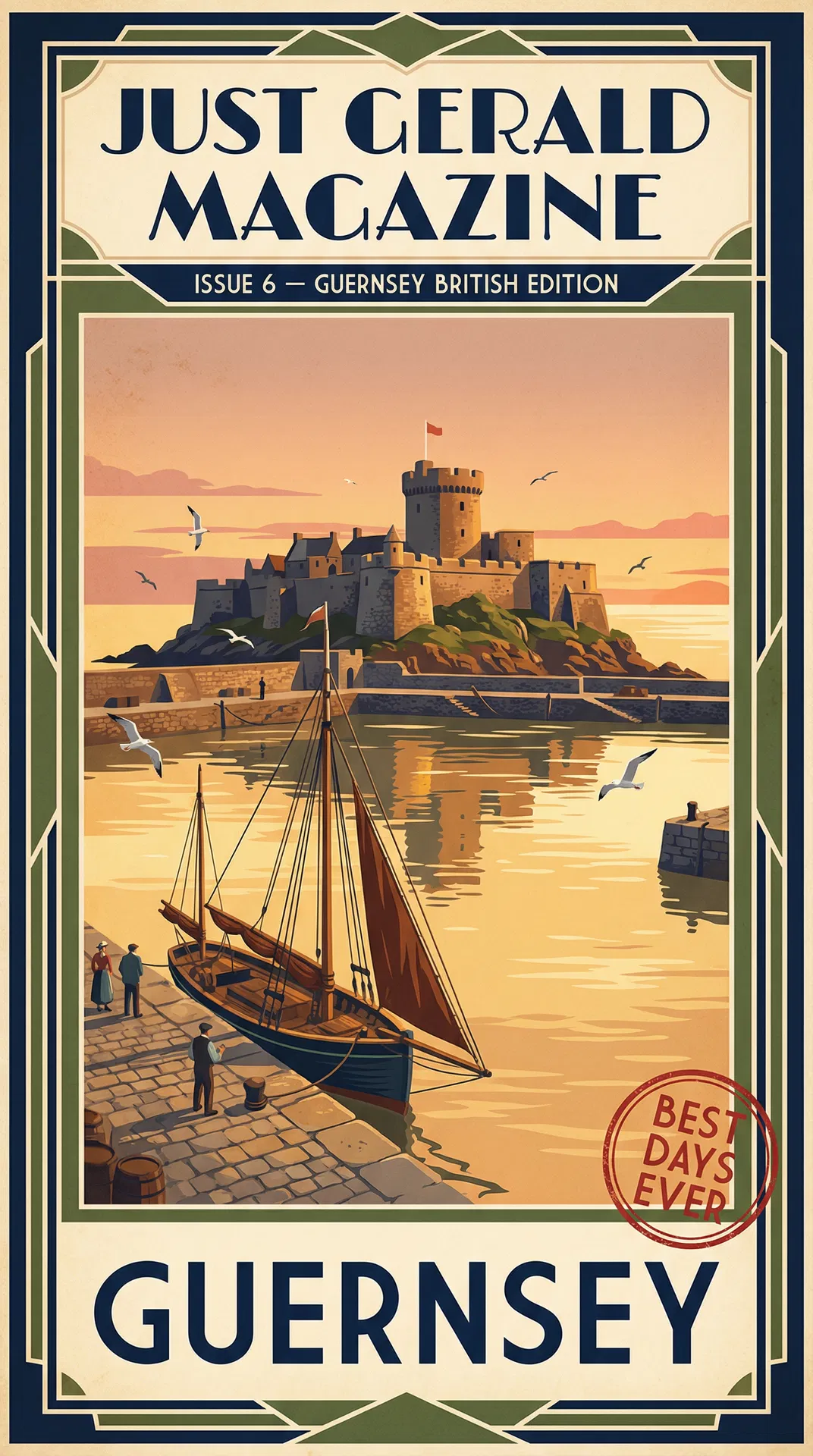
Just Gerald Magazine Issue 6 — Guernsey
Best Days EverBritish Edition

GUERNSEY

Cobblestones, castles, and the best cocktail bar in the Channel Islands.

1EDITORS NOTE
2ADVENTURE
2HISTORY
1CULTURE
2COCKTAILS
2DINING
1COFFEE
1BEST DAY EVER
Issue06

About This Issue

"There is a ferry from Poole. It takes three and a half hours. By the time the granite cliffs of Guernsey come into view, you are already somewhere else entirely."

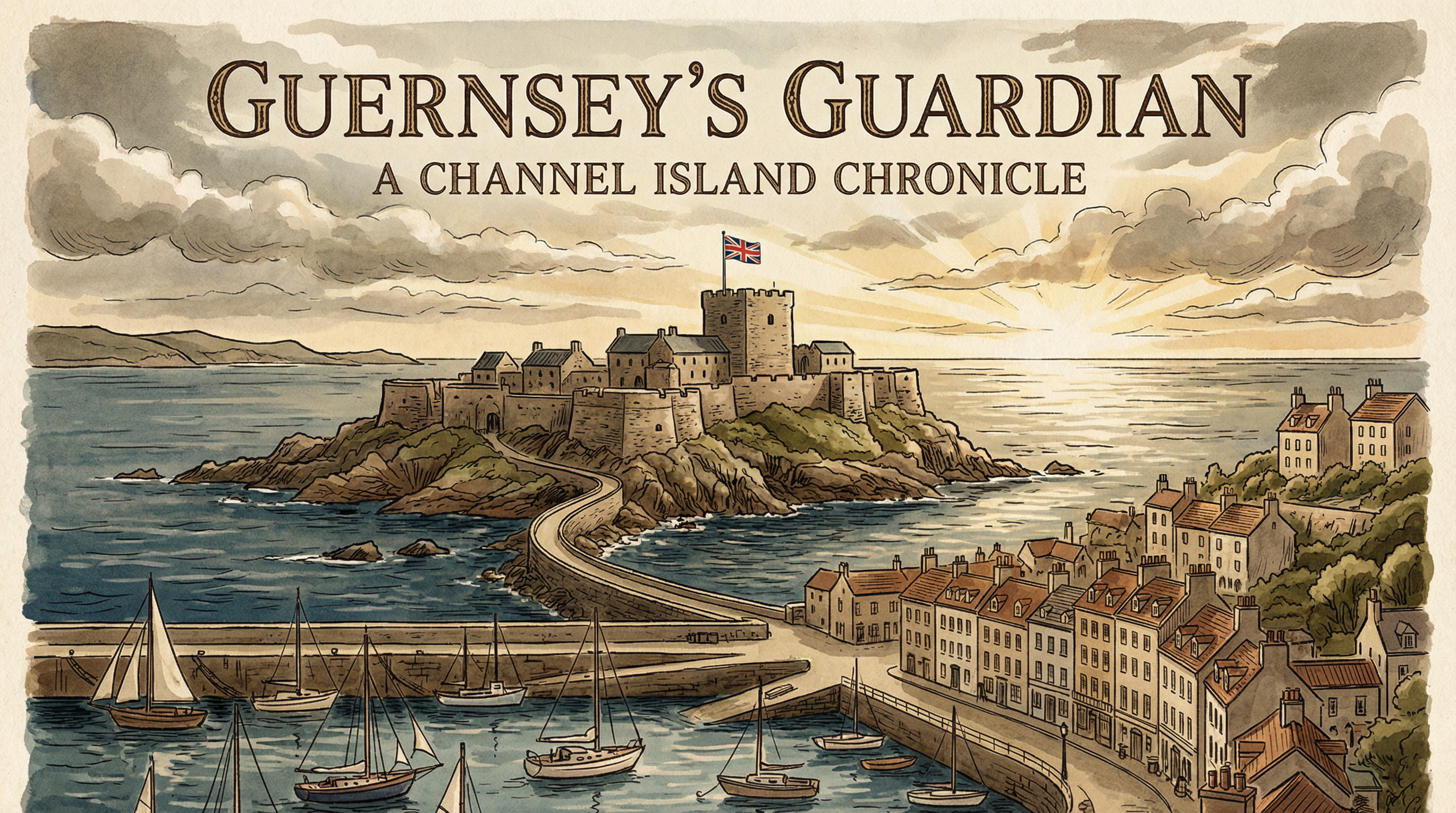
Issue 6 takes Just Gerald to the Channel Islands — specifically to Guernsey, the most underrated island in the British Isles. We climb the cobbled streets of St Peter Port, descend into eight centuries of Castle Cornet's history, follow Victor Hugo up to his glass room at Hauteville House, and find the best daiquiri in the Channel Islands at a Cuban-inspired bar on the Esplanade. We also reckon with five years of German occupation, the cream tea question, and the correct order of operations for a perfect day on the island.

EDITORS NOTE3 min read

Editor's Letter: The Island That Time Forgot to Rush

Gerald on why Guernsey is the most underrated island in the British Isles.

Gerald on why Guernsey is the most underrated island in the British Isles, and why the uphill climb is always worth it.
Editor's Letter: The Island That Time Forgot to Rush

From the Editor

There is a ferry from Poole. It takes three and a half hours. You stand on the deck as the English coast disappears and something shifts. The sea changes colour. The light changes. By the time the granite cliffs of Guernsey come into view, you are already somewhere else entirely. Not quite France. Not quite England. Something older than both. I first came to Guernsey on a whim, the way the best trips always start. A friend mentioned the castle. I looked it up. I booked the ferry. I have been back four times since. The island is small enough to walk across in a day and large enough to spend a week discovering. It has the best cocktail bar I have found outside of a major city. It has cobbled streets that Victor Hugo climbed every morning for fifteen years. It has a castle that has been besieged, bombed, struck by lightning, occupied by Nazis, and is still standing. It has cream teas that would make a Devonian weep with envy. This is Issue 6. This is Guernsey. The uphill climb is worth every step.
ADVENTURE7 min read

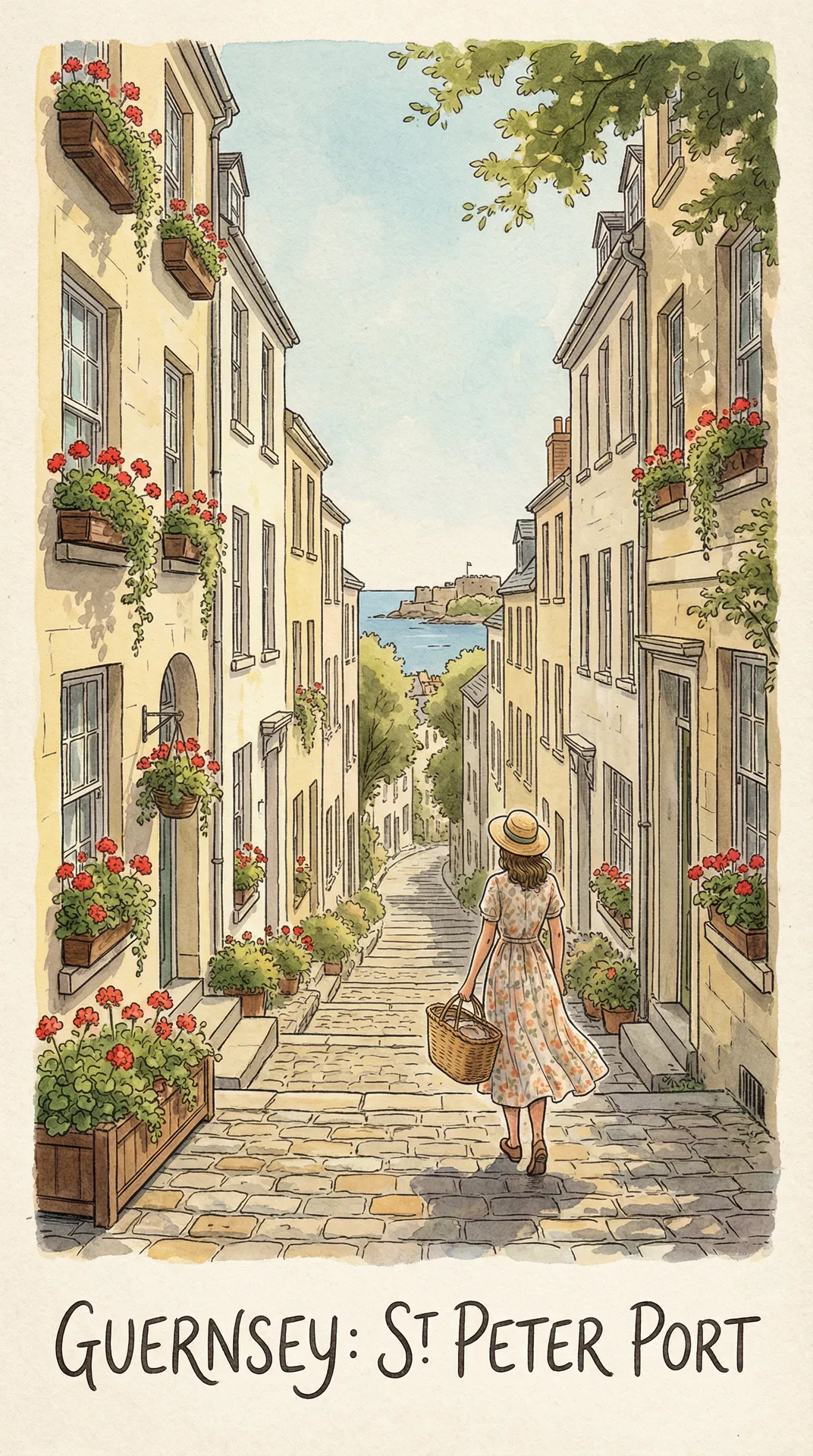
The Uphill Climb: St Peter Port's Greatest Walk

From the harbour to Hauteville House, the cobbled climb through St Peter Port.

From the harbour to Hauteville House, the cobbled climb through St Peter Port is one of the finest short walks in the British Isles. Gerald takes it slowly, on purpose.
The Uphill Climb: St Peter Port's Greatest Walk

Start at the Harbour

Begin at the North Beach car park, where the ferries come in and the smell of diesel and salt water mixes in a way that is somehow appealing. Walk south along the Esplanade. The harbour is on your right. Georgian townhouses climb the hill on your left. This is the thing about St Peter Port that catches first-time visitors off guard: it is vertical. The town does not spread outward. It climbs. Every street that runs away from the harbour goes upward, and most of them are cobbled, and all of them are beautiful.

The Lanes of the Old Town

Turn left at the Town Church, which has been standing since 1048, and begin the ascent. The lanes here are narrow enough that you can touch both walls simultaneously. They have names like Cornet Street, Fountain Street, and Le Pollet, and they are lined with the kind of independent shops that have been selling the same things to the same families for three generations. There is a bookshop that smells exactly as a bookshop should. There is a baker whose almond croissants are, objectively, among the best in the Channel Islands. Buy one. You will need the energy.

Halfway Up: The View

Stop at the top of Cornet Street and turn around. The harbour is below you now, and beyond it, Castle Cornet sits on its rocky tidal island, connected to the town by a long stone pier. The water is a colour that has no name in English but that the French call bleu-vert. Sailboats are moored in rows. The lighthouse at the end of the White Rock pier catches the morning light. This is the view that Victor Hugo looked at every morning for fifteen years from the top of Hauteville House, and it is the view that made him say he had found paradise in exile.

Hauteville House: The Poet's Fortress

Continue up the hill to number 38 Hauteville. The house is plain from the outside, a flat-fronted Georgian townhouse in cream stone. Inside, it is one of the most extraordinary interiors in the British Isles. Hugo bought it in 1856 with the proceeds from his poetry collection Les Contemplations and spent the next two years transforming it into a monument to his own imagination. He cut up Aubusson tapestries to fit the rooms. He built a crystal conservatory at the top of the house with a glass floor and views over the harbour. He wrote Les Miserables at a small standing desk in that room, in all weathers, looking out to sea. The house is now owned by the City of Paris and open to the public. The tours are guided and last about an hour. Book ahead.

The Descent: Take the Other Way Down

Do not come back the way you went up. Instead, continue over the hill and descend through the Candie Gardens, which are the oldest public gardens in the British Isles, established in 1887. There is a Victorian bandstand. There is a greenhouse full of tropical plants. There is a statue of Victor Hugo looking out to sea with the expression of a man who has just thought of a very good sentence. The gardens descend back toward the harbour. Stop at the Candie Museum cafe for a pot of tea and a scone with Guernsey cream, which is thicker and richer than any cream you have had before and which will ruin all other cream for you permanently.

— ADVERTISEMENT —

Naturally Straws — The Natural Garnish. Elevate every craft cocktail with the ultimate zero-waste decorative element.
HISTORY8 min read

Castle Cornet: Eight Centuries of Stubbornness

Built in 1206, struck by lightning, held by Royalists, occupied by Nazis. Still standing.

Built in 1206, struck by lightning, besieged by the French, held by Royalists for nine years, and occupied by Nazis. Castle Cornet has had a complicated eight centuries. Gerald goes inside.
Castle Cornet: Eight Centuries of Stubbornness

The Beginning: 1206

Castle Cornet was built by the English Crown in 1206, the year after King John lost Normandy to the French. The Channel Islands, though geographically closer to France, remained loyal to the English Crown, and the castle was built to defend that loyalty. It sits on a rocky tidal island at the entrance to St Peter Port harbour, connected to the town by a long stone pier. For the first three centuries of its existence it was the most important fortification in the Channel Islands, and the English Crown spent considerable money keeping it that way.

The French Sieges

The French besieged Castle Cornet repeatedly throughout the 14th and 15th centuries, with varying success. In 1338, the French occupied Guernsey for several years and held the castle. In 1356, they tried again. In 1372, they tried again. The castle was designed to be held by a small garrison against a much larger force, and it performed this function reliably. The walls are thick. The position is strong. The sea is cold. French soldiers who attempted to wade across at low tide discovered all three of these facts simultaneously.

The English Civil War: The Last Royalist Holdout

The most remarkable chapter in the castle's history came during the English Civil War. When Parliament took control of Guernsey in 1642, the Governor of Castle Cornet, Sir Peter Osborne, refused to surrender. He held the castle for the King for nine years, from 1642 to 1651, supplied by Royalist ships and sustained by a stubbornness that borders on the pathological. The town of St Peter Port was Parliamentarian. The castle was Royalist. They fired at each other across the harbour for nine years. Osborne finally surrendered in 1651, two years after the King had been executed, making Castle Cornet the last Royalist garrison in the British Isles to hold out. He was given honourable terms. He deserved them.

The Lightning Strike of 1672

On 29 December 1672, lightning struck the castle's powder magazine. The resulting explosion destroyed the medieval keep, the great hall, and the chapel. The Governor's wife and mother were killed. The explosion was heard as far away as France. The castle was rebuilt, but the medieval keep was never replaced, which is why the castle today has a distinctive silhouette that looks slightly incomplete from certain angles. The absence is the history.

The German Occupation: 1940-1945

In June 1940, the German military occupied the Channel Islands, the only part of the British Isles to fall under Nazi occupation during the Second World War. Castle Cornet was used as a naval signal station and observation post. The Germans reinforced the castle walls with concrete and installed anti-aircraft guns on the ramparts. Much of this wartime infrastructure is still visible. The castle now houses five museums, including a dedicated occupation museum with a remarkable collection of documents, photographs, and personal testimonies from islanders who lived through the five-year occupation. It is sobering and essential.

Visiting Today

Castle Cornet is open daily from April to October. The walk along the pier from the harbour takes about ten minutes and is one of the finest short walks in Guernsey. The castle contains five separate museums covering military history, the occupation, maritime history, and the story of the 201st Guernsey Artillery. Allow at least two hours. The noon gun is fired every day at midday by a costumed gunner, a tradition that has continued since the 19th century. Do not stand directly behind it.
HISTORY7 min read

Five Years Under: Guernsey and the German Occupation

Five years under German occupation. The only part of the British Isles to fall.

From June 1940 to May 1945, Guernsey was the only part of the British Isles under Nazi occupation. The story of those five years is more complicated, more human, and more important than most people know.
Five Years Under: Guernsey and the German Occupation

The Evacuation

In June 1940, as the German army swept through France, the British government made the decision to demilitarise the Channel Islands. They were indefensible. The announcement was made on 19 June 1940. Within days, roughly 17,000 Guernsey residents, about half the population, had evacuated to England. Those who stayed, mostly farmers, fishermen, elderly residents, and those who could not or would not leave, woke up on 30 June 1940 to find German aircraft circling overhead. The occupation had begun.

Daily Life Under Occupation

The occupation was not a single experience. It was five years of small accommodations, daily calculations, and impossible choices. German soldiers were billeted in private homes. Food became scarce and then scarcer. By 1944, after D-Day cut off supply lines, islanders were surviving on near-starvation rations. The Red Cross ship Vega arrived in December 1944 with food parcels and is still remembered with something close to reverence. The occupation produced collaborators, resisters, and the vast majority who simply tried to survive. The Guernsey Underground News Service, known as GUNS, produced a clandestine newsletter throughout the occupation. Its operators risked deportation to concentration camps.

Liberation: 9 May 1945

The German garrison surrendered on 9 May 1945, one day after VE Day. Liberation Day is still celebrated as a public holiday in Guernsey every year. The celebrations in 1945 were, by all accounts, extraordinary. People who had not seen each other for five years, who had not known whether their evacuated relatives were alive or dead, were reunited on the streets of St Peter Port. The Occupation Museum in Castle Cornet has a remarkable collection of photographs from that day. They are worth the price of admission on their own.

Where to Learn More

The German Occupation Museum in Forest is the most comprehensive collection of occupation artefacts on the island, assembled over decades by one man, Richard Heaume, who began collecting as a child. The Castle Cornet occupation exhibition is excellent. The Guernsey Museum at Candie Gardens has a strong permanent collection. And if you want to understand what daily life felt like, read The Guernsey Literary and Potato Peel Pie Society, which is a novel but draws on real testimony. It is better than its title suggests.
Partners & Advertisers
ADVERTISE WITH JUST GERALD
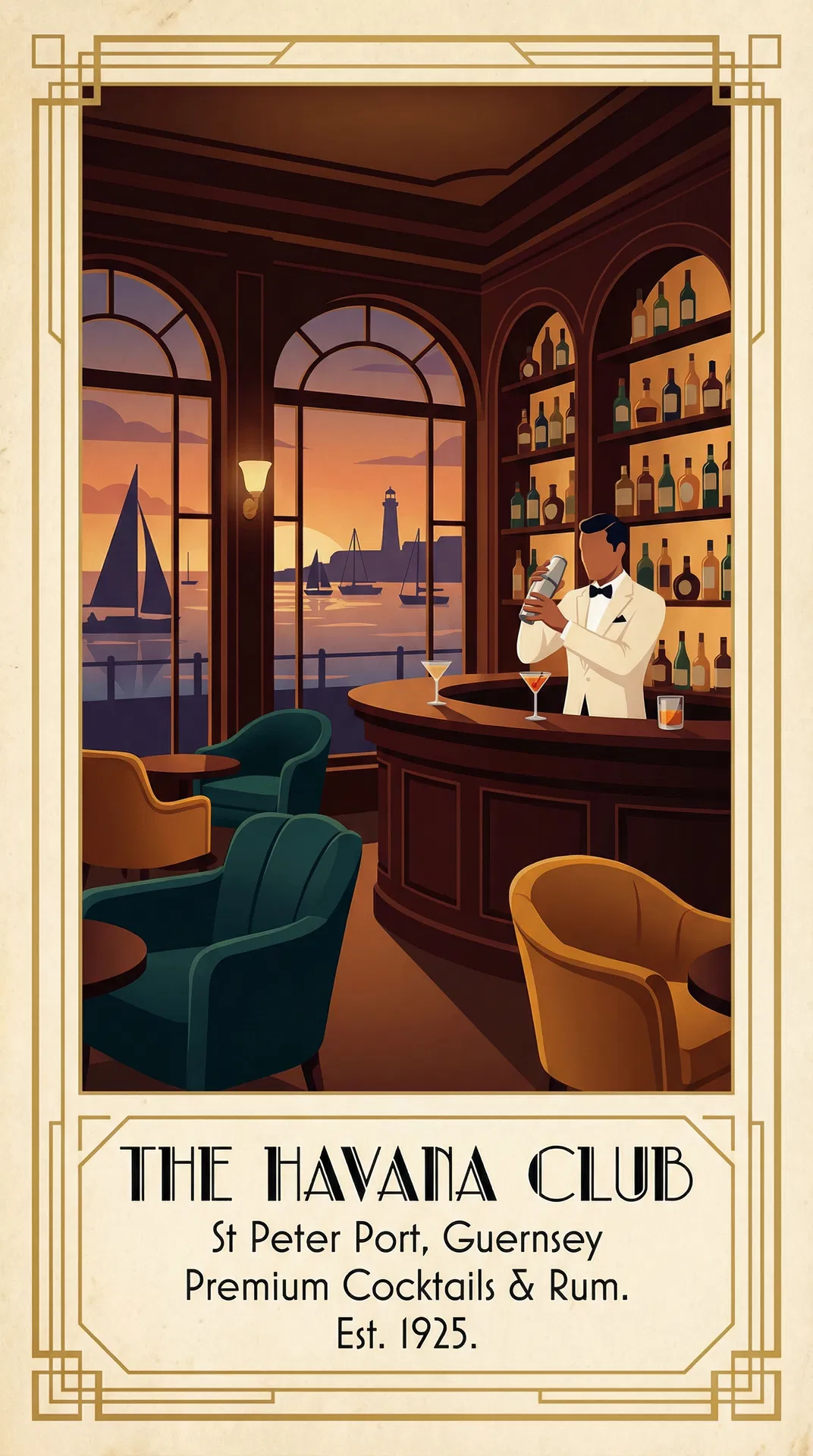
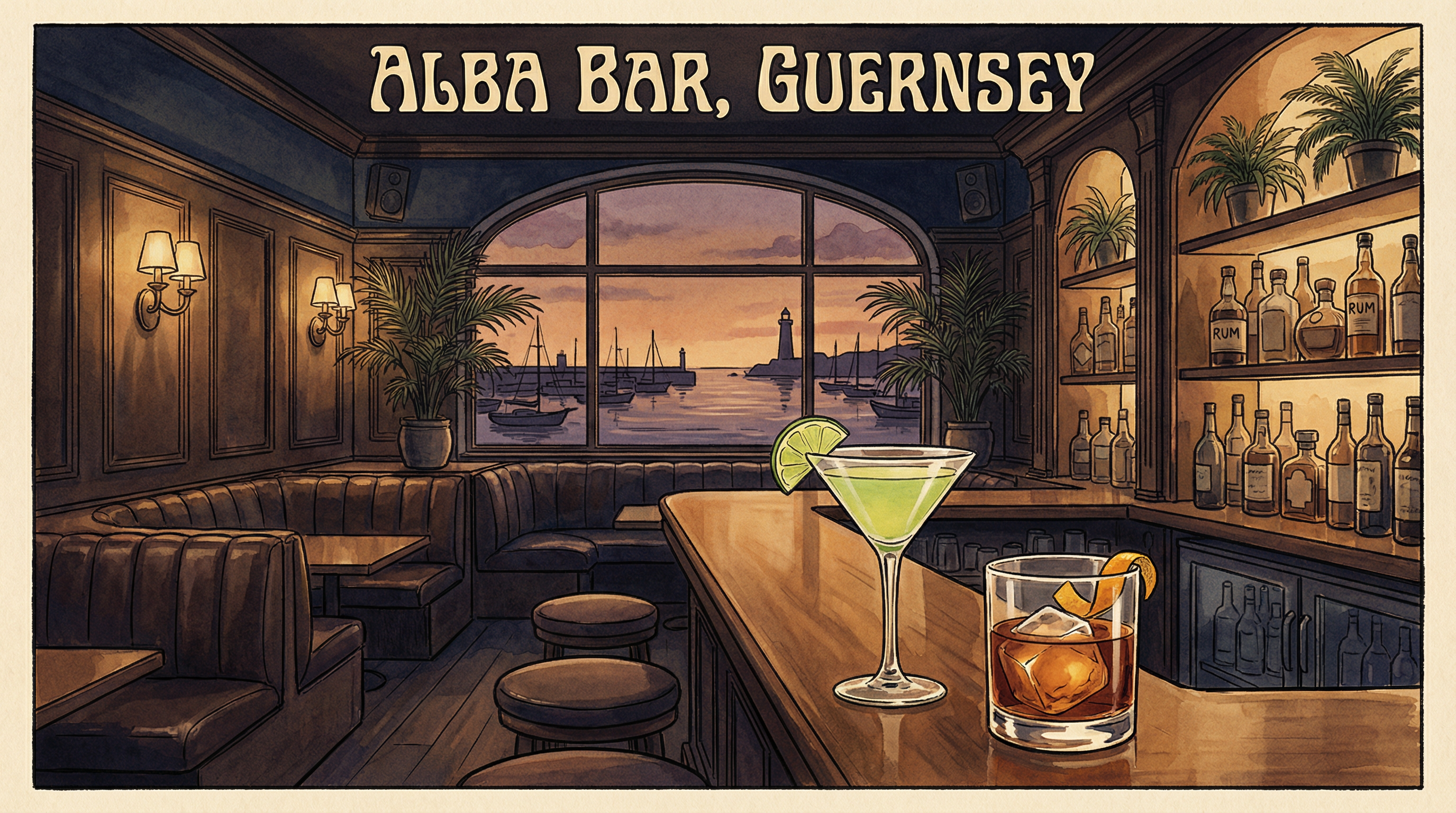
Alba
ISSUE 6

COCKTAIL BAR · ST PETER PORT, GUERNSEY

Alba

"Rum, rhythm & harbour views."

The best rum bar in the Channel Islands. Full stop.

Advertise in Issue 6
ADVERTISE WITH JUST GERALD
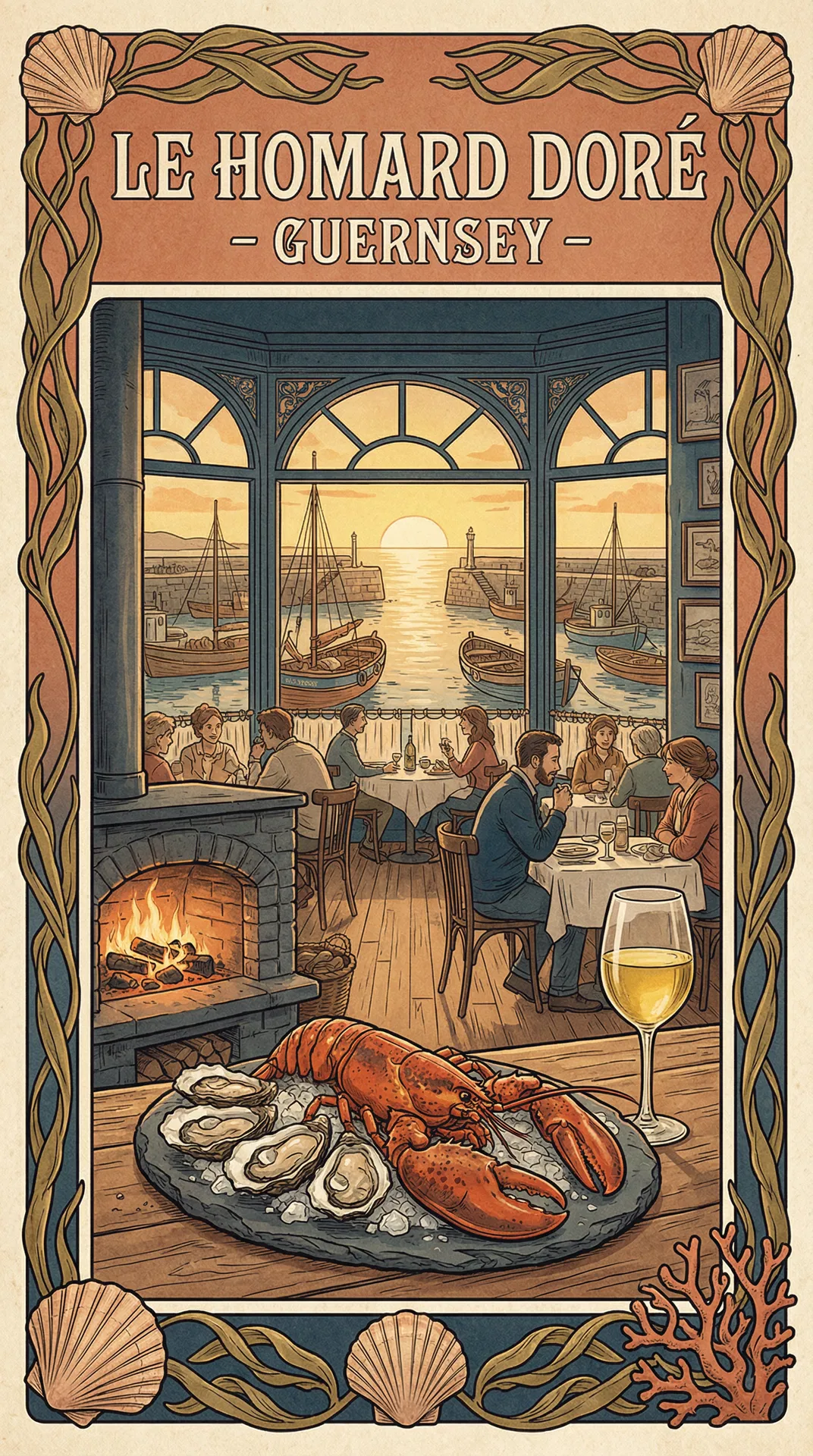
Hook
ISSUE 6

SEAFOOD RESTAURANT · ST PETER PORT, GUERNSEY

Hook

"Coal-fired. Harbour-fresh. Unforgettable."

The lobster alone is worth the flight.

Advertise in Issue 6
ADVERTISE WITH JUST GERALD
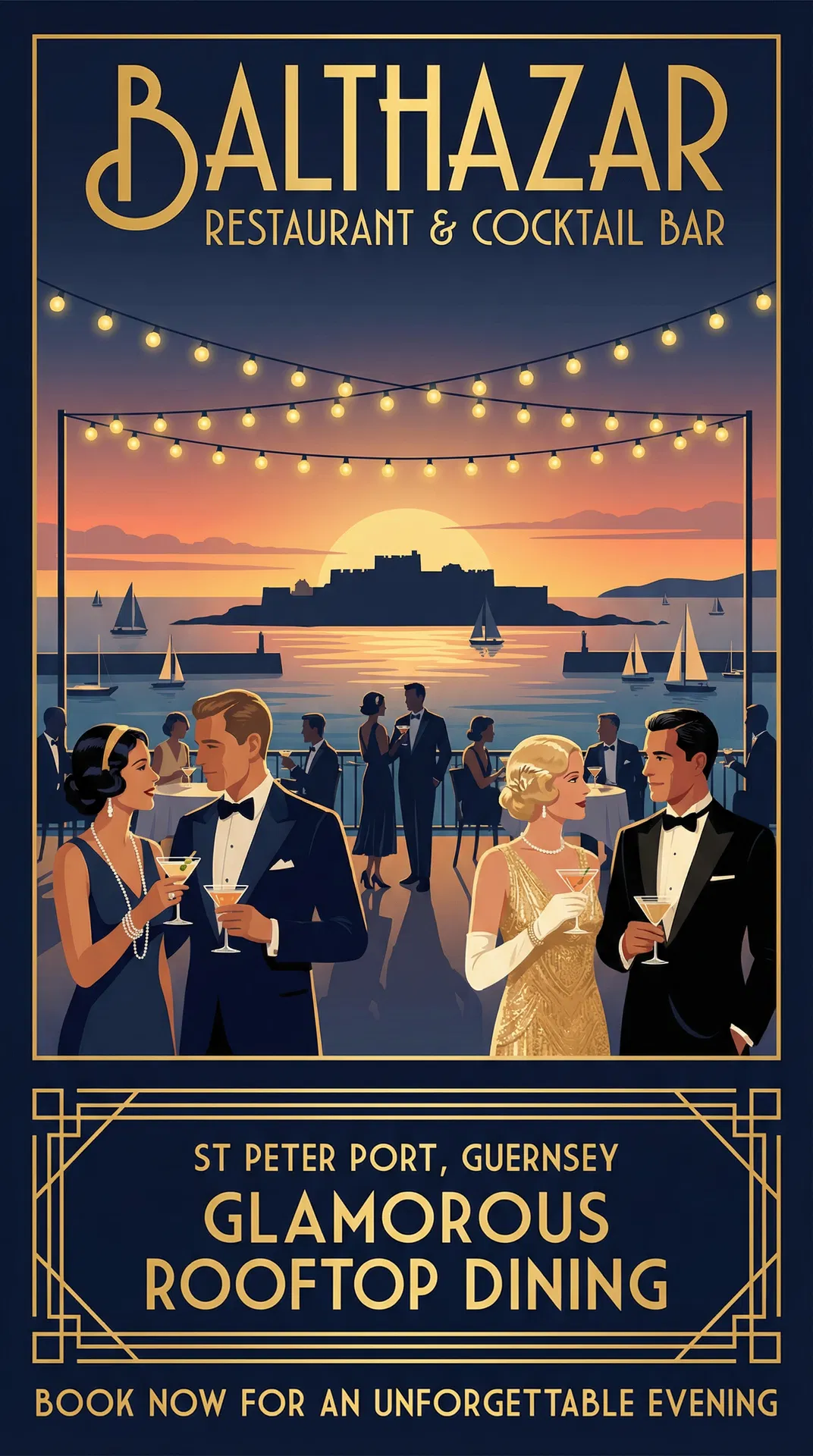
Balthazar
ISSUE 6

RESTAURANT & BAR · ST PETER PORT, GUERNSEY

Balthazar

"Cocktails with a castle view."

Rooftop sundowners with Castle Cornet as your backdrop. Yes, really.

Advertise in Issue 6

Spec placements — contact [email protected] to claim your space

CULTURE6 min read

The Man Who Wrote Les Miserables in a Glass Room

Victor Hugo arrived with a suitcase, a mistress, and a grudge. He wrote Les Miserables.

Victor Hugo arrived in Guernsey in 1855 with a suitcase, a mistress, and a grudge against Napoleon III. He left fifteen years later having written two of the greatest novels in the French language. Gerald visits Hauteville House.
The Man Who Wrote Les Miserables in a Glass Room

The Exile

Victor Hugo arrived in Guernsey on 31 October 1855, in a storm. He had been expelled from Jersey for writing a pamphlet attacking Napoleon III, who had staged a coup and made himself Emperor of France. Hugo had been in exile since 1851. He was 53 years old, famous, furious, and looking for somewhere to settle. He found Guernsey. He bought a house on the hill above St Peter Port with the proceeds from his poetry collection Les Contemplations, which had sold 4,000 copies in two days. He named it Hauteville House and began to rebuild it in his own image.

The House

Hauteville House is, from the outside, a plain Georgian townhouse. Inside, it is one of the most extraordinary interiors in the British Isles. Hugo spent two years transforming it, raiding antique shops across Guernsey and France for tapestries, tiles, carved wood, Chinese silk, and anything else that caught his eye. He cut up 17th-century Aubusson tapestries to fit the rooms. He built a dining room lined with Delft tiles and carved the initials H and V into every surface he could find. He designed furniture from old sea chests. He wrote the words ABSENTES ADSUNT, the absent are present, on the back of a carved throne in the dining room. He was thinking of his daughter Leopoldine, who had drowned in the Seine at the age of 19.

The Crystal Room

At the very top of the house, Hugo built a conservatory in glass and iron, which he called the Crystal Room or the Lookout. It had views in every direction: the harbour, Castle Cornet, the open sea, and, on clear days, the coast of France. He wrote standing at a small desk by the open windows, even in winter, even in rain. It was here that he wrote Les Miserables, which he had begun in Paris in 1845 and which he completed in Guernsey in 1862. It was here that he wrote Les Travailleurs de la Mer, a novel set in Guernsey, in which the island is a character as much as any human. The room is freezing in winter and an oven in summer. Hugo worked in it every day.

The Return

Hugo left Guernsey in 1870 when Napoleon III fell and the Republic was restored. He returned to Paris to a hero's welcome. He was 68 years old. He lived another fifteen years, dying in 1885 at the age of 83. He left Hauteville House to the City of Paris, which has maintained it ever since. The house is now a museum and one of the most visited sites in Guernsey. The tours are conducted in French and English. The Crystal Room, where Les Miserables was written, is the last room on the tour. Stand at the desk by the window. Look out at the harbour and the castle and the sea. Think about what was written here. Then go and have a drink. You have earned it.
COCKTAILS6 min read

Where to Drink in Guernsey: The Short and Decisive List

The short and decisive list of where to drink well in Guernsey.

Guernsey has no shortage of places to drink. It has a smaller number of places to drink well. Gerald has done the research so you do not have to.
Where to Drink in Guernsey: The Short and Decisive List

Alba: The Best Cocktail Bar in the Channel Islands

Alba is on the Esplanade, which means it has harbour views, which means you should arrive at sunset and stay until the lights on Castle Cornet come on. The bar is styled after a 1920s Cuban speakeasy: dark wood panelling, brass fixtures, low amber lighting, and a rum selection that would embarrass most London bars. The daiquiri is made with fresh lime, not from a bottle, and the balance is exactly right. The dark rum old fashioned, made with a Barbadian rum that has no business being this good, is the kind of drink that makes you reconsider everything you thought you knew about old fashioneds. The kitchen does lobster tagliolini that is, frankly, too good for a cocktail bar. Order it anyway. Rating: 5 stars. The best bar on the island, possibly the best bar in the Channel Islands. Go.

Cornerstone: The Proper Pub

On Cornet Street, halfway up the hill, Cornerstone is what a proper British pub looks like when it is done correctly. Real ales from local and mainland breweries, a wine list that has been thought about, and a menu that runs from bar snacks to a full French bistro. The beef bourguignon is the best thing on the menu and is the kind of dish that makes you want to cancel your ferry home. The staff know what they are doing. The atmosphere on a Friday evening, when half of St Peter Port appears to be in attendance, is exactly right. Rating: 4.5 stars.

Balthazar: Harbour Views and a Disco in the Ladies

Balthazar is on the Pollet, which is the main street running up from the harbour, and it has the best harbour views of any restaurant in St Peter Port. The cocktail list is ambitious and mostly successful. The food is modern European and changes with the seasons. The reason it is on this list, however, is the ladies toilet, which contains a small disco, complete with mirror ball and coloured lights, that activates when you enter. This is either charming or alarming depending on your disposition. The cocktails are good enough that it does not matter. Rating: 4 stars.

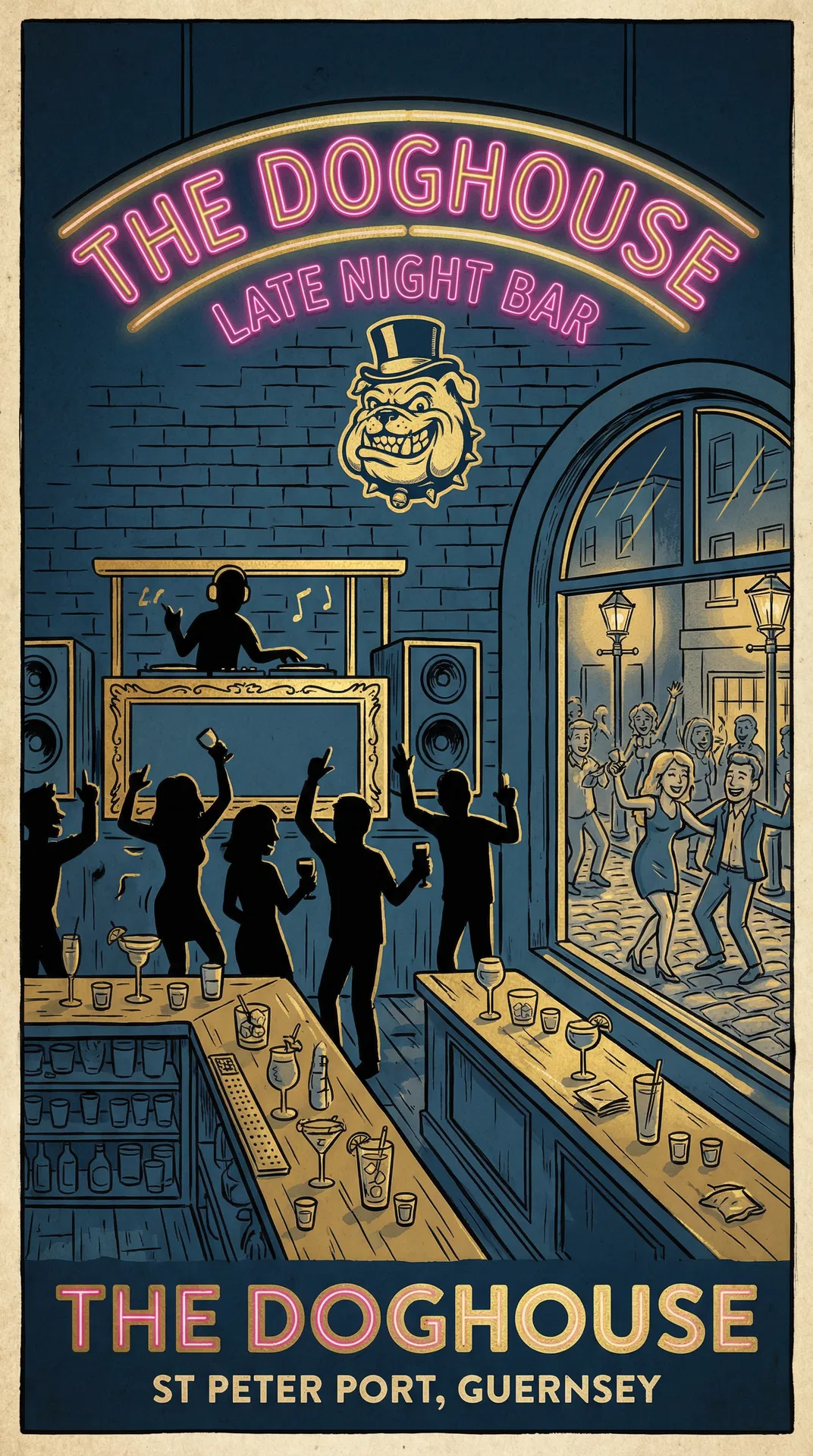
The Doghouse: Late Night, No Apologies

The Doghouse is where you go after Alba has closed and you are not ready to stop. It is small, it is loud, it is underground, and it serves cocktails until late. The menu is shorter than Alba's and the atmosphere is less refined, but the drinks are good and the bar staff are the kind of people who will tell you what to order and be right about it. It is not for everyone. It is for people who are having a good night and want to keep having it. Rating: 4 stars for what it is.
Partners & Advertisers
ADVERTISE WITH JUST GERALD
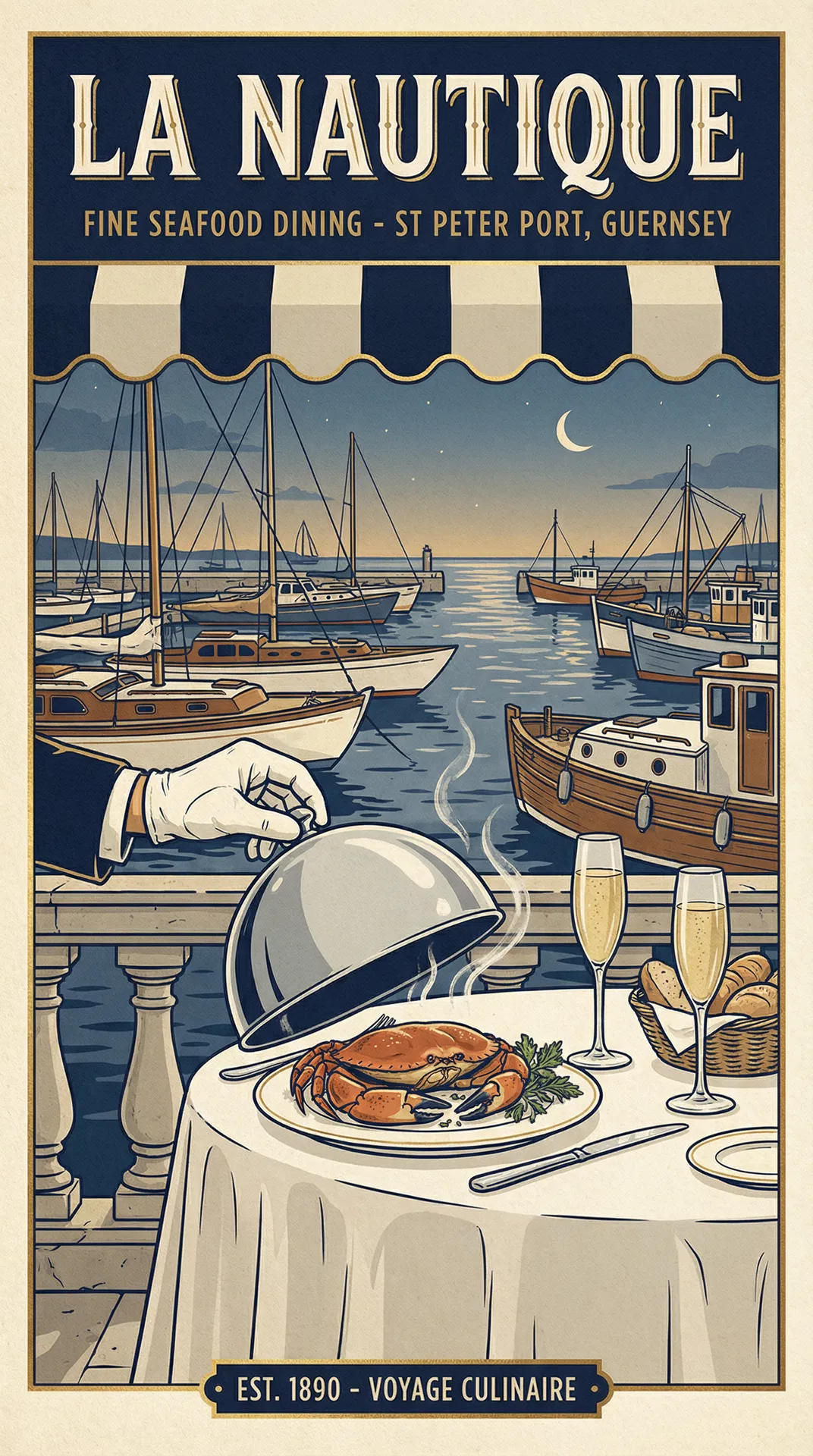
La Nautique
ISSUE 6

FINE DINING · ST PETER PORT, GUERNSEY

La Nautique

"Fine dining on the water's edge."

White tablecloths, harbour views, and Guernsey crab done properly.

Advertise in Issue 6
ADVERTISE WITH JUST GERALD
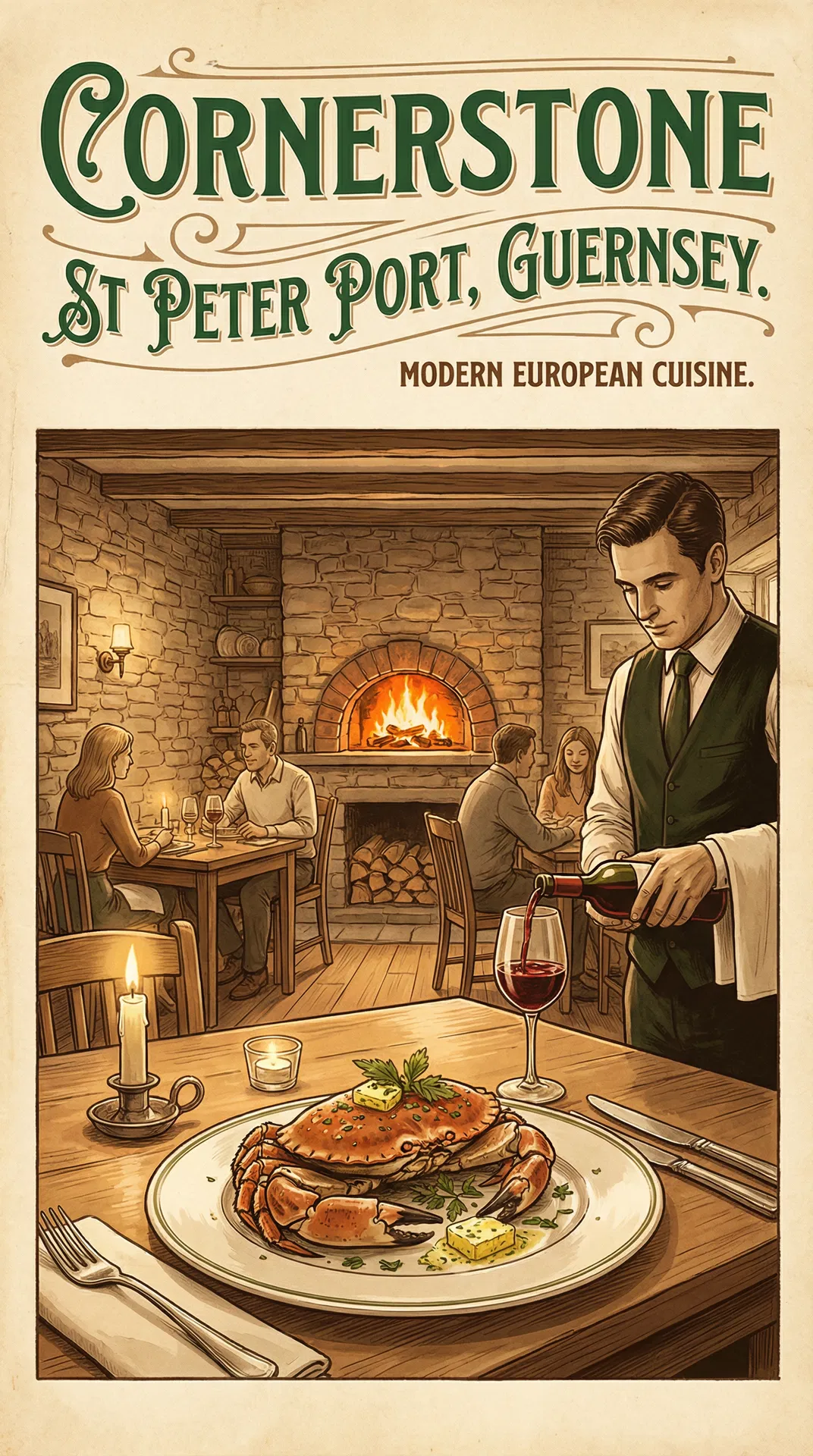
Cornerstone
ISSUE 6

NEIGHBOURHOOD RESTAURANT · ST PETER PORT, GUERNSEY

Cornerstone

"Modern European. Local soul."

The kind of place you'd keep to yourself if you were a lesser person.

Advertise in Issue 6
ADVERTISE WITH JUST GERALD
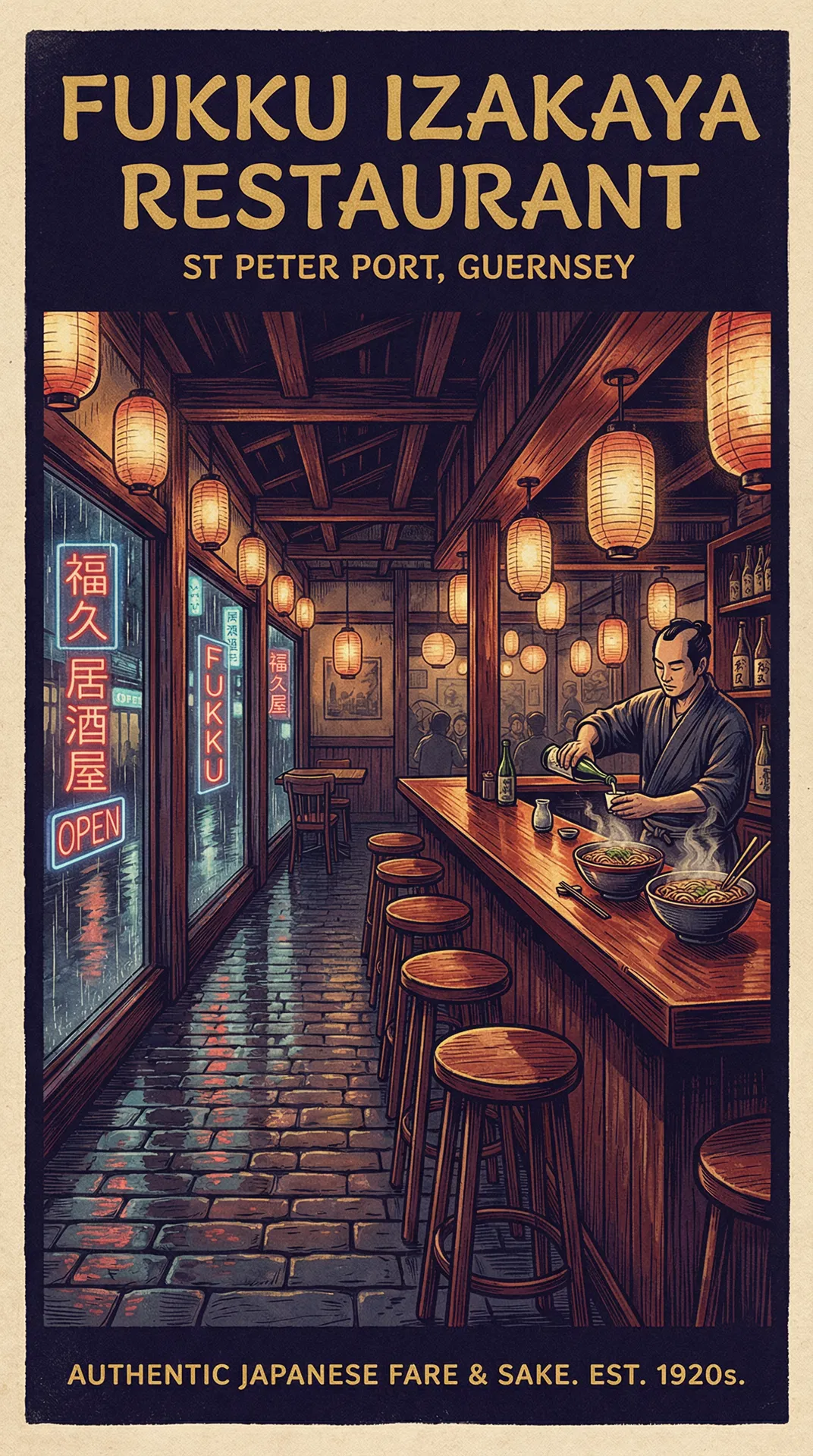
Fukku
ISSUE 6

IZAKAYA · ST PETER PORT, GUERNSEY

Fukku

"Japanese soul in a British island."

Ramen, sake, and a playlist that makes you forget where you are.

Advertise in Issue 6

Spec placements — contact [email protected] to claim your space

DINING7 min read

Where to Eat in Guernsey: From Harbour Seafood to Clifftop Cream Tea

From harbour seafood to clifftop cream tea. Gerald eats his way through St Peter Port.

Guernsey is an island. The seafood is exceptional. The cream is legendary. The rest is better than you expect. Gerald eats his way through St Peter Port.
Where to Eat in Guernsey: From Harbour Seafood to Clifftop Cream Tea

Hook: Coal-Fired Seafood on the Seafront

Hook is on the North Esplanade, which means it is one of the first things you see when you get off the ferry, and one of the last things you see before you get back on. This is appropriate because it is the best seafood restaurant in Guernsey and possibly the best reason to visit. The menu is built around what came in that morning: Guernsey crab, lobster, sole, sea bass, scallops. Everything is cooked over a coal fire, which gives the fish a char that you cannot replicate with gas. The crab linguine is the signature dish and is worth the trip from England on its own. Book ahead. Rating: 5 stars.

Avocado: The Breakfast Spot

Avocado is on the Pollet and opens early, which is the first thing you want in a breakfast spot. The coffee is proper, made on a La Marzocco machine by people who know what they are doing. The full Guernsey breakfast, which includes local sausages, black butter, and Guernsey tomatoes, is the correct way to start a day on the island. The avocado toast, which you might expect to be the main event given the name, is actually the second-best thing on the menu. Order the breakfast. Rating: 4.5 stars.

La Nautique: Fine Dining with Harbour Views

La Nautique is the oldest restaurant in Guernsey and one of the finest. It sits on the harbour, with views over the marina and Castle Cornet, and the menu is built around the best of Guernsey's seafood and local produce. The Guernsey lobster thermidor is the dish to order. The wine list is serious and the service is the kind that makes you feel like the most important person in the room without being obsequious about it. It is expensive by Guernsey standards and worth every penny. Rating: 4.5 stars.

The Cream Tea Question

Guernsey cream is not the same as Devonshire cream or Cornish cream. It is thicker, richer, and more yellow, because Guernsey cows produce milk with a higher fat content than mainland breeds. The best cream tea on the island is served at the Candie Gardens cafe, in the Victorian greenhouse, with a view of the harbour. The scones are made fresh each morning. The jam is local. The cream is applied in quantities that would alarm a cardiologist. This is correct. Do not hold back. You are on an island. Normal rules do not apply.
DINING10 min read

Eat Guernsey: Every Table Worth Booking

Every table worth booking in St Peter Port and beyond.

From coal-fired seafood on the North Esplanade to a Japanese izakaya on Smith Street, Guernsey's restaurant scene is quietly, stubbornly excellent. Gerald works through the list.
Eat Guernsey: Every Table Worth Booking

The Hook: Coal, Crab, and Conviction

The Hook is the restaurant that Guernsey residents mention first when you ask where to eat, and they are right to. It sits on the North Esplanade with a view of the harbour and an interior of racing green walls and natural wood that looks like someone built it specifically for Just Gerald to photograph. The menu is small plates, which in lesser restaurants is an excuse to charge more for less, but here is a genuine philosophy. The kitchen wants you to try things. Order the Herm oysters first -- they come from the island just across the water and taste of the sea in the way that only very fresh oysters do. Then the scallops, cooked in smoked mussel butter with samphire. Then the monkfish tail on the bone with lobster bisque. The cooking is over coal, which gives everything a depth that gas cannot replicate. The wine list is short and well-chosen. Reservations are essential and should be made at least two days in advance. This is the meal you will talk about on the ferry home.

Otto: Italy on Belle Greve Bay

Otto is the kind of restaurant that makes you wonder why you ever eat anywhere else. It occupies a corner position on Belle Greve Bay, and on a clear day the terrace tables look out over the sea wall to the water beyond, with the Guernsey granite doing its usual trick of making everything look like a painting. The food is Italian in the serious sense -- not pizza and pasta for tourists, but arancini that are crisp outside and molten inside, wagyu pappardelle with a ragu that has been cooking since morning, montanara mortadella at lunch that are small fried pizzas and are exactly as good as they sound. Come for breakfast if you can: the pastries arrive fresh and the coffee is properly made. Come for dinner if you want the full experience. Come for cicchetti in the early evening if you want to feel like you are in Venice without the crowds or the expense.

Alba: The Room That Does Everything

Alba is in Market Square, which is the heart of St Peter Port, and it is the most versatile room on the island. At breakfast it is a cafe. At lunch it is a restaurant. In the early evening it is a cocktail bar. Late at night, when the DJs start and the square fills up, it is something else entirely. The food is wood-fired and locally sourced: lobster tagliolini, Guernsey crab, duck confit. The cocktail list draws on Latin America -- tequila, rum, daiquiris, margaritas -- and is executed with the kind of seriousness that suggests the bar team actually knows what they are doing. The conservatory opens onto the square in summer, and eating lunch there while the market traders pack up around you is one of the genuinely pleasurable things you can do in Guernsey. The monthly Sunday lunches are a local institution. Book well ahead.

Red Grill House: Serious Meat, Serious Wine

Red is for carnivores, and it does not apologise for this. The meat comes from UK farms and Galicia, is aged in-house for up to ninety days, and is cooked at four hundred degrees on a Josper grill that seals in everything a long ageing process has built up. The result is a depth of flavour that makes you understand why people are willing to wait three weeks for a piece of beef. The wine list has over three hundred bottles, which is extraordinary for a restaurant of this size on an island of this size, and the staff know it well enough to make genuine recommendations rather than pointing at the second-cheapest bottle. Pescatarians are not forgotten: the lobster mac and cheese is the best thing on the menu that does not involve a Josper grill. The interior is sleek and green, with succulents on every surface, and is considerably more stylish than it has any right to be.

Fukku: Japan Comes to Smith Street

Fukku opened in 2022 as a Japanese izakaya and has quietly become one of the most interesting restaurants on the island. The location on Smith Street is central, the open kitchen means you can watch the chefs work, and the menu covers enough ground -- sushi, sashimi, ramen, bento boxes, salads -- that you could eat here every day for a week and not repeat yourself. The sourcing is serious: Japanese merchants for the specialist ingredients, local suppliers for the fresh produce. The drinks menu takes the same approach, with sake, Japanese whisky, and Japanese-brewed ales alongside the usual wines. It is the kind of restaurant that a city of a million people would be pleased to have. Guernsey has it on a cobbled street between a bookshop and a bakery.

Beyond St Peter Port: The Rest of the Island

Leave the town and the island opens up. The Imperial at Rocquaine Bay on the west coast has a beer garden that faces the sunset and a menu of mussels, scallops, and a one-kilogram cote de boeuf to share that is the correct way to end a day of coastal walking. The Puffin and Oyster at Grand Harve on the north-west coast is dog-friendly, has panoramic sea views from a three-sided conservatory, and serves a Guernsey crab and prawn linguine that is better than it has any right to be given the pub setting. Les Douvres Hotel in the south is a former eighteenth-century manor with a garden strung with fairy lights and a pork belly with Rocquette Cider jus that is the dish of the south coast. And if you can get a boat to Herm, the Shell Beach Cafe serves local crab with sand between your toes and the most photographed beach in the Channel Islands behind you. Go in summer. Go hungry.
COCKTAILS8 min read

Drink Guernsey: Bars, Pubs, and the Viral Disco in the Ladies' Toilet

From the viral disco in the ladies' toilet to the best real ales in the Channel Islands.

Guernsey drinks well. From the 1920s Cuban bar in Market Square to the granite-walled pub on Cornet Street, here is where to go after the sun goes down.
Drink Guernsey: Bars, Pubs, and the Viral Disco in the Ladies' Toilet

Alba: The Benchmark

If you only go to one bar in Guernsey, go to Alba. It is in Market Square, it is open from morning until late, and the cocktail list is the best in the Channel Islands. The concept is 1920s Cuba and Mexico, which in lesser hands would be a theme-bar disaster, but here is executed with genuine knowledge and restraint. The tequila selection alone runs to two pages. The daiquiris are made properly -- fresh lime, real sugar, decent rum -- rather than the frozen pink slush that passes for a daiquiri in most places. The margaritas are the same. The bartenders know what they are doing and are happy to talk about it if you ask. In summer, the conservatory opens onto the square and you can drink in the evening air while the town winds down around you. In winter, the room is warm and the cocktails are stronger. There is no bad time to be at Alba.

Balthazar: Harbour Views and a Surprise in the Loos

Balthazar has quickly become the place to go for drinks in front of the harbour, and the reason is simple: the room is good. Plush benches, low lighting, a long bar as you walk in, and a cosy restaurant in the back. The harbour view from the front is the best in St Peter Port at night, when Castle Cornet is lit up across the water and the boats are reflected in the marina. The cocktails are well-made and the wine list is reasonable. But the reason Balthazar has gone viral -- at least by Guernsey standards -- is the ladies' toilet, which contains a fully functioning disco. This is not a metaphor. There is a disco in the ladies' toilet. It has been there long enough that it is now considered a landmark. Go and see it. You will not regret it.

Red Cocktail Bar: The View from Above

Red Cocktail Bar sits above the Red Grill House restaurant, perched above St Peter Port's harbour with a balcony that is the best place in town to watch the sun go down over the water. The interior is green leather banquettes, blue feature wallpaper, and statement lampshades -- it is considerably more stylish than the name suggests. The crowd is young and fashionable in the post-work Thursday and Friday sense, which in Guernsey means well-dressed people who have been working in finance and are ready to stop. The Mariposa Fizz -- butterflower gin, prosecco reduction, pink peppercorn, lemon and soda -- is the house cocktail and is excellent. The Leather Bee -- leather-infused vodka, honey, lemon, bitters -- is the one to order if you want to impress someone. Both are better on the balcony.

Cornerstone: The Pub That Earned Its Name

Cornerstone is on Cornet Street, just below Hauteville House, and is named after the actual cornerstone placed in 1700 that marked one of the four gates into St Peter Port. The history is not decorative: it is the point. This is a pub that has been part of the fabric of the town for as long as the town has had a fabric, and it feels like it. The real ales are the best on the island -- local spirits from Wheadon's Gin and Rocquette Cider feature alongside the usual suspects -- and the menu combines pub classics with French bistro dishes and a blackboard of seasonal specials that changes with what the kitchen can get. Come for a pint after the Hauteville House tour. Come for dinner if you want something quieter than the harbour bars. Come back the next day because you will want to.

La Nautique and La Fregate: When Only Fine Dining Will Do

There are two rooms in St Peter Port for when the occasion demands something more formal. La Nautique on North Plantation is the older of the two, with Head Chef Gunter producing a classical menu with a modern twist that has been feeding Guernsey's more serious diners for years. The wine list is extensive and the seafood is as fresh as it gets. La Fregate Hotel and Restaurant has the better view -- the dining room looks out over St Peter Port in a way that is stunning by day and spectacular by night -- and a fine-dining menu of British, European, and seafood dishes that justifies the prices. Both require reservations. Both are worth it for a special occasion. Both will make you understand why people who come to Guernsey for a weekend end up staying for a week.

The Outer Islands: Alderney, Sark, and Herm

Leave Guernsey on a day trip and the drinking gets more interesting. Alderney's Georgian House on cobbled Victoria Street in St Anne is the kind of pub that exists only in the imagination of people who have never been to the Channel Islands: locals at the bar, a meandering garden, a wood-burning stove in winter, and a backgammon board on the table. The Gin Garden cocktail -- gin, St Germain, Alderney apple juice -- is the best thing to drink on the island. On Sark, the Smuggler's Bar at Stocks Hotel does homemade hooch and a nightcap that you will not find anywhere else. On Herm, the Mermaid Tavern is a classic island pub that serves its purpose perfectly. Take the boat. Drink the local thing. Come back on the last ferry.
Partners & Advertisers
ADVERTISE WITH JUST GERALD
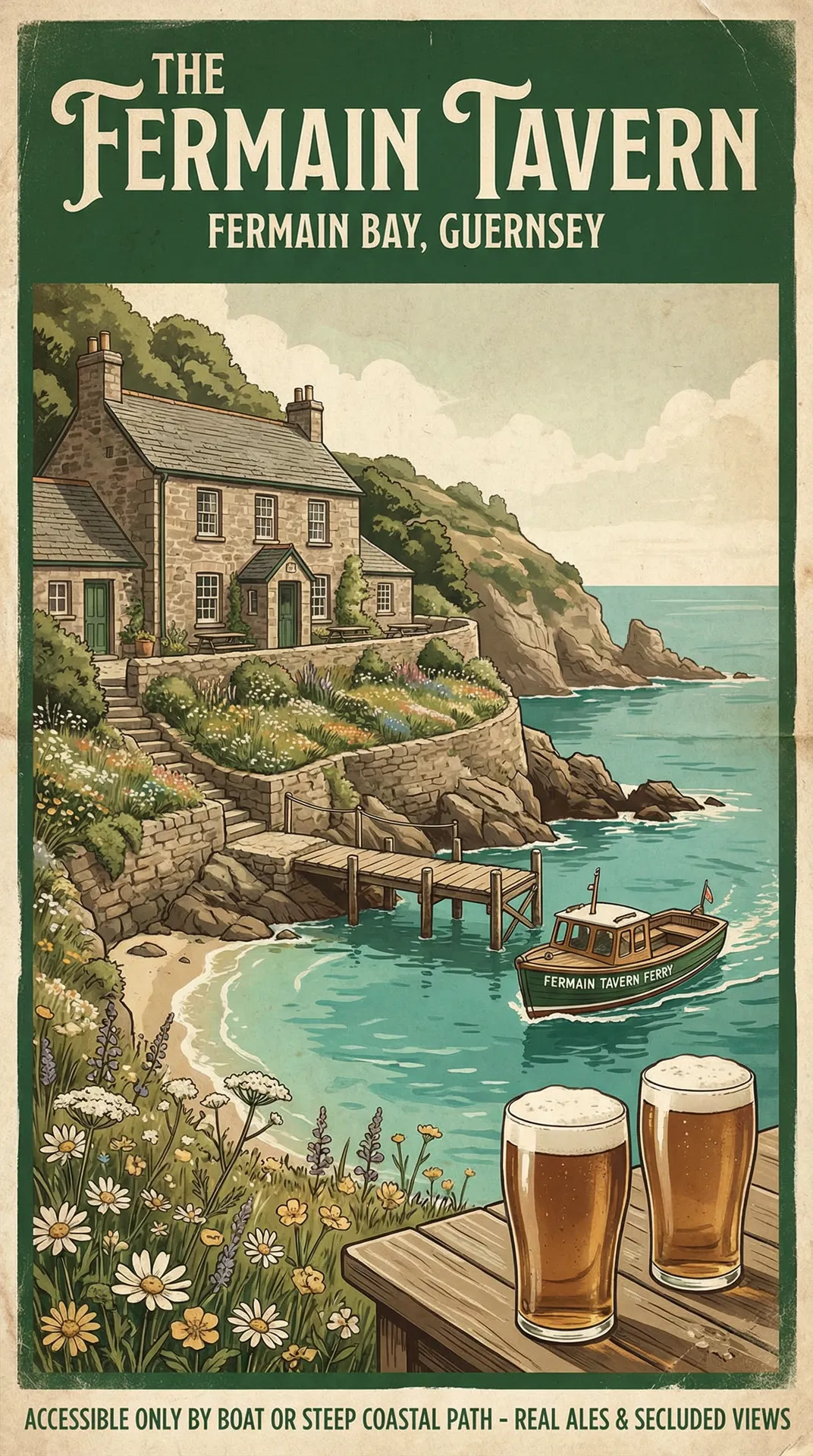
The Fermain Tavern
ISSUE 6

CLIFFSIDE PUB · FERMAIN BAY, GUERNSEY

The Fermain Tavern

"Only accessible by boat or on foot. Worth every step."

The most dramatic pub setting in the British Isles.

Advertise in Issue 6
ADVERTISE WITH JUST GERALD
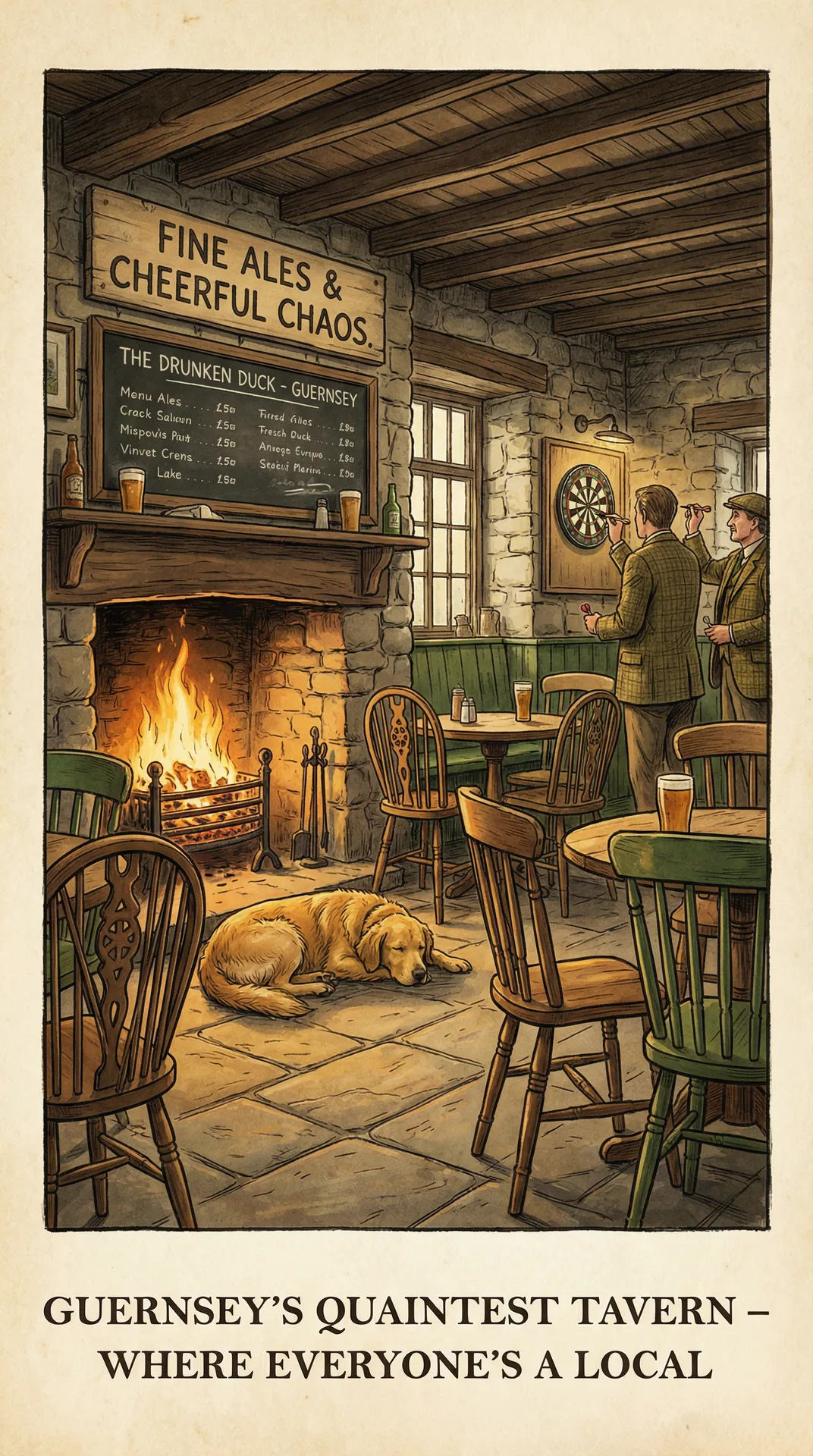
The Drunken Duck
ISSUE 6

TRADITIONAL PUB · GUERNSEY

The Drunken Duck

"Real ales. Real characters. Real Guernsey."

The pub your grandfather would have loved. And your dog.

Advertise in Issue 6
ADVERTISE WITH JUST GERALD
The Doghouse
ISSUE 6

LATE NIGHT BAR · ST PETER PORT, GUERNSEY

The Doghouse

"Late nights. Loud music. No apologies."

Every Best Day Ever needs a proper ending. This is it.

Advertise in Issue 6

Spec placements — contact [email protected] to claim your space

ADVENTURE6 min read

The Fermain Tavern: The Pub You Have to Earn

The cliffside pub you can only reach by boat or a very steep path.

There is a pub at the bottom of Fermain Bay that you can only reach by boat or by walking down a cliff path so steep it has handrails. Gerald took the path. He recommends the boat for the return journey.
The Fermain Tavern: The Pub You Have to Earn

Getting There

Fermain Bay is on the east coast of Guernsey, about two miles south of St Peter Port. There are two ways to reach the Fermain Tavern at the bottom of it. The first is the Castle Cornet ferry, a small boat that runs from the harbour in summer and drops you directly onto the beach. The second is the cliff path from the car park at the top, which descends through woodland and then open cliff face via a series of steps and handrails to the beach below. The path takes about twenty minutes. It is not difficult, but it is steep, and the return journey in the afternoon heat with a pint of local ale inside you is the kind of thing that builds character. Take the ferry down. Walk up. Or take the ferry both ways and pretend the path does not exist. No one will judge you.

The Bay

Fermain Bay is one of the most beautiful places in Guernsey, which is saying something on an island where beautiful places are not in short supply. The beach is small and pebbly and backed by wooded cliffs that come down to the water's edge. The sea here is the colour that Guernsey sea is always trying to be and occasionally achieves: a deep, clear blue-green that looks more Mediterranean than Channel Islands. The bay faces east, which means it catches the morning light and is in shade by mid-afternoon. Come in the morning. Bring a book. Stay for lunch.

The Tavern

The Fermain Tavern sits at the back of the beach in a building that has been serving food and drink to people who have made the journey down the cliff for longer than anyone currently working there can remember. It is not a gastropub. It is not trying to be anything other than what it is: a pub at the bottom of a cliff that serves cold beer, decent food, and the kind of welcome that comes from knowing that everyone who walks through the door has made a genuine effort to get there. The menu is straightforward: burgers, fish and chips, crab sandwiches, ice cream. The beer is cold. The view from the terrace is the bay, the sea, and the wooded cliffs on either side. It is, in the specific way that only pubs in extraordinary locations can be, perfect.

What to Order

Order the crab sandwich. It comes on white bread with butter and is made with Guernsey crab that was in the sea this morning. Order a pint of whatever is on tap. Sit on the terrace. Watch the boats come in and out of the bay. If you are there at lunchtime, order the fish and chips as well. If you are there in the morning, order a coffee and wait for the kitchen to open. The ice cream is made locally and is the correct way to end the meal. The Guernsey cream is the reason the ice cream is better than it would be anywhere else. This is not a complicated place. It does not need to be.

The Return

When you are ready to leave -- and you will not be ready for some time -- take the ferry back to St Peter Port if it is running. If it is not, take the cliff path. It is steep and it is warm and the handrails are there for a reason, but the view from the top, looking back down at the bay and the tavern and the sea, is the view that will make you understand why people come to Guernsey and do not leave. The ferry from Poole takes three and a half hours. The cliff path takes twenty minutes. Both journeys end at the same place. Both are worth it.
COFFEE5 min read

Coffee in Guernsey: The Flat White Field Guide

Where to find a proper flat white on an island that takes its coffee seriously.

Guernsey is a small island with a serious coffee culture. Here is where to find the good stuff, from the harbour-front flat white to the espresso at the top of the hill.
Coffee in Guernsey: The Flat White Field Guide

Why Guernsey Takes Coffee Seriously

The Channel Islands have always had an unusual relationship with the continent. Guernsey is closer to France than it is to England, and the French influence on the island's food and drink culture is real and persistent. The coffee is better than you would expect from a British island of sixty-three thousand people. The cafes are better. The pastries are better. This is not an accident. It is the result of being close enough to France to know what good coffee tastes like, and far enough from London to have developed your own version of it.

Avocado: The Morning Standard

Avocado on the Pollet is where the day begins in St Peter Port. It opens early, the coffee is properly made, and the full Guernsey breakfast -- eggs, local sausage, tomatoes from the island's greenhouses -- is the correct way to start a day of walking and castle-visiting. The flat white here is the benchmark against which all other flat whites on the island should be measured. It is made with milk from Guernsey cows, which have a higher fat content than mainland breeds, and the difference is noticeable. Order it. Sit by the window. Watch the harbour wake up.

Otto: Coffee with a View

Otto on Belle Greve Bay is primarily a restaurant, but the morning coffee service is worth knowing about. The espresso is Italian in the serious sense -- short, dark, with the kind of crema that suggests the machine has been properly calibrated and the beans have been properly sourced. The terrace tables look out over the sea wall, and drinking a coffee there in the morning before the town gets busy is one of the genuinely pleasurable things you can do in Guernsey. The breakfast pastries are made in-house and are the best on the island. Order the almond croissant. Order a second one. You are on holiday.

Cornerstone: The Mid-Morning Stop

Cornerstone on Cornet Street is primarily a pub and restaurant, but it serves coffee throughout the day and is the natural stopping point halfway up the hill to Hauteville House. The coffee is not the point here -- the point is the location, the history, and the fact that you are sitting in a building that has been part of St Peter Port since 1700. But the coffee is good enough to justify the stop, and the almond croissants from the baker two doors down can be eaten here without anyone objecting. This is the mid-morning stop. This is where you sit down, look at the cobblestones, and decide whether to continue up the hill or go back to the harbour for another flat white.

The Rule

The rule in Guernsey is the same as the rule everywhere: drink the coffee where the locals drink it, not where the signs say 'Best Coffee in Guernsey.' The best coffee in Guernsey is at Avocado on the Pollet, at Otto on Belle Greve Bay, and at the small bakery on Fountain Street that does not have a sign but has a queue every morning at eight o'clock. Join the queue. Order whatever they are making. Drink it standing up. This is the correct way to have coffee in Guernsey.
BEST DAY EVER5 min read

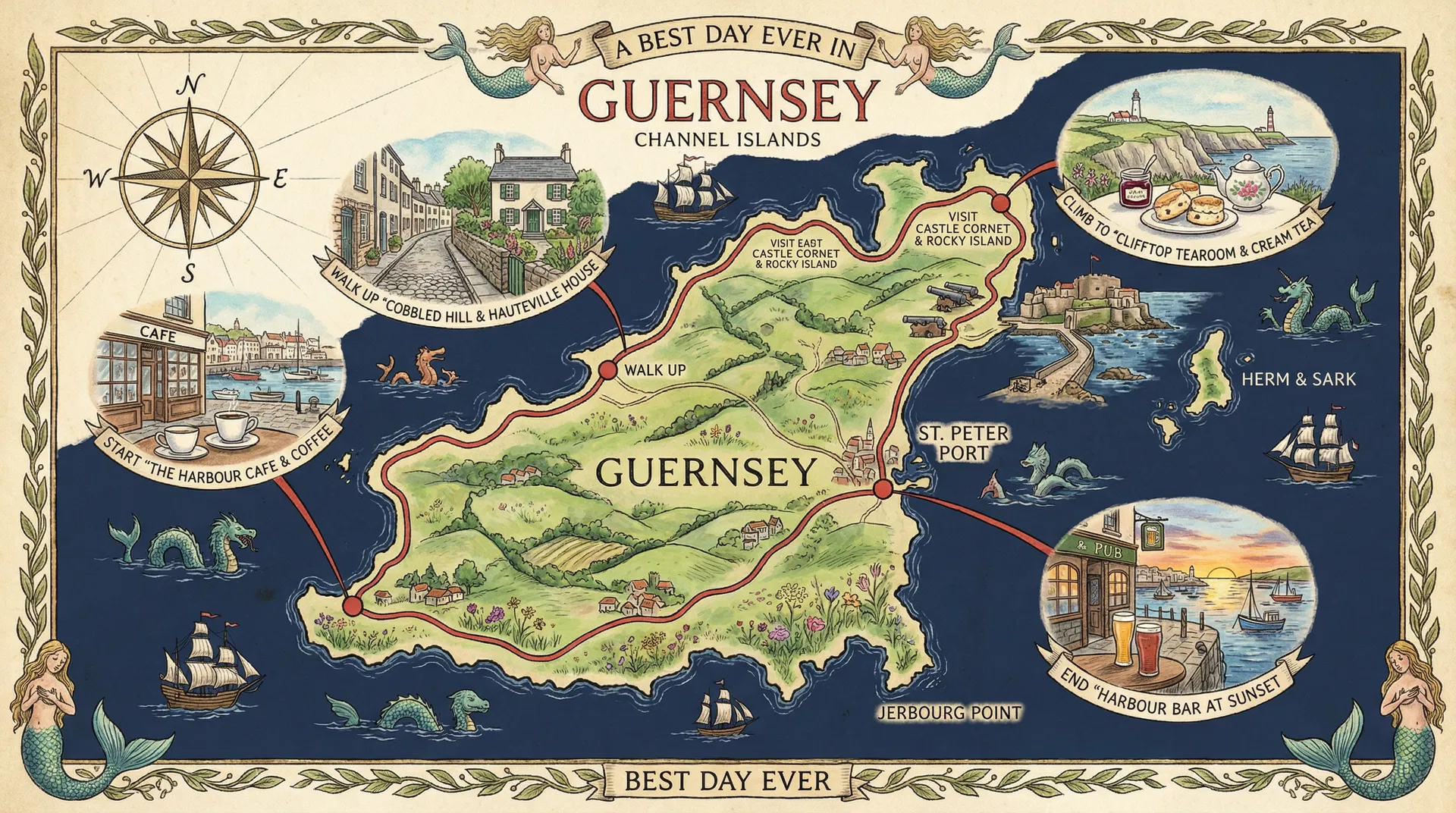
Best Day Ever: Guernsey

One perfect day in Guernsey. Gerald's definitive itinerary.

One perfect day in Guernsey, from the first coffee on the harbour to the last rum at Alba. Gerald's definitive itinerary.
Best Day Ever: Guernsey

7:30am: Coffee at Avocado

Start at Avocado on the Pollet before the town wakes up. Order a flat white and the full Guernsey breakfast. Eat it slowly. Look at the harbour. The ferries will not start arriving for another hour and the streets are still quiet. This is the best time to be in St Peter Port. The light on the water at this hour is the colour of weak tea and is, inexplicably, beautiful.

9:00am: The Uphill Climb

Walk up through the old town lanes. Take Cornet Street, then Le Pollet, then the steep steps that lead up past the Town Church. Stop at the baker on Fountain Street for an almond croissant. Continue up to Hauteville House. The tour starts at 10am. Book it the night before. Allow ninety minutes for the house and the garden.

11:30am: Candie Gardens

Descend through the Candie Gardens. Find the statue of Victor Hugo and take a photograph of him looking out to sea. Have a pot of tea and a scone with Guernsey cream at the cafe in the Victorian greenhouse. Do not rush this. The cream tea is the point.

1:00pm: Castle Cornet

Walk back down to the harbour and along the pier to Castle Cornet. Allow two hours minimum. See the occupation museum. Watch the noon gun if you timed it right. Walk the ramparts. Look back at St Peter Port from the castle and understand why the Governor held it for nine years. He was right. It is worth holding.

3:30pm: Jerbourg Point

Take a taxi or hire a bike to Jerbourg Point on the southeast tip of the island. The cliffs here are the highest in Guernsey and the views on a clear day extend to Jersey, Sark, and the coast of France. There is a coastal path that runs along the cliff edge. Walk it for as long as you want. Come back when you are ready.

6:00pm: Hook for Dinner

Return to St Peter Port and go directly to Hook on the North Esplanade. Order the crab linguine. Order a glass of Chablis. Watch the harbour lights come on as the sun goes down. Take your time. This is the meal of the day.

9:00pm: Alba Until Closing

Walk to Alba on the Esplanade. Order a daiquiri. Then an old fashioned. Then whatever the bartender recommends. Stay until the lights on Castle Cornet are the only lights on the water. This is the end of the best day ever in Guernsey. You will be back.

Just Gerald — Curated Itinerary

Your Best
Day Ever

Two paths through Best Days Ever: Guernsey. Every decision already made. Choose your day.

Solo / Couple

8:00am

Wake Up Right

The Old Government House Hotel — Ann's Place, St Peter Port, Guernsey

The former official residence of the Governor of Guernsey, now the finest hotel on the island. The Leopard Bar serves breakfast — order the full Guernsey breakfast with local black butter on toast.

Gerald says: Request a harbour-facing room. St Peter Port from above, at dawn, is the best view on the island.

9:30am

First Coffee

Cornerstone Café — La Plaiderie, St Peter Port, Guernsey

The best specialty coffee on the island. Single-origin espresso, excellent pastries, and a room full of locals who know what they're doing. Order a flat white and a croissant.

Gerald says: The almond croissant is the correct order. They sell out by 10am.

10:30am

Castle Cornet

Castle Cornet — St Peter Port Harbour, Guernsey

A 13th-century castle on a tidal island at the entrance to St Peter Port harbour. The noon gun fires every day at 12pm — stand on the ramparts for it.

Gerald says: The noon gun is the highlight. Time your visit to be on the ramparts at 11:55am.

1:00pm

Lunch

Hook — The Pollet, St Peter Port, Guernsey

Coal-fired seafood in a converted warehouse. The lobster is the correct order — Guernsey waters produce exceptional shellfish.

Gerald says: Book ahead. Hook fills up fast and they don't take walk-ins at lunch.

3:00pm

The Cliffs

Icart Point — Icart, St Martin, Guernsey

The highest point on the south coast of Guernsey. The cliff path from Icart Point to Moulin Huet Bay takes about an hour and offers the most dramatic coastal scenery on the island.

Gerald says: The path is well-marked but can be muddy after rain. Wear proper shoes.

6:00pm

Sundowners

Alba — The Pollet, St Peter Port, Guernsey

The best rum bar in the Channel Islands. The rum list runs to over 100 bottles. Order a rum old fashioned and sit at the bar.

Gerald says: Ask for the Barbancourt 15-year old fashioned. It's not on the menu but they'll make it.

8:00pm

Dinner

La Nautique — Quay Steps, St Peter Port, Guernsey

Fine dining on the water's edge. White tablecloths, harbour views, and Guernsey crab done properly. The tasting menu is the correct choice.

Gerald says: The Guernsey crab starter is the best thing on the menu. Order it regardless of what else you choose.

Travelling with children?

From the Newsstand

More Best Days Ever