IN THIS EDITION
— ADVERTISEMENT —
Editor's Letter: The South Has It
On sardines, sea caves, and the art of doing nothing properly
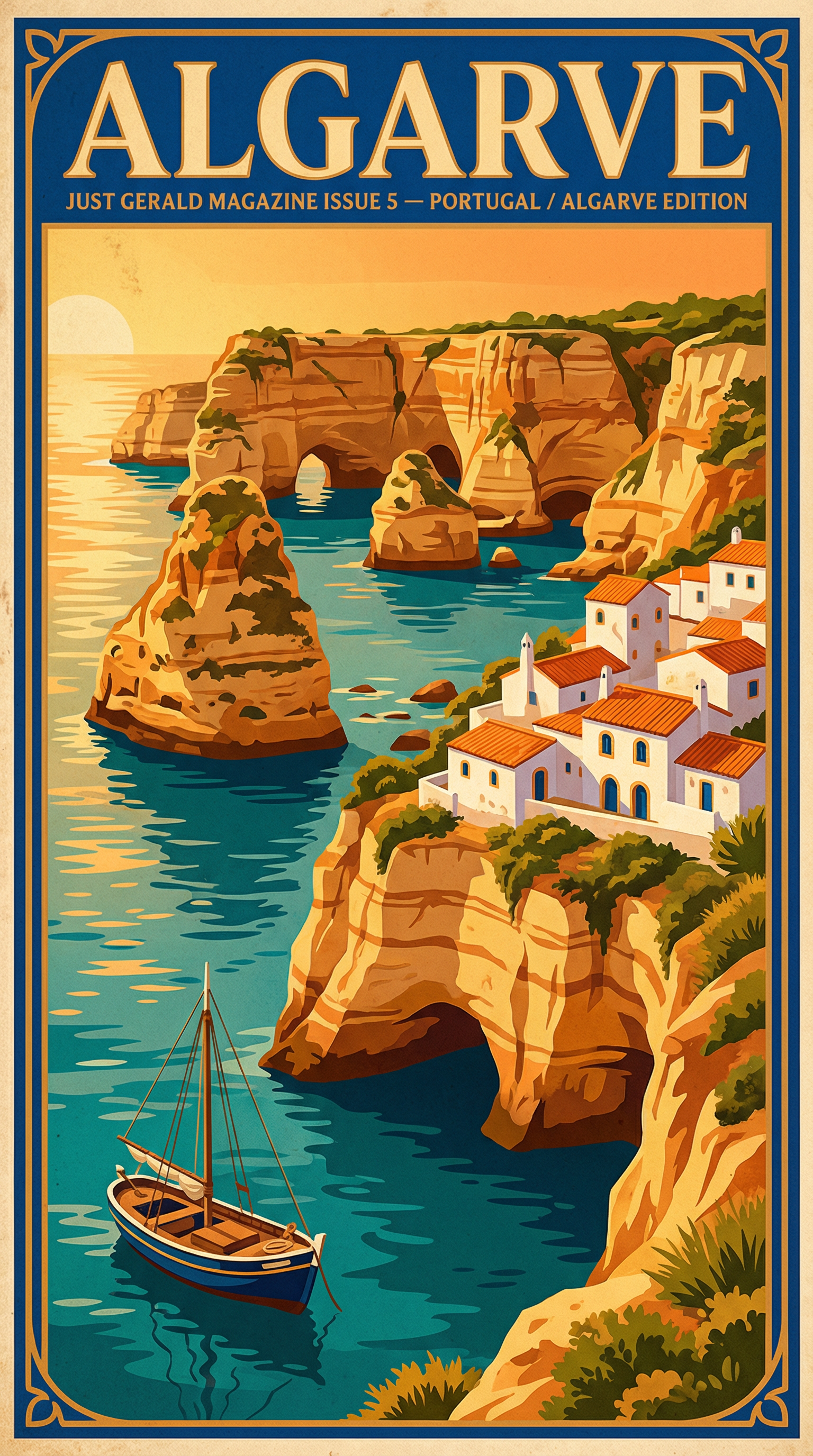
There is a particular quality of light in the Algarve that does something to your sense of urgency. It arrives around 8am, low and golden, and it hits the limestone cliffs at an angle that makes everything look like a painting you have seen before but cannot quite place.
From the Editor
"The Algarve does not demand your attention. It simply makes the case, quietly and without fuss, that this is where you should be."
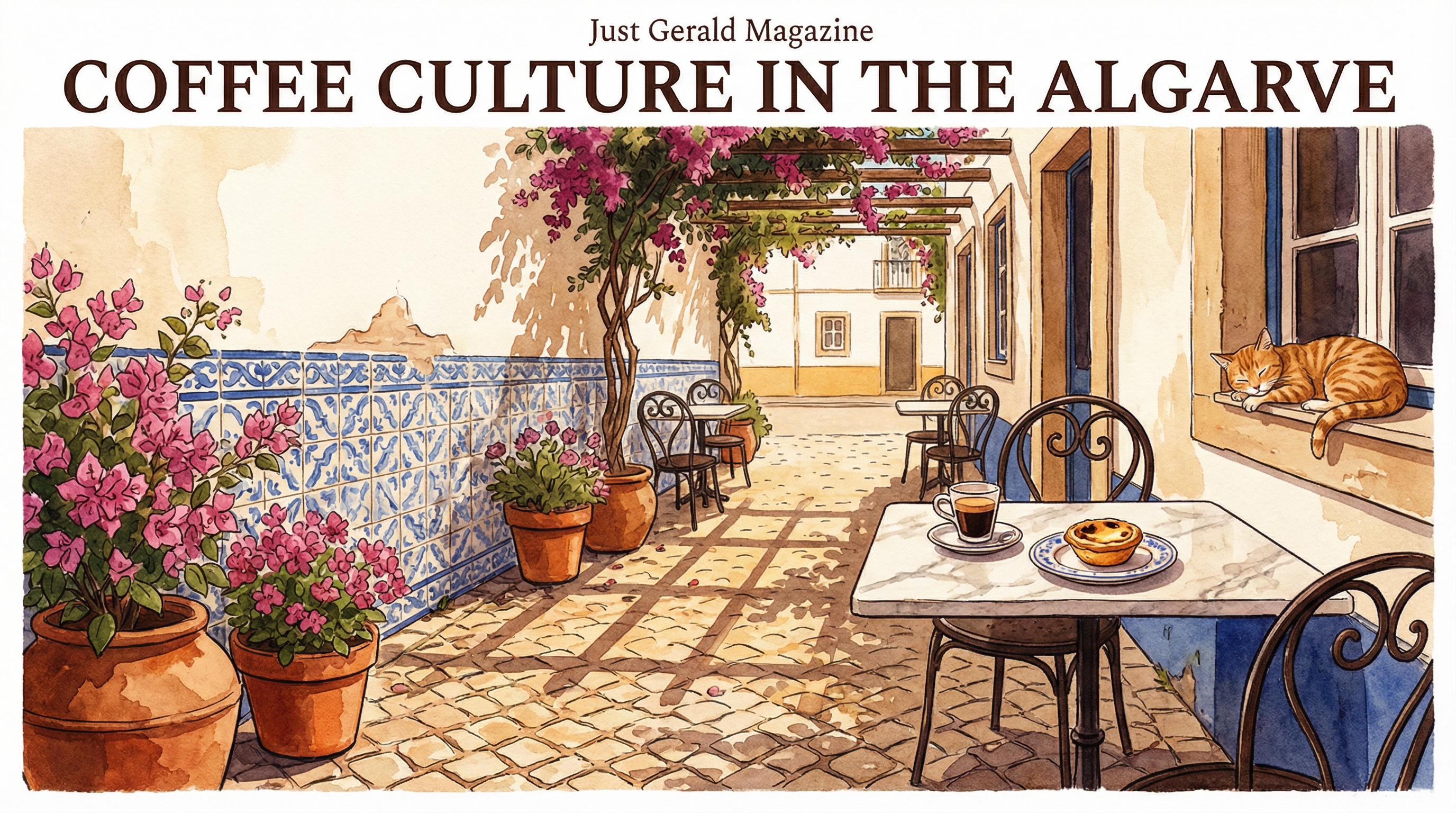
By 9am you are sitting at a marble table outside a pastelaria, a bica in one hand and a pastel de nata in the other, and the idea of being anywhere else seems genuinely absurd. This is the effect the Algarve has on people. It does not demand your attention the way some places do. It simply makes the case, quietly and without fuss, that this is where you should be.
Portimao is the anchor of this issue. It is a working city -- not a resort, not a theme park -- with a harbour that still smells of fish and a museum that was once a sardine cannery. It has beach bars that serve cocktails at sunset and restaurants where the fish arrived this morning. It has the kind of coffee culture that makes you reconsider everything you thought you knew about espresso.
We have written about the sardine legacy, the sea caves, the cocktail bars on the clifftops, and the best day you can possibly have if you start early and pace yourself. We have also written about the bica -- the Portuguese espresso that is, in our considered opinion, one of the great small pleasures of the known world.
The south has it. Come and see.
Issue 5 is live. Pack light. Start early. Order the sardines.
The Tin That Built a City
How the humble sardine turned Portimao into an industrial powerhouse -- and what remains
In 1891, two sardine canneries opened on the banks of the Rio Arade in Portimao. They were called Liberdade and Sao Jose, and they were the beginning of something that would define this city for the next ninety years.
The Factory That Changed Everything
"A skilled varina could clean and pack a sardine in under three seconds. On a good day, a factory might process fifty thousand fish."
By 1905, there were twenty-three canning factories operating along the Algarve coast. By the 1920s, Portimao was one of the most productive fishing ports in Europe. The sardine -- small, oily, abundant -- had turned a quiet riverside town into an industrial city.
The work was done almost entirely by women. They were called the varinas, the fish workers, and they arrived at the factories before dawn to clean, salt, and pack the sardines that the boats brought in overnight. They worked standing at long metal tables, their hands moving with a speed and precision that visitors found astonishing. A skilled varina could clean and pack a sardine in under three seconds. On a good day, a factory might process fifty thousand fish.
The Museum in the Old Cannery
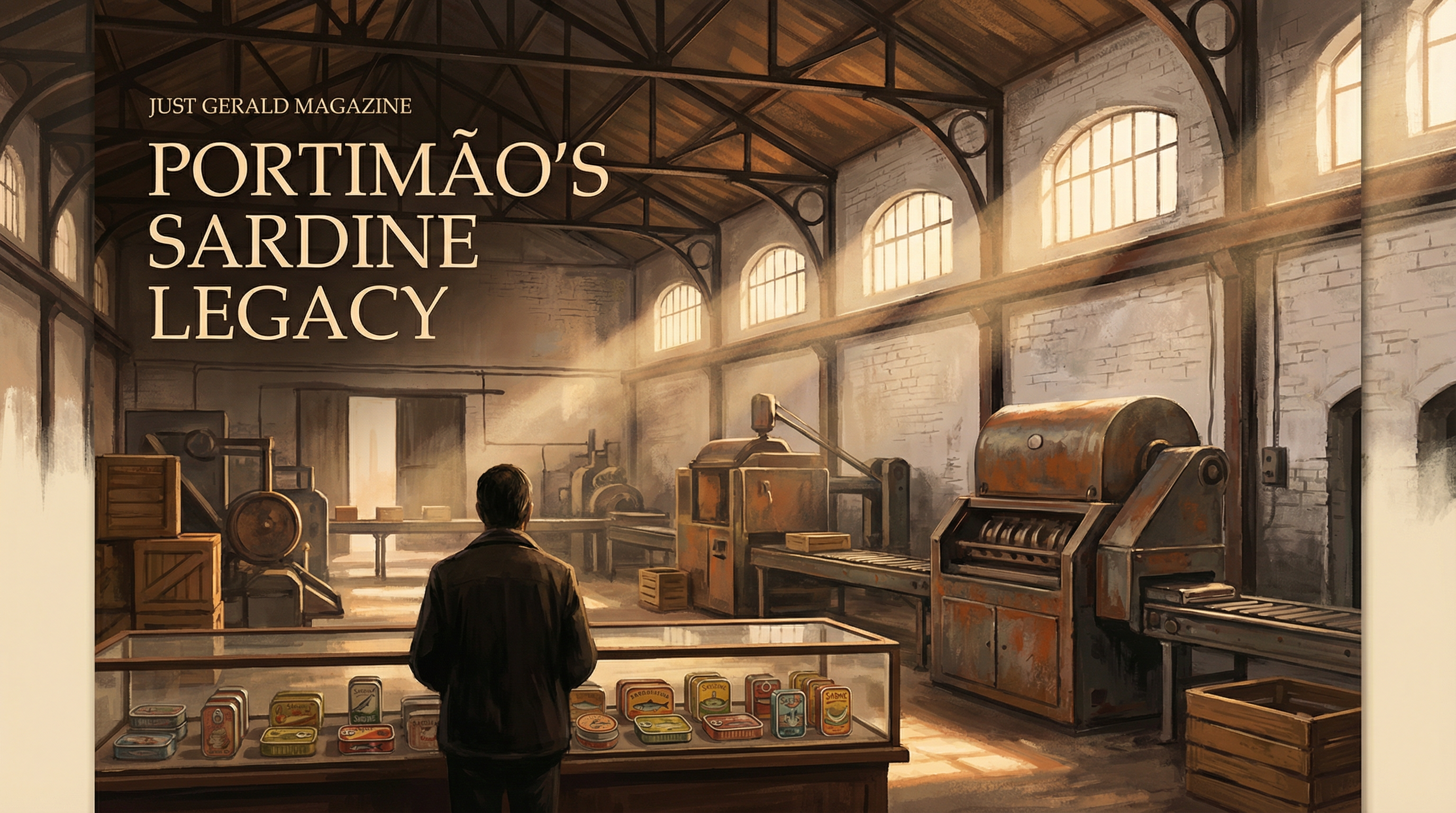
The last sardine cannery in Portimao closed in 1981. The Feu Hermanos factory, one of the oldest and largest, sat empty on the riverbank for twenty years before the city decided to do something unusual with it: turn it into a museum without removing anything.
The Museu de Portimao opened in 2008 and it is, without question, one of the best small museums in Portugal. The canning machinery is still in place -- the conveyor belts, the sealing presses, the sterilisation tanks -- and the museum has built its interpretation around it rather than replacing it. You walk through the factory floor as it was, with the machines frozen mid-process, and the effect is genuinely eerie. It feels less like a museum and more like a crime scene.
The exhibition begins with a 1946 film showing the full canning process from catch to tin. It is eleven minutes long and completely hypnotic. By the end of it you will understand, in a way that no amount of reading can convey, what it meant to work in one of these factories.
The Sardine Today
The sardine did not disappear when the factories closed. It simply changed form. Today, Portimao celebrates its sardine heritage with an annual Sardine Festival in August -- one of the largest in Portugal -- where the entire city smells of charcoal and the streets are lined with grills. The sardines are served the traditional way: whole, on a piece of bread to catch the juices, with a glass of cold Sagres.
The best place to eat sardines in Portimao is not a restaurant. It is any of the small tascas along the harbour front where the fishermen still bring their catch in the morning. Order the sardinhas assadas -- grilled sardines -- and ask for them with batatas cozidas (boiled potatoes) and a salad. The price will be less than you expect. The quality will be more than you deserve.
Visit the Museu de Portimao on a weekday morning. Allow two hours. Watch the 1946 film twice. Then walk to the harbour and eat sardines. This is the correct order of operations.
— ADVERTISEMENT —
The Bica: A Field Guide
On the Portuguese espresso, the pastelaria ritual, and why the Algarve does coffee differently
The bica is the Portuguese word for espresso, and it is not quite the same thing as the Italian original. It is served in a small ceramic cup, slightly larger than a ristretto, with a thin layer of crema on top.
What Is a Bica
"The Portuguese drink their bica with sugar, standing at the bar. This is the correct way to drink it."
It is brewed from a dark blend of Robusta and Arabica beans -- heavier on the Robusta than most Italian espressos -- which gives it a particular intensity and a slight bitterness that the Portuguese consider a virtue rather than a flaw.
The name is said to derive from the acronym BICA -- Beba Isto Com Acucar, meaning 'drink this with sugar' -- a sign allegedly posted above the espresso machine at the Brasileira cafe in Lisbon in the early twentieth century. Whether this is true or not, the Portuguese do drink their bica with sugar, and they drink it standing at the bar, which is the correct way to drink it.
In the Algarve, the bica is served everywhere: in pastelarias, in beach bars, in petrol stations, in the kind of small dark cafes that have not changed since 1975. The quality is remarkably consistent.
The Pastelaria Ritual
The correct context for a bica is a pastelaria -- a Portuguese pastry shop -- in the morning. The ritual is as follows: you stand at the counter, you order a bica and a pastel de nata (the custard tart that is Portugal's greatest contribution to the world), you add sugar to the coffee, you eat the tart in two bites, you drink the coffee in three sips, and you leave. The entire transaction takes less than five minutes and costs less than two euros.
This is not a place to sit and work on your laptop. This is not a place to have a meeting. This is a place to have a coffee and a pastry and then get on with your day. The Portuguese understand this, and they execute it with an efficiency and a pleasure that is quietly instructive.
Specialty Coffee in the Algarve
The specialty coffee movement has arrived in the Algarve, though it has arrived quietly and without the evangelical fervour that sometimes accompanies it elsewhere. In Lagos, Black and White Coffee Shop on Rua Marreiros Netto is widely regarded as the best specialty espresso in the region -- skilled baristas, single-origin beans, the kind of place where the coffee is taken seriously without being made into a performance.
Also in Lagos, Coffee and Waves on Travessa do Cotovelo combines specialty coffee with a surf shop, which sounds like a gimmick but is in fact a very sensible combination given the location. The coffee is excellent.
For those willing to drive, KOYO Speciality Coffees in Aljezur -- a small town on the west coast, about forty minutes from Portimao -- roasts its own beans in-house and is considered by serious coffee people to be the best in the Algarve. The drive through the Serra de Monchique hills to get there is itself worth the trip.
Start every morning in the Algarve with a bica and a pastel de nata at a local pastelaria. Stand at the bar. Add sugar. This is not negotiable. Save the specialty coffee for the afternoon, when you have earned it.
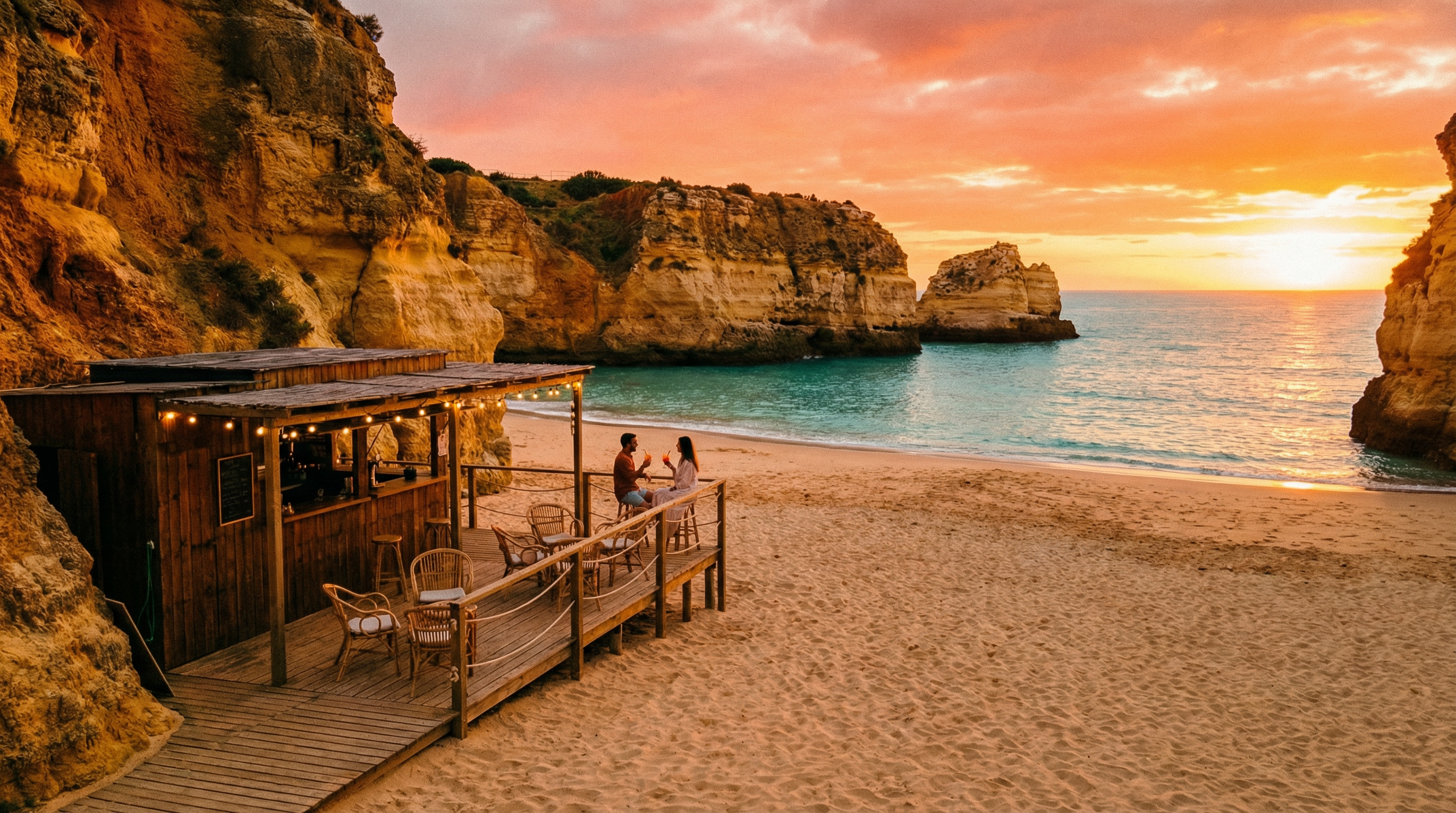
Sunset at the Edge of Europe
The best places to drink in Portimao -- from clifftop bars to harbour tascas
Praia da Rocha is Portimao's beach resort, a kilometre of golden sand backed by amber limestone cliffs and a promenade lined with bars, restaurants, and hotels. It is, in the high season, extremely busy. It is also, at the right time of day -- specifically, the hour before sunset -- one of the most beautiful places in Europe to have a drink.
NoSoloAgua: The Standout
"The sunset from Praia da Rocha is the kind of thing that makes you reach for your phone and then put it away again."
The bars along the Praia da Rocha promenade range from the excellent to the forgettable, and the trick is knowing which is which. The best approach is to walk the full length of the promenade in the late afternoon and look for two things: a terrace with an unobstructed view of the cliffs, and a bar that is making its own cocktails rather than opening bottles of Sagres.
NoSoloAgua, at the western end of the beach, is the standout. It operates as a beach club during the day and transitions into a cocktail bar as the sun drops. The signature drink is a Medronho Sour -- made with medronho, the Algarve's local firewater distilled from arbutus berries -- and it is the correct thing to order. The terrace is directly on the sand, the cliffs are directly in front of you, and the sunset, on a clear evening, is the kind of thing that makes you reach for your phone and then put it away again.
Club Nau: The Surprise
Club Nau at Praia Grande, a short drive west of Portimao, is the kind of place that does not look like much from the road but reveals itself completely once you are standing on its terrace. It is built into the clifftop above a small cove, with a view of the Atlantic that extends, on a clear day, to what feels like the edge of the world.
The cocktail list is longer than you expect and more considered than the setting suggests. The house speciality is a Gin Tonica -- the Portuguese gin and tonic, served in a large balloon glass with ice, cucumber, and a generous pour of premium gin -- which has become the national drink of Portugal in the last decade and is executed here with the seriousness it deserves.
The Harbour Tascas
"The medronho is the kind of thing that clarifies your thinking in a way that is either very useful or very dangerous, depending on the time of day."
The most honest drinking in Portimao happens not on the beach but in the harbour tascas -- the small, dark bars along the waterfront where the fishermen drink after work. These are not cocktail bars. They serve cold beer, cheap wine, and medronho in small glasses. The decor is functional. The conversation is in Portuguese.
They are also, without exception, excellent. The beer is cold, the wine is local and inexpensive, and the medronho -- if you are brave enough to order it -- is the kind of thing that clarifies your thinking in a way that is either very useful or very dangerous, depending on the time of day.
The best of these tascas are on Rua Judice Fialho, in the old town, and they open in the early evening and close when the last person leaves.
Order a Medronho Sour at NoSoloAgua at Praia da Rocha at 7pm. Watch the sunset. Then walk to the harbour and drink cold beer in a tasca. This will cost you less than thirty euros and it will be the best evening of your trip.
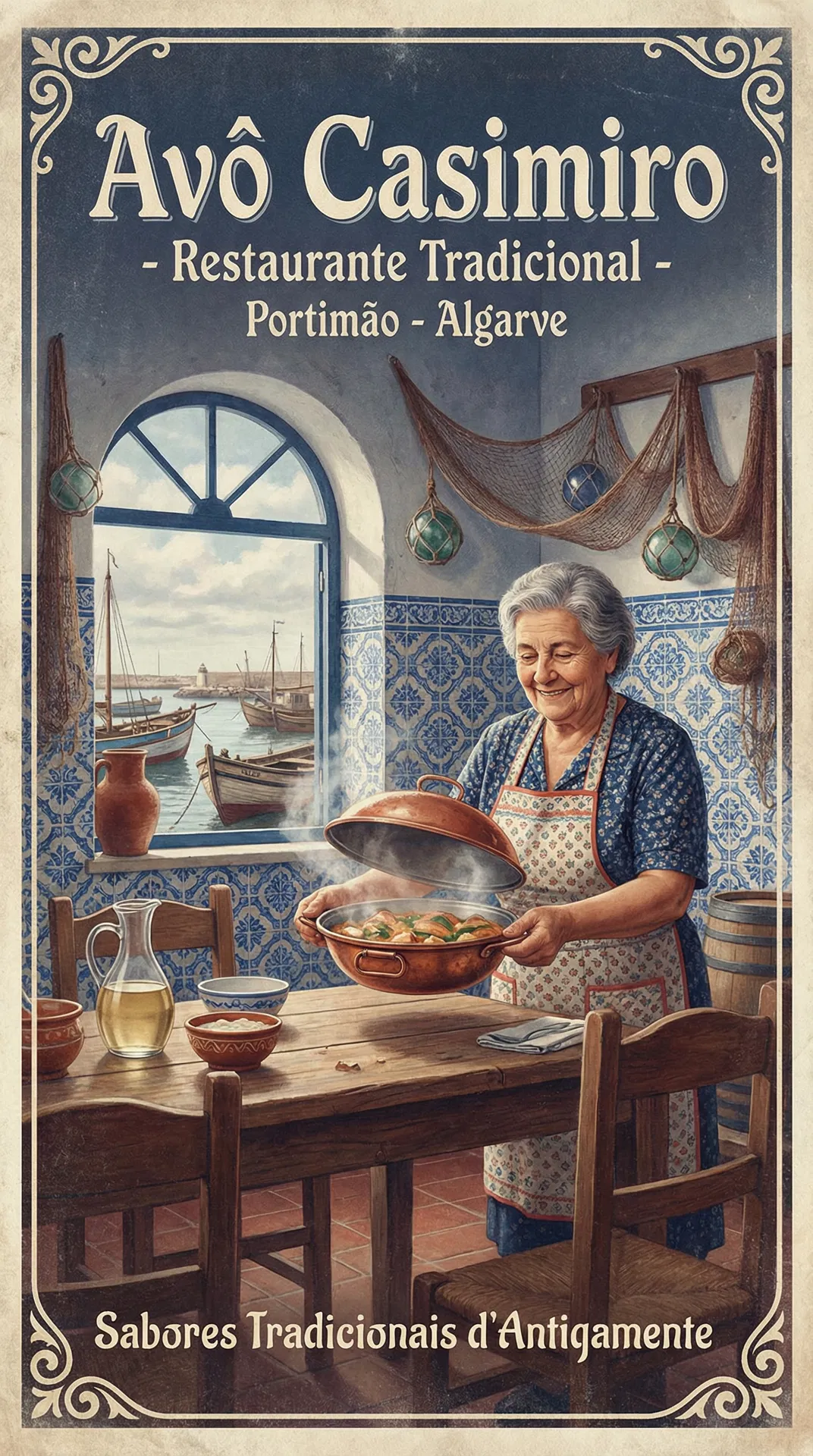
TRADITIONAL PORTUGUESE · PORTIMÃO, ALGARVE
Avô Casimiro
"Grandmother's kitchen. Grandfather's wine list."
The cataplana here will ruin you for all other cataplanas. Permanently.
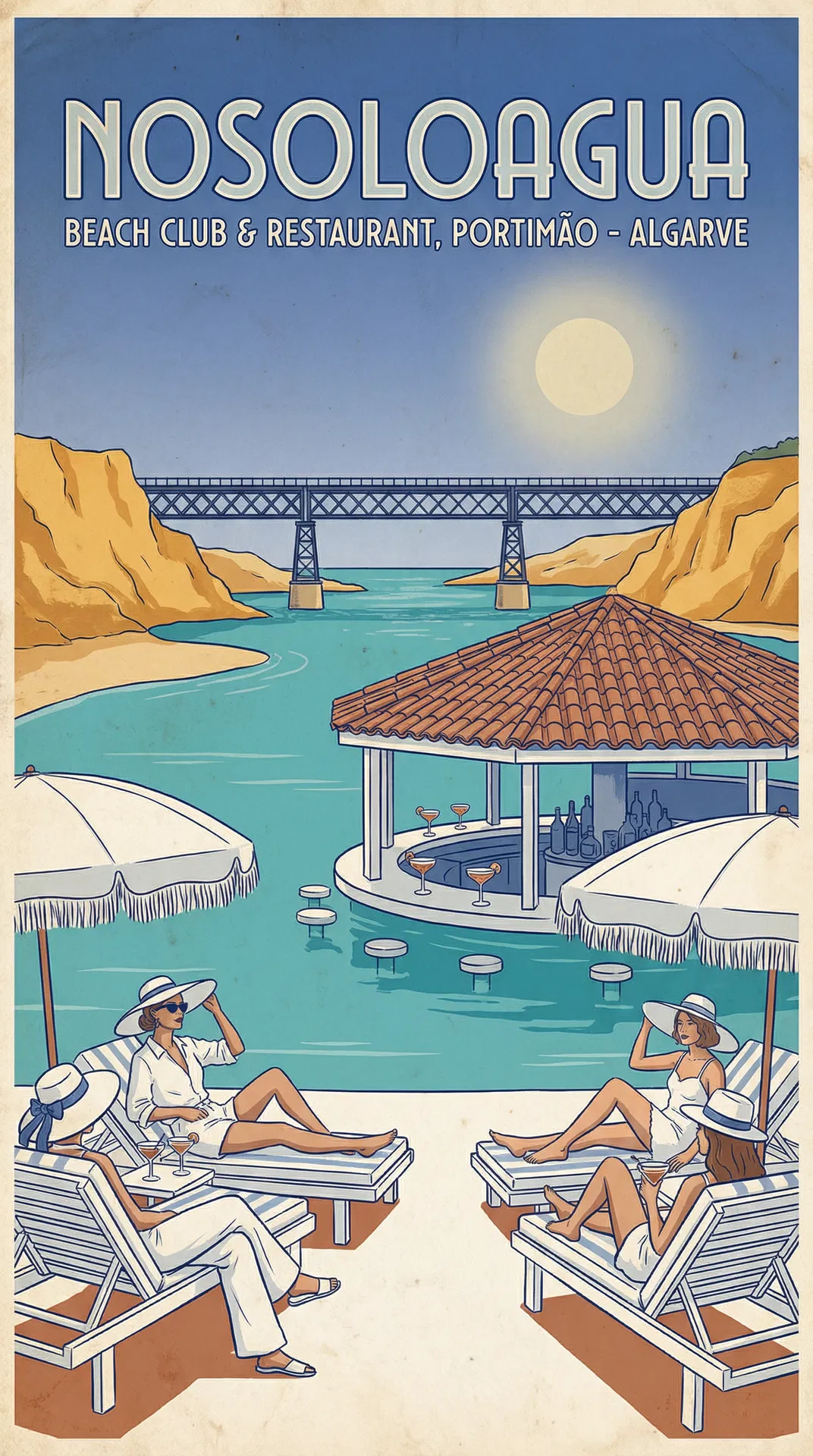
BEACH CLUB & RESTAURANT · PORTIMÃO, ALGARVE
NoSoloÁgua
"Not just water. Not just a bar."
The Arade River's most glamorous address.
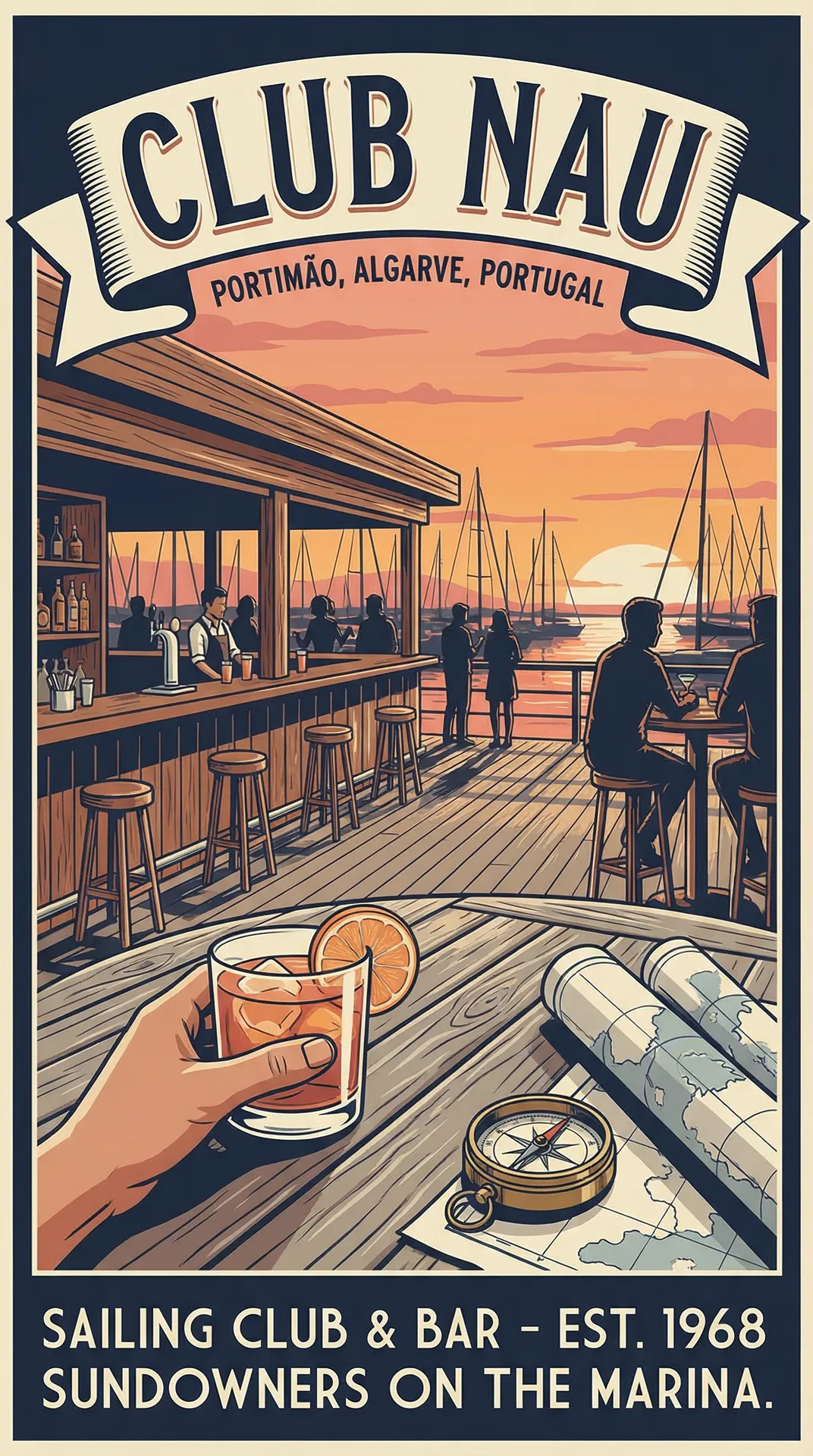
SAILING CLUB & BAR · PORTIMÃO, ALGARVE
Club Nau
"Sundowners on the marina since 1968."
The Negroni tastes better when you're watching sailboats.
Spec placements — contact [email protected] to claim your space
Eat the Algarve
From grilled sardines on the harbour to the best cataplana in the region
The cataplana is the defining dish of the Algarve, and it is named after the copper clam-shaped vessel in which it is cooked. The vessel is sealed and placed over heat, creating a steam environment that concentrates the flavours of whatever is inside.
The Cataplana: Start Here
"The cataplana de marisco serves two, takes twenty minutes to prepare, and is the best thing you will eat in the Algarve."
Typically the vessel contains clams, prawns, chorizo, tomato, onion, garlic, and white wine, though the variations are endless. The result is a broth of extraordinary depth and a collection of seafood that has been cooked to exactly the right point: the clams open, the prawns are just firm, the chorizo has released its fat into the sauce. It is served at the table in the cataplana itself, which is opened with a flourish that is entirely justified by what is inside.
The best cataplana in Portimao is at Avô Casimiro, a family restaurant in the old town that has been serving the same menu for thirty years. The cataplana de marisco -- seafood cataplana -- is the thing to order. It serves two, it takes twenty minutes to prepare, and it is the best thing you will eat in the Algarve.
Avô Casimiro: The Essential
Avô Casimiro translates as 'Grandfather Casimiro,' and the restaurant has the atmosphere of a place that has been feeding the same families for generations. The decor is simple -- tiled walls, wooden tables, fishing nets on the ceiling -- and the menu is focused on the kind of traditional Algarvian cooking that has largely disappeared from the tourist restaurants along the coast.
Beyond the cataplana, the arroz de linguado (sole rice) is exceptional -- a wet, soupy rice cooked with whole sole and finished with olive oil and coriander. The bacalhau a bras (salt cod with eggs and potato crisps) is the best version of this dish we have eaten outside of Lisbon.
The Harbour Restaurants
The restaurants along the Portimao harbour front vary enormously in quality, and the tourist menus in English are generally a reliable indicator of what to avoid. The rule is simple: if there is a photograph of the food on the menu, keep walking.
The exceptions are the small tascas at the eastern end of the harbour, near the fish market, where the menus are in Portuguese and the fish was swimming this morning. Order the peixe grelhado -- grilled fish -- and ask what is fresh. The answer will be whatever the boats brought in that morning, and it will be cooked simply: whole fish on a charcoal grill, served with boiled potatoes, salad, and olive oil.
The Sardine Festival
If you are in Portimao in August, the Sardine Festival is not optional. It runs for three days in the city centre, with grills set up on every street corner and the smell of charcoal and sardines permeating the entire city. The sardines are sold by the dozen, served on bread, with cold beer. The crowds are enormous. The atmosphere is genuinely festive in a way that is not manufactured for tourists.
The festival has been running for decades and it is, at its core, a celebration of the city's fishing heritage. It is also, more practically, an opportunity to eat very good sardines for very little money while standing in the street with several thousand other people who are doing the same thing.
Eat at Avô Casimiro on your first night. Order the cataplana de marisco. Book in advance. On your second night, find a harbour tasca with no English menu and order the grilled fish. These two meals will define your understanding of Algarvian cooking.
Into the Rock
The sea caves of the Algarve coast -- and why the boat trip from Portimao is the best day you will have this year
The Algarve coastline is made of limestone -- specifically, a soft, ochre-coloured limestone that has been carved by the Atlantic over millions of years into an extraordinary landscape of arches, stacks, caves, and grottos.
The Geology
"The colour of the water inside the caves has no equivalent in any other context. You will try to describe it to people when you get home and you will fail."
The most dramatic section runs from Portimao west to Sagres, a stretch of about forty kilometres that includes some of the most photographed coastal scenery in Europe. The caves are the result of the sea exploiting weaknesses in the rock -- faults and fractures that the waves have widened over time into tunnels and chambers. Some are accessible only by boat. Others can be reached on foot at low tide.
The colour of the water inside the caves is the thing that photographs cannot adequately convey. It is a particular shade of turquoise -- lit from below by the sand and from above by the sky -- that has no equivalent in any other context. You will try to describe it to people when you get home and you will fail.
The Boat Trip
The standard way to see the caves is by boat, and the standard departure point is the Portimao harbour. The trips run from April to October, take between ninety minutes and three hours depending on how far west you go, and cost between fifteen and thirty euros per person.
The boats are small -- typically six to twelve passengers -- and they are driven by local fishermen who know every cave and arch on the coast. They will take you inside the caves, cut the engine, and let you sit in the silence while the turquoise water laps against the walls. They will also, if you ask, take you to the beaches that are only accessible by sea.
The best time to go is early morning, before the wind picks up and before the other boats arrive. Book the first departure of the day and you will have the caves largely to yourself.
Ponta da Piedade
Ponta da Piedade, outside Lagos, is the most spectacular section of the Algarve coast and the destination for the longer boat trips from Portimao. The headland is a labyrinth of golden rock towers, arches, and sea stacks rising from the water, with caves and grottos cut into the base of the cliffs.
The boat trip from Portimao to Ponta da Piedade and back takes about three hours. It is not a comfortable three hours -- the Atlantic swell can be significant -- but it is one of the most visually extraordinary experiences available in southern Europe. Bring sunscreen, a hat, and a willingness to be slightly damp.
Book the first boat departure from Portimao harbour. Go early, go west, and go inside the caves. This is the best thing you will do in the Algarve. The sardines are a close second.
TRADITIONAL PORTUGUESE · PORTIMÃO, ALGARVE
Avô Casimiro
"Grandmother's kitchen. Grandfather's wine list."
The cataplana here will ruin you for all other cataplanas. Permanently.
BEACH CLUB & RESTAURANT · PORTIMÃO, ALGARVE
NoSoloÁgua
"Not just water. Not just a bar."
The Arade River's most glamorous address.
SAILING CLUB & BAR · PORTIMÃO, ALGARVE
Club Nau
"Sundowners on the marina since 1968."
The Negroni tastes better when you're watching sailboats.
Spec placements — contact [email protected] to claim your space
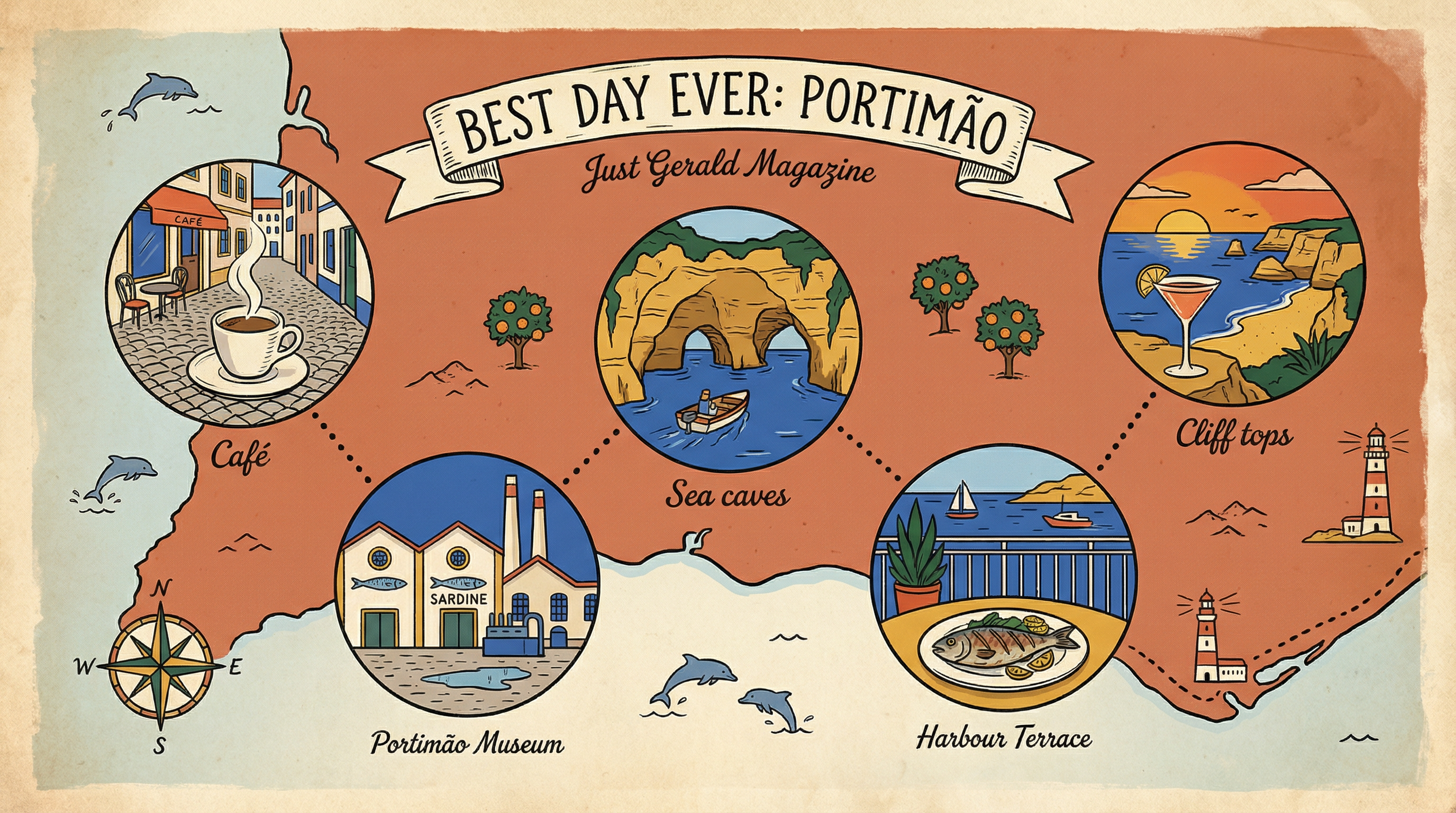
Best Day Ever: Portimao
From the first bica to the last medronho -- a complete day in Portimao, done properly
This is a full day in Portimao, done properly. Start early. Pace yourself. The third medronho is inadvisable but, in our experience, inevitable.
7:30am -- The Bica
Start at a pastelaria in the old town, not on the tourist strip. Order a bica and a pastel de nata. Stand at the bar. Add sugar to the coffee. Eat the tart in two bites. Drink the coffee in three sips. Pay less than two euros. Walk to the harbour.
The harbour at this hour is the best version of Portimao: the fishing boats are coming in, the market is opening, the city is waking up at its own pace. Walk the full length of the waterfront and watch the morning happen.
9:00am -- The Museum
The Museu de Portimao opens at 10am on most days. Arrive at opening to beat the tour groups. Allow two hours. Watch the 1946 sardine canning film in the basement -- it runs on a loop and it is eleven minutes of genuine industrial history. Walk the factory floor with the machines in place.
When you leave, you will understand Portimao in a way that no amount of beach time can provide.
12:00pm -- The Boat
"The caves at midday have a particular quality of light that photographs cannot convey."
Book the noon departure from the harbour for a sea cave tour. The trips run to Ponta da Piedade and back, about three hours, with stops inside the caves and at a beach accessible only by sea. Bring sunscreen and a hat. The water is cold but swimmable from June onwards.
The caves at midday have a particular quality of light -- the sun is high enough to illuminate the turquoise water from above -- that is different from the morning. Both are worth seeing. If you can only do one, do the morning.
3:00pm -- The Sardines
After the boat, you will be hungry. Walk to the harbour tascas at the eastern end of the waterfront, near the fish market. Find one with a handwritten menu in Portuguese and no photographs. Order the sardinhas assadas -- grilled sardines -- with batatas cozidas and salad. Order a cold Sagres.
Eat outside if possible. The sardines will arrive whole, on a piece of bread to catch the juices. Eat them with your hands. This is correct.
5:00pm -- The Cliffs
Drive or take a taxi to Praia da Rocha. Walk the full length of the promenade to the western end. Find NoSoloAgua. Order a Medronho Sour. Sit on the terrace and watch the sun drop toward the Atlantic.
The sunset from Praia da Rocha, with the amber cliffs on either side and the ocean in front, is the kind of thing that makes you understand why people come to the Algarve and do not leave.
8:00pm -- The Cataplana
Book Avô Casimiro in the old town for 8pm. Order the cataplana de marisco for two. Order a bottle of Alentejo white wine -- ask for something local and not too expensive. The cataplana will take twenty minutes to arrive. Use the time to drink the wine and eat bread with olive oil.
When the cataplana arrives and is opened at the table, the smell alone is worth the trip.
10:30pm -- The Medronho
"The third medronho is inadvisable but, in our experience, inevitable."
After dinner, walk to one of the harbour tascas and order a medronho. It will be served in a small glass, room temperature, and it will taste of arbutus berries and fire. Drink it slowly. Order another if you feel it is appropriate.
This is the correct end to a day in Portimao. The third medronho is inadvisable but, in our experience, inevitable.
This is the best day you can have in Portimao. It costs less than you expect. It will be better than you imagine. Start early.
West of Everything
The drive from Portimao to Sagres -- the end of the world, done at the right speed
The drive from Portimao to Sagres is fifty kilometres. On the N125, the main coastal road, it takes about forty-five minutes. On the smaller roads that hug the coastline, it takes as long as you want it to.
The Route
The correct approach is to take the coastal route and stop everywhere. The Algarve west of Portimao is a different landscape from the resort coast to the east: wilder, emptier, with fewer hotels and more of the raw limestone scenery that makes this coast extraordinary. The beaches are harder to reach and therefore less crowded. The villages are smaller and less oriented toward tourism.
Lagos: The First Stop
"The Igreja de Santo Antonio is covered floor to ceiling in gilded baroque woodcarving. It is one of the most extraordinary interiors in Portugal."
Lagos is twenty kilometres west of Portimao and it is the most beautiful town on the Algarve coast. The old town is enclosed by medieval walls, the streets are cobbled, and the Igreja de Santo Antonio -- an eighteenth-century church covered floor to ceiling in gilded baroque woodcarving -- is one of the most extraordinary interiors in Portugal.
Have a coffee at Black and White Coffee Shop on Rua Marreiros Netto. Walk to Ponta da Piedade. Look at the sea stacks. Take the steps down to the water if the tide is out. Then get back in the car and drive west.
Sagres: The End
Sagres is at the southwestern tip of Portugal, and it has the atmosphere of a place that knows it is at the edge of something. The Fortaleza de Sagres -- a fortress built on the clifftop by Henry the Navigator in the fifteenth century, from which the Portuguese Age of Discovery was planned and launched -- is the most historically significant site in the Algarve.
The wind at Sagres is constant and strong. The cliffs are vertical and the sea below them is the colour of deep water. The light is different from the rest of the Algarve -- harder, cleaner, more northern -- because you are, in fact, at the point where the Mediterranean climate ends and the Atlantic begins.
Have lunch at one of the small restaurants in the village. Order the fish. Drive back along the coast as the sun drops. Stop at every viewpoint.
Leave Portimao at 9am. Stop in Lagos for coffee. Drive to Sagres for lunch. Take the coastal road back. Stop everywhere. This is a full day and it is one of the best drives in Europe.
Just Gerald — Curated Itinerary
Your Best
Day Ever
Two paths through Best Days Ever: Portimão & the Algarve. Every decision already made. Choose your day.
8:00am
Wake Up Right
Bela Vista Hotel & Spa — Av. Tomás Cabreira, Praia da Rocha, Portimão
A converted early 20th-century manor house on the cliff above Praia da Rocha. The breakfast terrace faces the Atlantic. Order the local cheese, the smoked ham, and a galão. Watch the light change on the water.
Gerald says: Request a sea-facing room. The cliff-top position means the sunrise comes straight through the window.
9:30am
First Coffee
Pastelaria Garrett — Rua Direita 34, Portimão
The oldest pastelaria in Portimão. Order a bica and a pastel de nata. Stand at the counter like the locals do. This is the correct way to start a Portuguese morning.
Gerald says: The pastel de nata here is made fresh each morning. If you arrive before 10am, they'll still be warm.
10:30am
The Sea Caves
Algar Seco — Carvoeiro — Algar Seco, Carvoeiro, Lagoa
The most dramatic coastline in the Algarve. The rock formations at Algar Seco are accessible on foot — the natural pools, the sea arches, the ochre cliffs dropping into the Atlantic.
Gerald says: Go early. By midday in summer the path is crowded. The light is also better in the morning.
1:00pm
Lunch
Restaurante O Barão — Rua João de Deus 12, Portimão
The sardines at O Barão are the reason you came to Portimão. Coal-grilled, served with boiled potatoes and salad, eaten outside at a plastic table with a cold Sagres. This is not a restaurant. It's a ritual.
Gerald says: Order the sardines. Don't overthink it. Order the sardines.
3:30pm
The Beach
Praia de Marinha — Praia de Marinha, Lagoa
Consistently rated one of the best beaches in Europe. The beach is sheltered by the rock formations on three sides. The water is cold and clear.
Gerald says: The snorkelling around the rock formations is exceptional. Bring a mask.
6:30pm
Sundowners
NoSoloAgua — Av. Tomás Cabreira, Praia da Rocha, Portimão
The beach bar on Praia da Rocha with the best sunset view in Portimão. Order a gin tónica — the Portuguese way, with a large glass, plenty of ice, and a slice of lime.
Gerald says: The Hendrick's with elderflower tonic is the correct order. Ask for it.
8:30pm
Dinner
Avocasimiro — Rua Direita 26, Portimão
The best wine bar in Portimão. Natural wines, small plates, and a list of Portuguese producers that would impress any sommelier. The octopus carpaccio is exceptional.
Gerald says: Ask the staff what they're drinking tonight. They always have something interesting open.
Travelling with children?
More Best Days Ever

MOUNTAIN BIKING IN WHISTLER

SKIING IN WHISTLER

NORTH SHORE & SUNSHINE COAST
MONACO GRAND PRIX
GUERNSEY

THE LOUVRE, PARIS

A DAY WITH ROB STONER

THE LOUVRE WITH KIDS

THE ICEFIELDS PARKWAY
ROUTE DES GRANDES ALPES
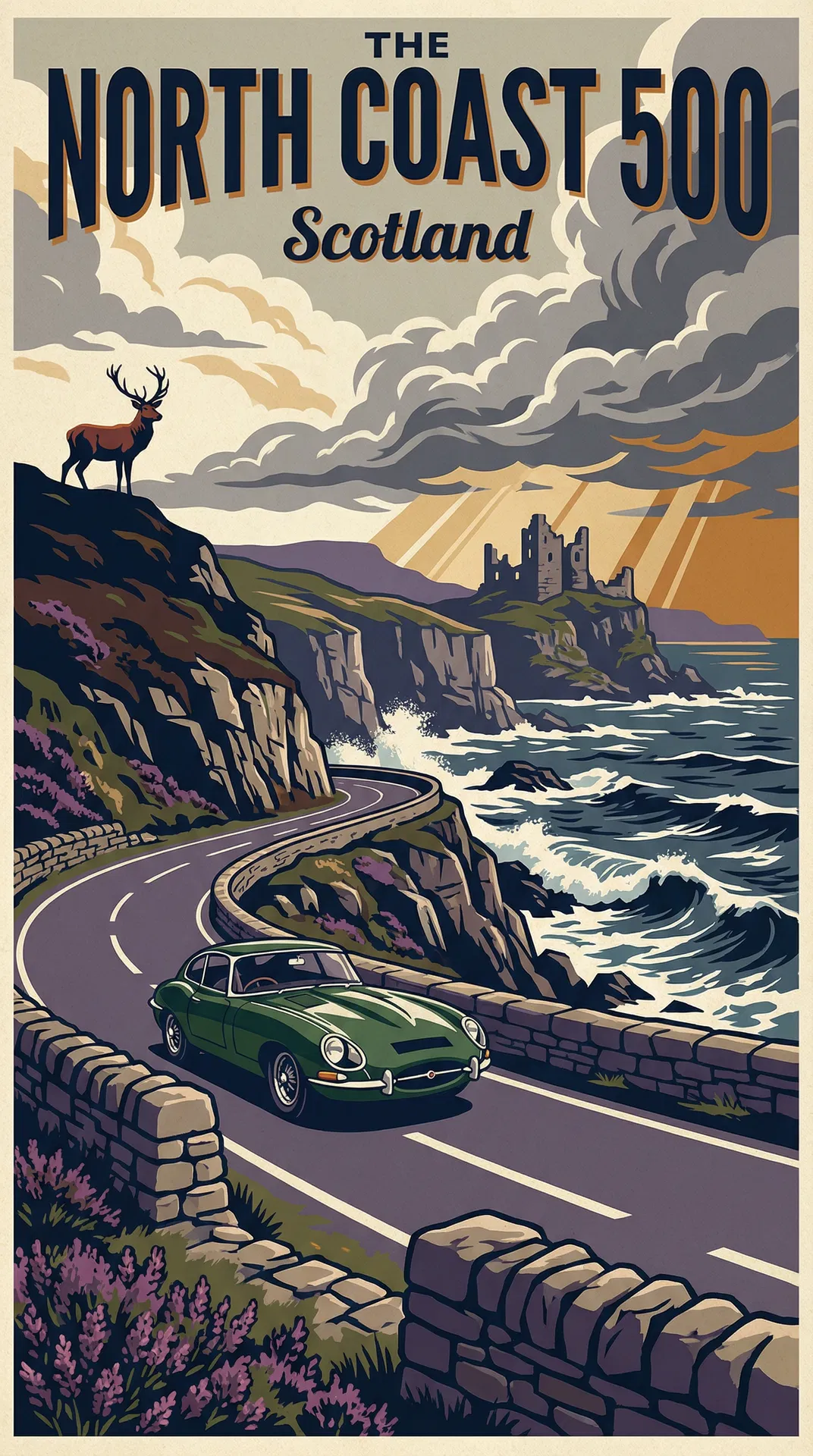
THE NORTH COAST 500
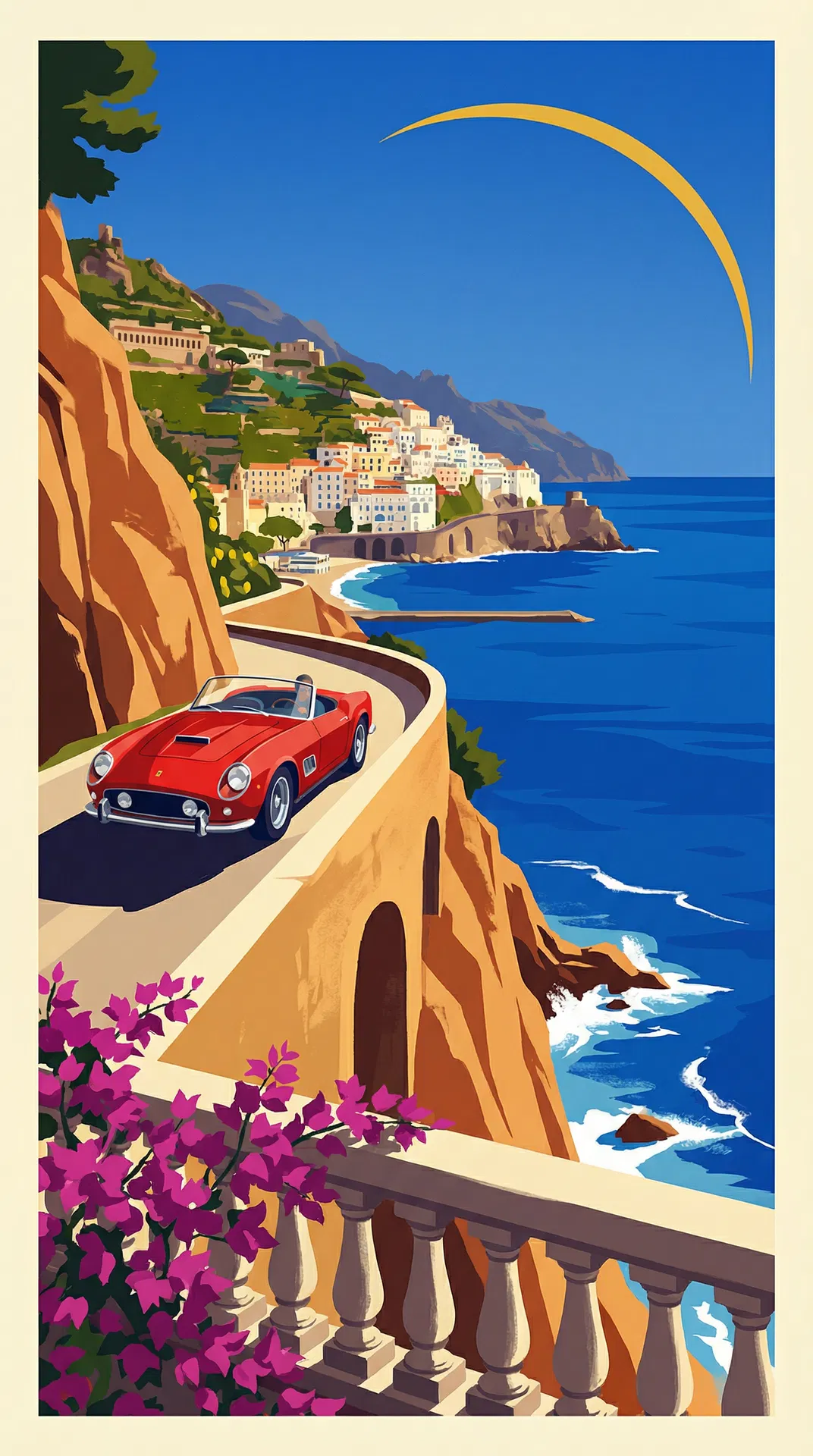
AMALFI COAST

VANCOUVER ISLAND