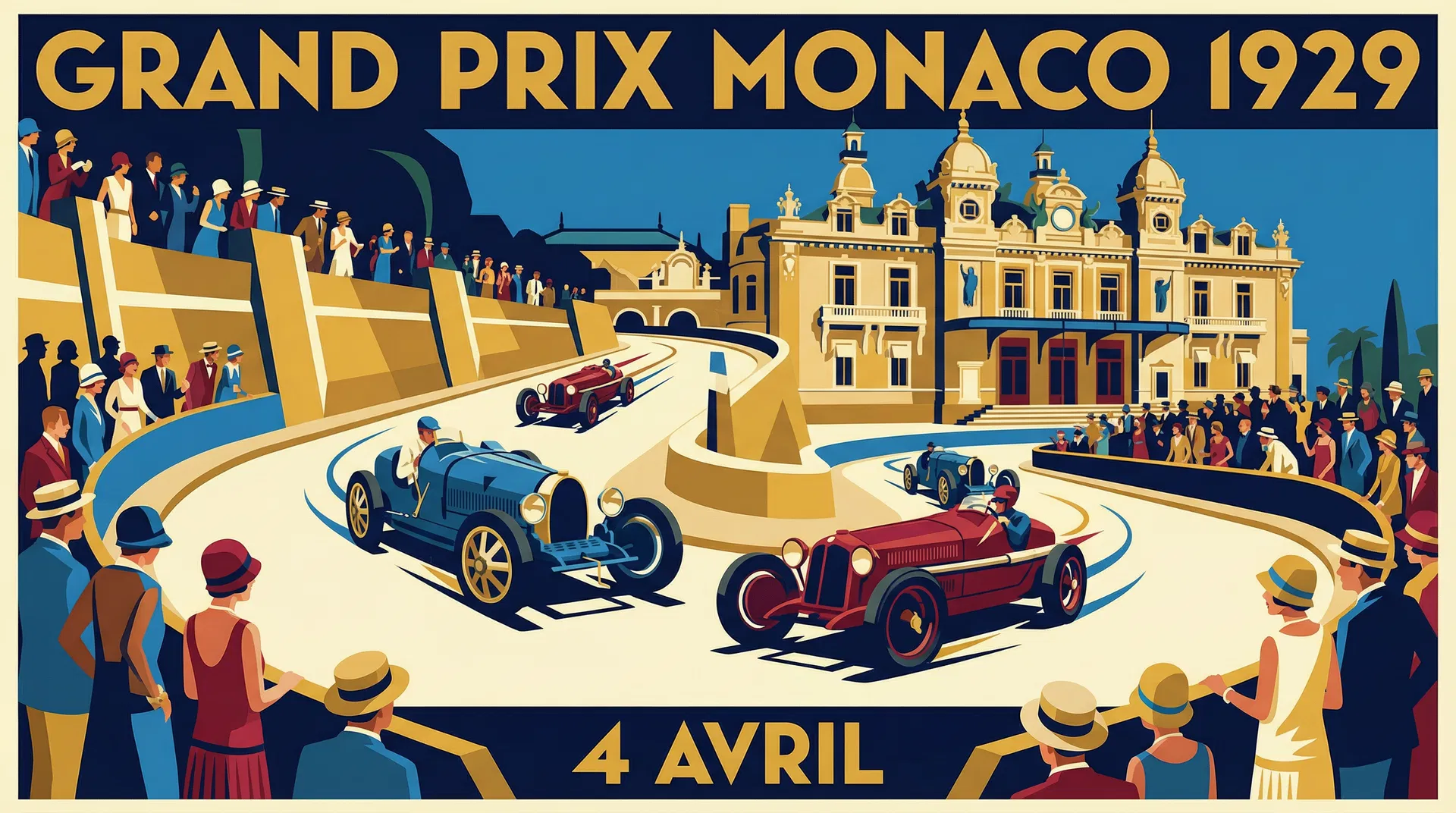
THE RACE THAT STARTED EVERYTHING: MONACO GRAND PRIX, 1929
On April 14, 1929, twenty cars lined up on a cobblestone street in Monaco. The world of motorsport was never the same.
Field Notes
There was no qualifying. The starting positions were drawn by lot. Twenty drivers -- some of the finest racing talents in the world, and a few who had no business being there -- lined up on a cobblestone street in the middle of Monaco.
01
THE IDEA THAT ALMOST DIDN'T HAPPEN
The Monaco Grand Prix was the idea of one man: Antony Noghès, the General Commissioner of the Automobile Club de Monaco. He had been watching the Monte Carlo Rally -- which his own father had helped found in 1911 -- bring thousands of spectators to the principality every January, and he thought: what if we ran a proper Grand Prix here? On the streets. Through the city. Around the harbour.
The Automobile Club de Monaco agreed. Prince Louis II gave his blessing. And on April 14, 1929, it happened. The circuit was 3.18 kilometres of public road -- essentially the same layout used today, which is either a tribute to Noghès's genius or evidence that Monaco hasn't changed much in a century, depending on your perspective.
There was no qualifying. The starting positions were drawn by lot. Twenty drivers -- some of the finest racing talents in the world, and a few who had no business being there -- lined up on a cobblestone street in the middle of Monaco. The flag dropped at 1:30pm.
ADVERTISEMENT
JUST GERALD MAGAZINE
Coffee 'til Cocktails — Bottled and Bound
02
THE BUGATTI AND THE MAN WHO DROVE IT
William Charles Frederick Grover was born in Paris in 1903 to a British father and a French mother, which made him the kind of person who belonged everywhere and nowhere simultaneously. He raced under the pseudonym "W. Williams" -- partly for privacy, partly because it sounded better on a race programme. He had started as a chauffeur to a British painter, who lent him a car to race. He was good enough that Ettore Bugatti himself noticed, and signed him as a works driver.
His car for the 1929 Monaco Grand Prix was a Bugatti Type 35B -- a machine that is, by any measure, one of the most beautiful racing cars ever built. The Type 35 was the product of Ettore Bugatti's obsession with lightness: the engine and gearbox housing were aluminium, the wheels were cast aluminium with integrated brake drums, the body was a narrow, elegant teardrop of French blue. The supercharged 2.3-litre eight-cylinder engine produced 140 horsepower and weighed 750 kilograms. It had won over 2,000 races in the 1920s. It was, in Bugatti's own estimation, not just a racing car but a work of art.
Grover started fifth after the draw. By lap three he was third. By lap twenty he was leading. He pitted on lap 49 -- a mandatory stop that handed the lead briefly to Rudolf Caracciola in a Mercedes SSK -- but came back out with better grip on the hot asphalt and pulled away. After 100 laps and 318 kilometres, he crossed the finish line first. His fastest lap was 2 minutes 15 seconds, an average speed of 84.8 km/h. It was, by the standards of the time, sensational.
"The Bugatti Type 35B was not just a racing car. Ettore Bugatti called it a work of art. He wasn't wrong."
03
THE FIELD BEHIND HIM
Second place went to Georges Bouriano in another Bugatti Type 35C. Third was Caracciola, who would go on to become one of the greatest drivers of the pre-war era -- three European Championship titles, five German Grand Prix victories, a man who drove in conditions that would have sent modern drivers back to the garage.
The rest of the field was a roll call of the era's finest talent. Philippe Étancelin, who had taken pole position. Louis Chiron, the Monégasque driver who was Grover's business partner in a car dealership and who would win Monaco himself in 1931. Tazio Nuvolari, the Italian who Ferdinand Porsche would later call "the greatest driver of the past, the present, and the future" -- a man so committed to speed that he once raced with a broken leg, and who won the 1932 Monaco Grand Prix in an Alfa Romeo Monza.
The cars themselves were a spectacle. The Bugattis in French blue. The Alfa Romeos in Italian red -- the Scuderia Ferrari cars, run by a young Enzo Ferrari who was still a team manager rather than a manufacturer. The Mercedes in silver. The Maseratis. The Delages. All of them open-cockpit, all of them with drum brakes, all of them driven by men in linen shirts and leather helmets through streets that were not designed for racing at any speed, let alone 140 horsepower.
— ADVERTISEMENT —

04
THE MAN WHO DIED A HERO
William Grover-Williams won Monaco again in 1930 and 1931. He continued racing until the late 1930s, when the world changed in ways that made Grand Prix racing seem beside the point.
When the Second World War began, Grover moved to Britain and joined the Special Operations Executive -- the SOE, Churchill's "Ministry of Ungentlemanly Warfare." He was parachuted into occupied France near Le Mans, where he helped organise one of the most effective resistance networks in the country. He was arrested by the Gestapo in 1943. He was executed at Sachsenhausen concentration camp in 1945, weeks before the American liberation.
A statue of Grover-Williams now stands at the first corner of the Monaco circuit -- the Sainte-Dévote corner, named for the patron saint of Monaco. He is depicted in his Bugatti, goggles up, looking ahead. It is a good likeness. He deserved better than the end he got.
The 1929 Monaco Grand Prix was the beginning of something that has lasted nearly a century. The circuit is still there. The cobblestones are still there. The hairpin at the Grand Hotel is still the tightest corner in Formula 1. And somewhere in the Automobile Club de Monaco's archives, there is a programme from April 14, 1929, with the name "W. Williams" listed at car number 12.
THE VERDICT
The 1929 Monaco Grand Prix is the founding document of modern motorsport. Walk the circuit. Find the statue. Remember the man.
Keep Reading
MORE FROM MONACO
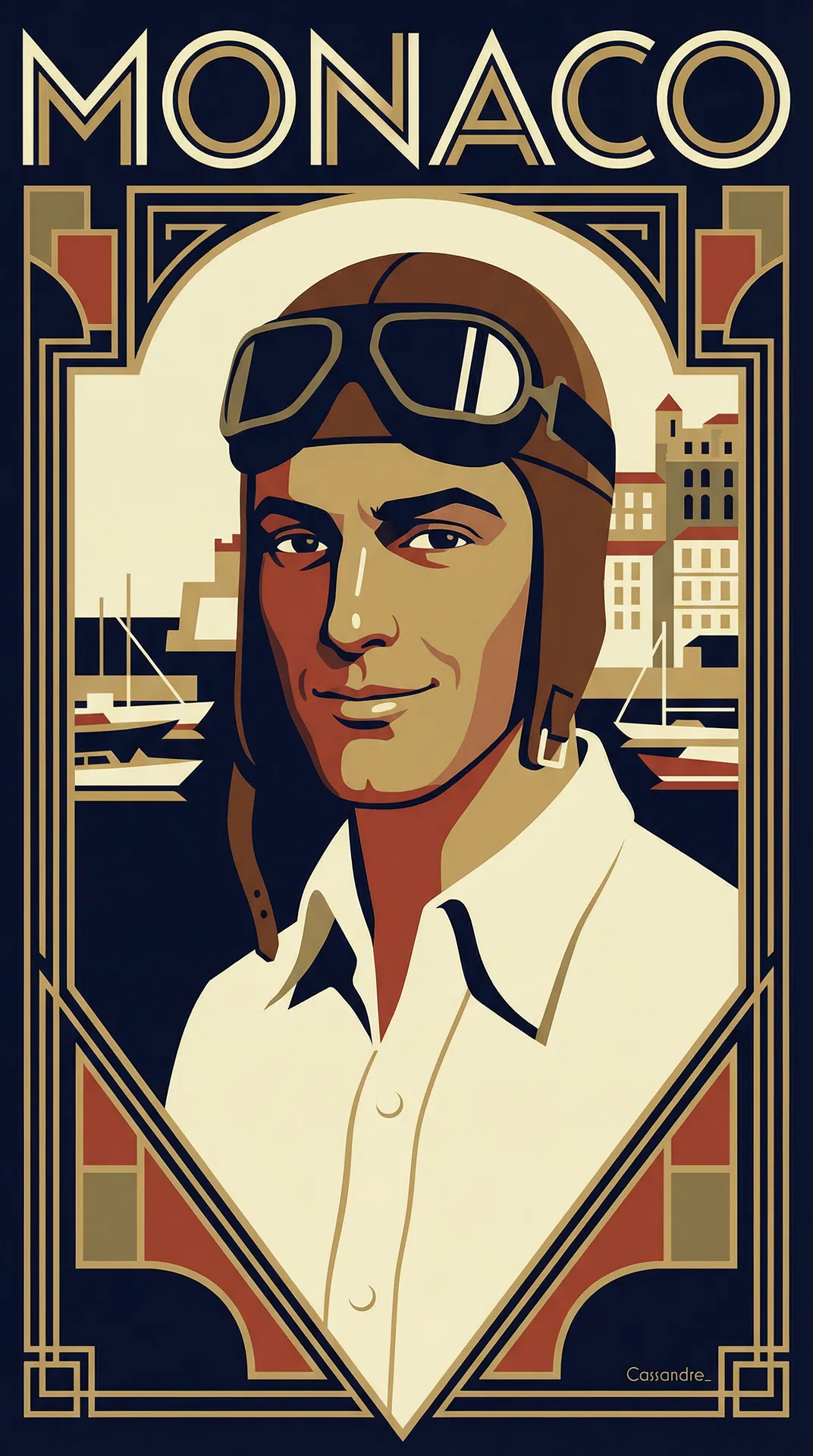
THE BEAUTIFUL MACHINES: ART DECO RACING CARS OF THE 1930S
Before aerodynamics became a science, racing cars were designed by artists. The …
THE LONG ROAD TO MONTE CARLO: A HISTORY OF THE RALLY
Since 1911, drivers have been setting out from the far corners of Europe -- thro…
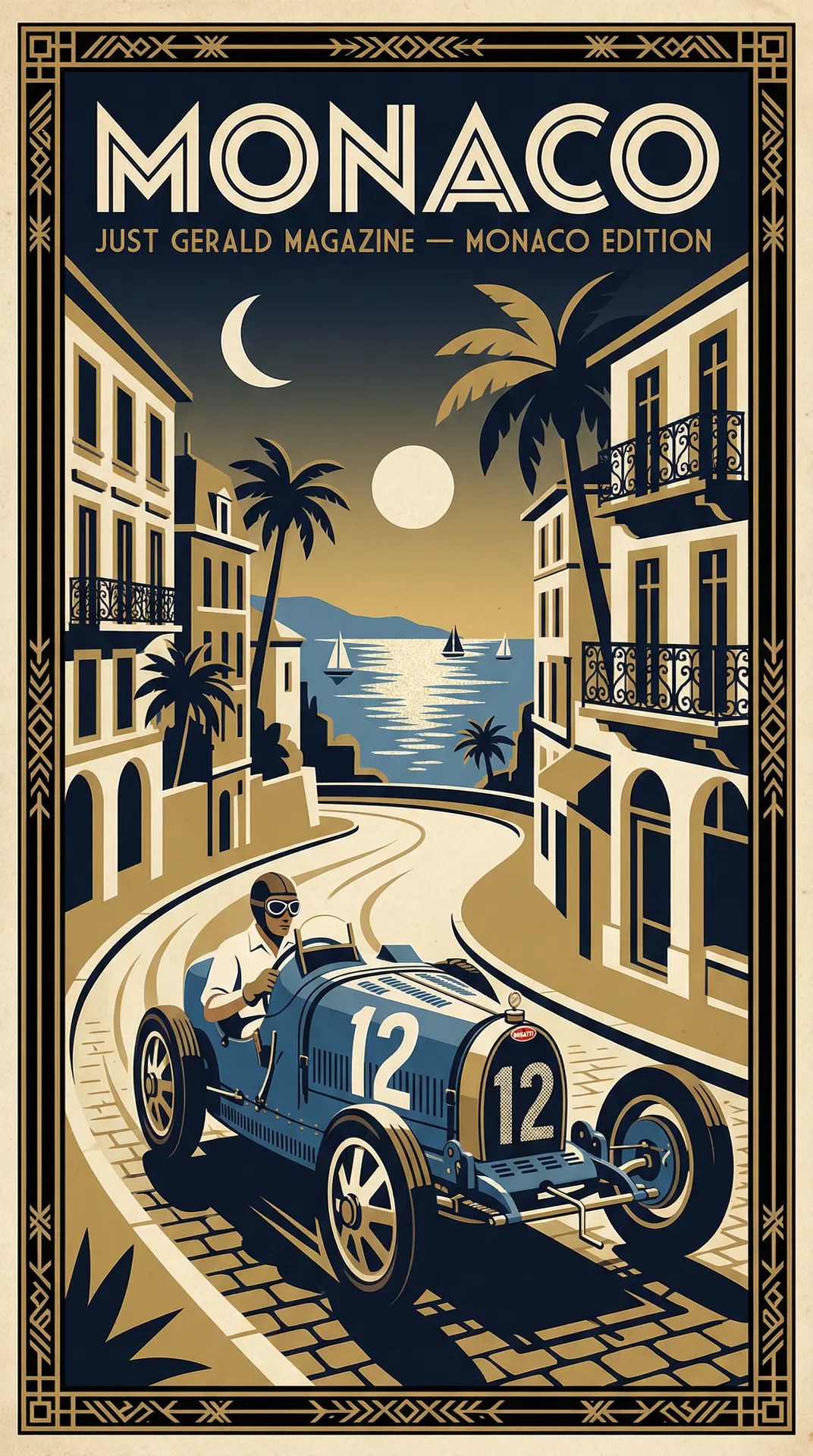
EDITOR'S LETTER: THE SMALLEST COUNTRY WITH THE BIGGEST STORY
Welcome to Monaco -- where the hairpins are tighter, the cocktails are colder, a…