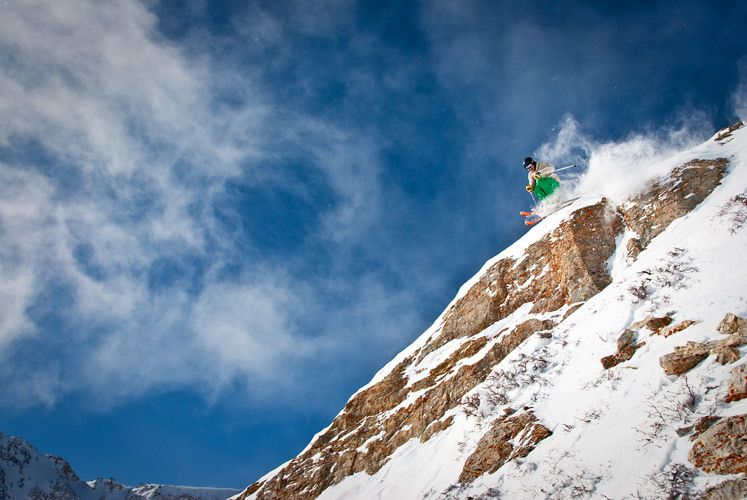
Vancouver, British Columbia
Tony Hoare
Adventure photographer. Athlete. A Hoare through and through.
By Gerald
March 2026 · Featured Artist
There are people you know distantly who, when you look closely at what they have actually done with their lives, leave you quietly astonished. Tony Hoare is one of those people. We share a family name and a loose thread of lineage — the kind that makes you nod at each other across a room and feel a vague, warm recognition without quite being able to place it. But when I sat down to look at his work properly, I stopped nodding and started paying attention.
Tony Hoare is an adventure sports and adventure travel photographer based in Vancouver, British Columbia. His portfolio spans four continents, two Winter Olympics, the most remote race on earth, and a documentary project on human trafficking survivors that has been exhibited at universities and galleries across Canada. He studied Environmental Design at the University of Calgary. He sea kayaks off Vancouver Island. He has stood at the edge of things — literal edges, mountain ridges, river crossings, velodrome banks — and made images that make you feel the cold and the speed and the silence.
His own bio, written in the spare, declarative style of someone who has learned to trust the image over the caption, reads: "In Love with Wild Places — Thrives on New Experiences — Forever Curious about People and what makes them Tick — Never Happier than on an Adventure with a Camera — Connects just as easily with the Janitor or the CEO — Lives Simply — Delivers the Goods." That last line is the one that stays with you. He delivers the goods.
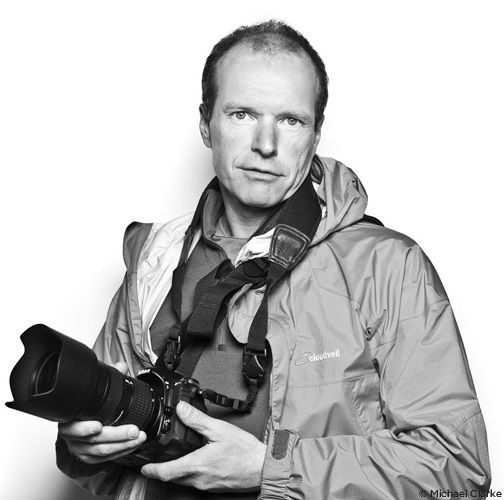
Tony Hoare. Photo: Michael Clark.
The Eye Behind the Lens
Tony is not a photographer who shoots from a safe distance. He is in the water, on the mountain, at the start line. The speed skating images from the 2010 Vancouver Winter Olympics — Clara Hughes, Canada's flag bearer, at the Richmond Oval — have the intimacy of someone who has earned the right to be that close. The Burnaby Velodrome cycling shots, taken under artificial light with the kind of compression that makes the pack feel like a single organism, are technically precise and emotionally immediate at the same time.
He has photographed base jumpers on the Colorado River, mountain climbers on Mount Waddington and Mount Rainier, surfers at Skookumchuck Rapids on the Sunshine Coast, and backcountry skiers in the Wasatch. He has a self-portrait at Torres del Paine in Patagonia that tells you everything about the kind of person who ends up with a self-portrait at Torres del Paine: someone who went there to work and could not resist the landscape for a moment.
National Geographic Adventure has run his work. Runner's World has credited him. ESRI used his images to illustrate a story about mapping the unmappable wilderness of Patagonia. These are not small credits.
Never Happier than on an Adventure with a Camera — Connects just as easily with the Janitor or the CEO — Lives Simply — Delivers the Goods.
— Tony Hoare, on himself
The Race at the End of the World
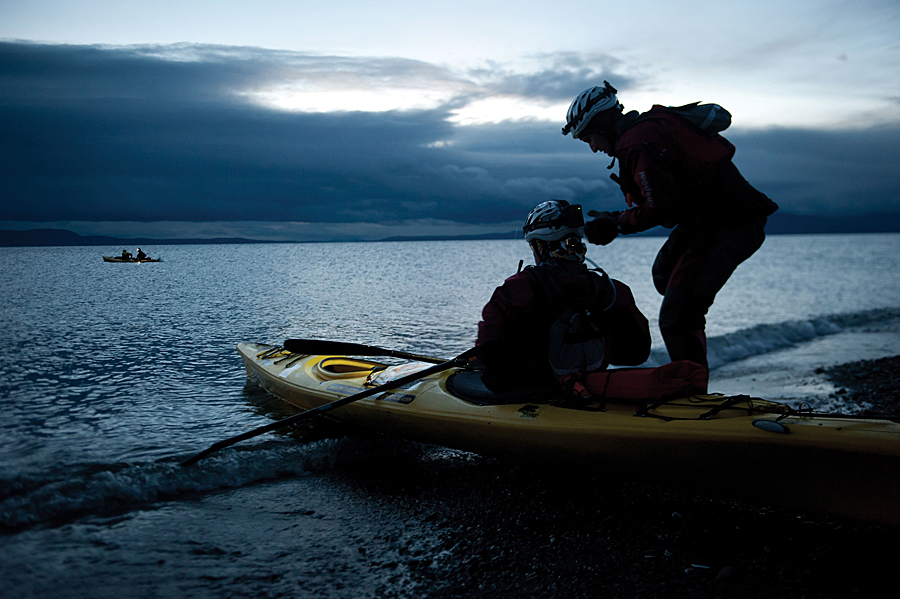
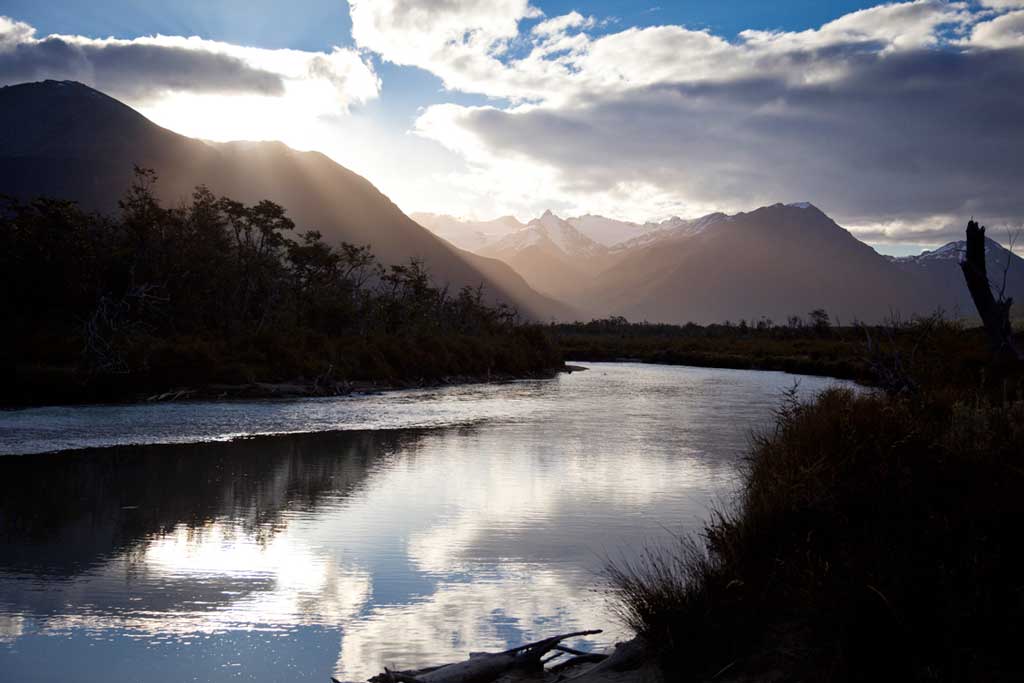
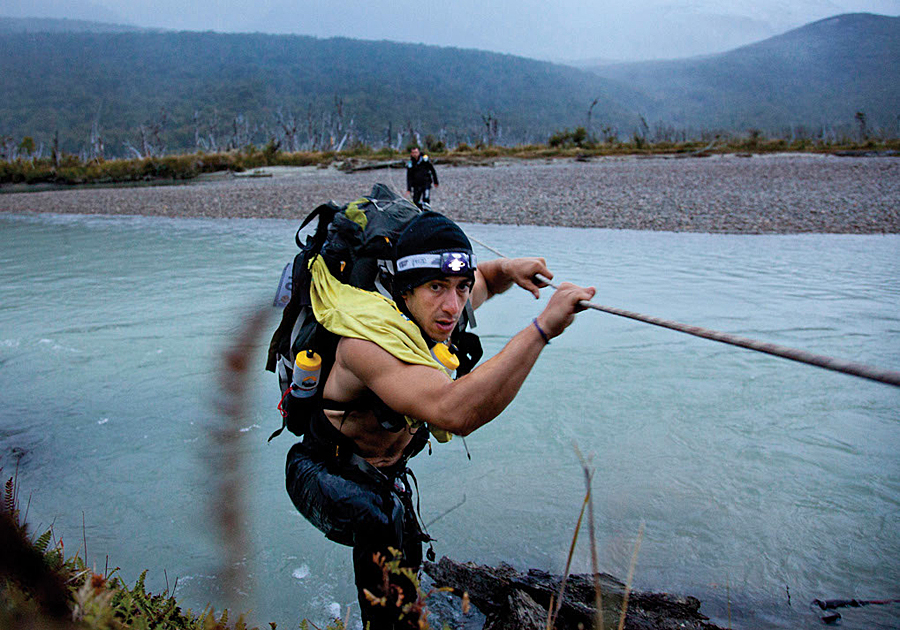
The Patagonian Expedition Race is not a race most people have heard of. It should be. Held annually in the wilderness of Chilean Patagonia — one of the most remote, weather-punished, topographically extreme landscapes on the planet — it sends teams of four through hundreds of kilometres of trekking, kayaking, climbing, and navigation with no GPS, no support crews, and no guarantee of anything except that the weather will be worse than forecast. Tony Hoare was the official photographer for multiple editions of this race.
The images he brought back from Patagonia are the kind that make you recalibrate your sense of what a "difficult day" means. Competitors crossing glacial rivers on ropes, kayaking through channels at dusk with the Torres del Paine massif behind them, hauling packs up scree fields in horizontal rain — Tony was there for all of it, and the images are extraordinary. National Geographic Adventure used them in their "Ten Great Races in Amazing Places" feature. ESRI used them to illustrate a piece about the challenges of mapping Patagonia's unmapped backcountry.
His self-portrait from Torres del Paine — taken during downtime at the 2008 race — is in his Lifestyles portfolio. It is a quiet image. A man, a camera, a mountain. It says more about who he is than any caption could.
— Advertisement —
Olympic Light
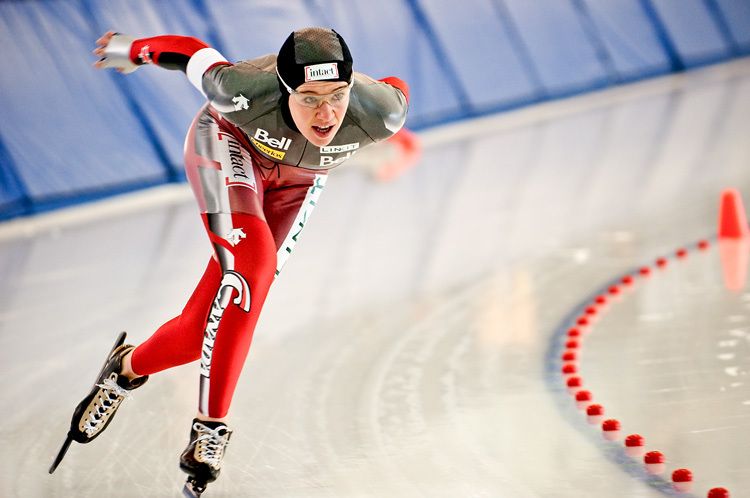
The 2010 Vancouver Winter Olympics were a homecoming of sorts for Tony — he was already based in Vancouver, already embedded in the local sports community, and already known to the athletes. His coverage of the speed skating at the Richmond Oval captures something that broadcast cameras rarely get: the physical reality of the sport. Clara Hughes, Canada's flag bearer and one of the most decorated athletes in Olympic history, in full stride — the blur of the track behind her, the concentration on her face, the Bell logo on her suit sharp against the motion. It is a photograph that respects the athlete.
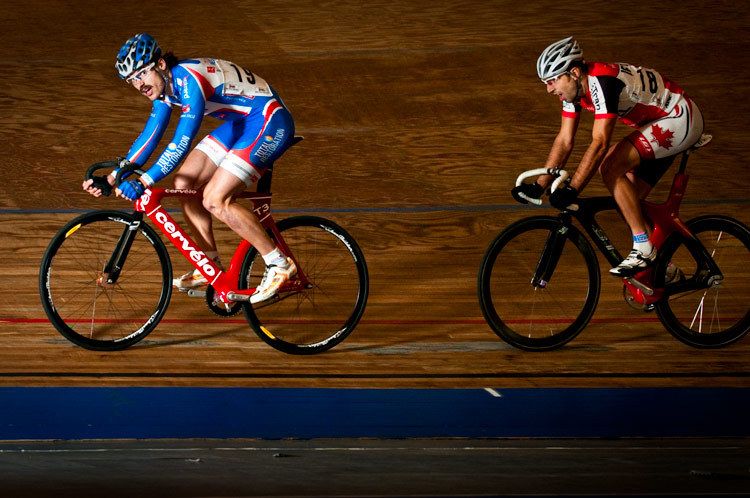
The Burnaby Velodrome series, shot at the Bare Bones Challenge Race in November 2009, is technically different — indoor, artificial light, a banked wooden track — but the same instinct is at work. The compression of the telephoto lens, the timing, the sense of speed contained within a still frame. These are not snapshots. They are considered images made by someone who understands both the sport and the light.
Betrayed: Portraits of Strength
The adventure sports work is what most people see first. But the project that reveals the most about Tony Hoare as a photographer — and as a person — is Betrayed: Portraits of Strength, a documentary series on human trafficking survivors gathered across more than half a dozen countries.
Tony's own words on the project are worth reading in full: "When people have looked at the images in this series they are often saddened by the circumstances of the survivors and of the hard ships they went through. When I photographed these individuals I also felt compassion but more strongly I felt admiration. These are not stories only about suffering. For me they are stories of inspiration. Each person I spoke to found within themselves the strength and courage to manage and escape from some very dire circumstances."
The exhibition was shown at the University of the Fraser Valley in 2015. It is the kind of work that requires trust — from the subjects, from the communities, from the organisations working in this space. That Tony earned that trust, across multiple countries and cultures, says something about the person behind the camera. He connects just as easily with the janitor as the CEO. He said so himself.
There is a coherence to all of Tony's work, from the Patagonian wilderness to the velodrome to the portraits of survivors. He is interested in people at the edge of their capacity — physical, emotional, circumstantial — and in the dignity that lives there. That is not a common instinct. It is the instinct of a genuinely good photographer.
Three Hundred and Fifty Years of Hoare
The name Hoare carries weight in British history. C. Hoare & Co., founded in 1672 by Richard Hoare — son of a horse trader from the Midlands — is the oldest privately owned bank in the United Kingdom, still operating from 37 Fleet Street in London, still owned by the same family, now in its twelfth generation. Samuel Pepys was an early client. Lord Byron banked there. Jane Austen's family held accounts. Henry Hoare "the Magnificent," who was a partner for nearly sixty years in the eighteenth century, built Stourhead in Wiltshire — one of the finest landscape gardens in England, now in the care of the National Trust.
The family survived the South Sea Bubble, the Napoleonic Wars, the Wall Street Crash, and two World Wars. They did it by being careful, by being private, and by being good at what they did. Eight direct descendants of Sir Richard currently own the bank. It has never been sold, never been floated, never been absorbed into a larger institution. In an era of mergers and acquisitions and quarterly earnings calls, that is a remarkable thing.
Tony Hoare, photographing adventure races in Patagonia and human trafficking survivors in Bangladesh, is a long way from Fleet Street. But there is something in the family character — the quiet competence, the preference for doing the work over talking about it, the ability to connect with anyone — that feels continuous. The Hoares have always delivered the goods. Tony is no exception.
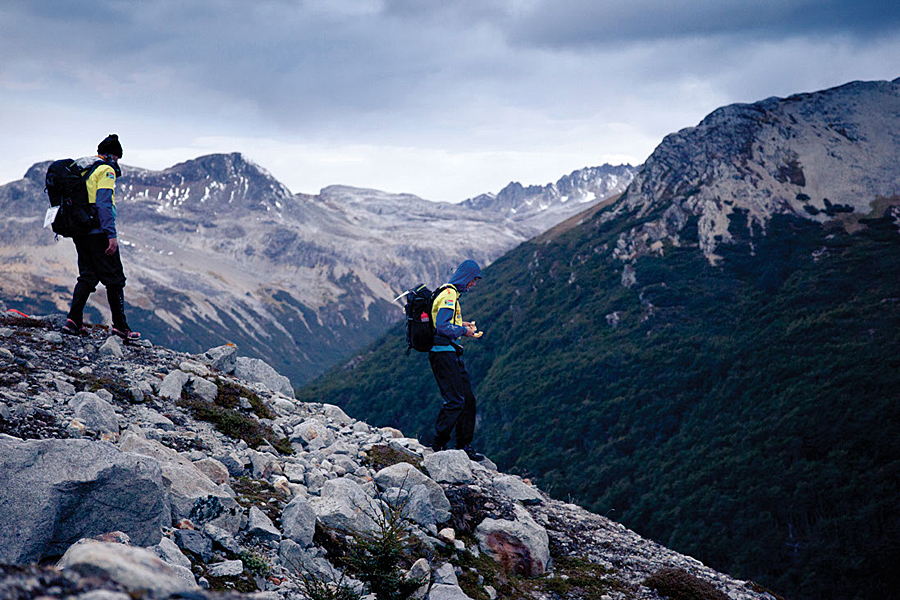
Competitors traverse the Patagonian wilderness. Photo: Tony Hoare.
— Advertisement —
I do not see Tony often. We are the kind of relations who exist in each other's peripheral vision — a name that comes up, a face that is familiar, a shared something that neither of us has ever fully mapped. But I have always had the sense, from a distance, that he was doing something real. Looking at his work properly, for the first time, I find I was right. He is doing something real. He is doing something that matters. And he is doing it with a camera and a willingness to go to the places where the interesting things happen, which is, when you think about it, exactly what this magazine is about.
Tony Hoare Photography is at tonyhoare.com. He can be reached at [email protected] or +1 604.818.1987. If you are planning something adventurous and want someone who delivers the goods, he is the person to call.
Share this feature