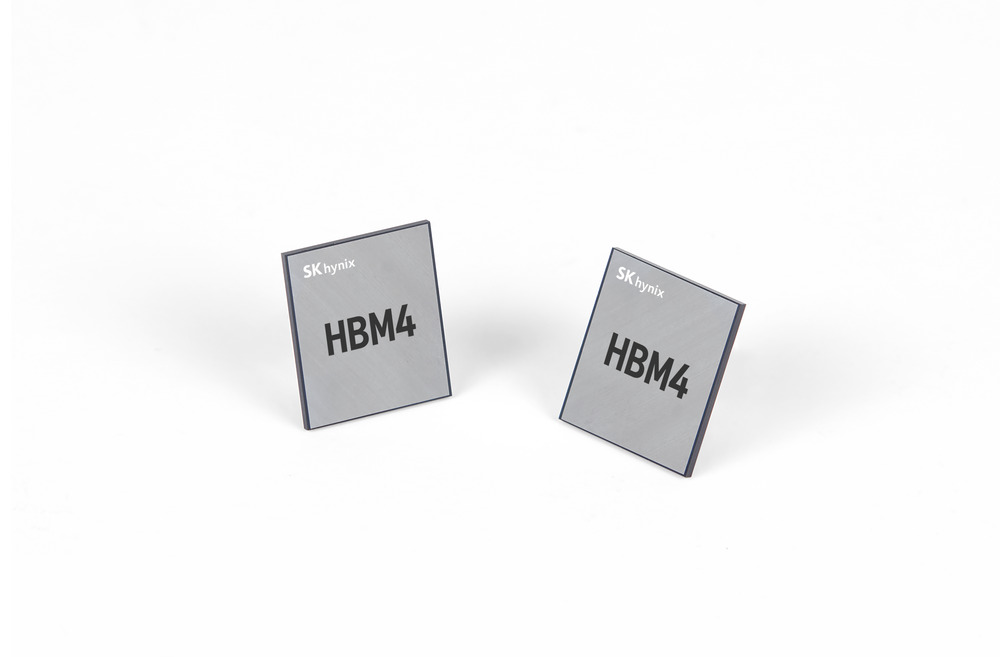
There is a company headquartered in Icheon, South Korea, that makes a component without which every AI system on earth would grind to a halt. It does not make the flashy GPU. It does not run the data centre. It does not write the model. What it makes is the memory — and in 2025, it posted the most profitable year in the history of the global memory industry.
Revenue of 97.1 trillion Korean won — approximately $68 billion USD. Operating profit of 47.2 trillion won, at a margin of 49 percent. Net profit of 42.9 trillion won, at a margin of 44 percent. In the fourth quarter alone, operating profit surged 68 percent quarter-on-quarter to reach a 58 percent operating margin — a number that would be extraordinary in any industry, let alone one that manufactures physical silicon at atomic scale. For context, Apple's operating margin in the same period was around 31 percent. SK Hynix, making memory chips, was nearly twice as profitable.
The reason is a product called High Bandwidth Memory, or HBM — and SK Hynix makes more of it, better, and faster than anyone else on earth.
From Hyundai's Garage to the Centre of the AI Universe
The story of SK Hynix begins in 1983, when Hyundai Group founder Chung Ju-yung decided South Korea needed its own semiconductor industry. Hyundai Electronics was born in a country that had been rebuilding from war for barely three decades, with the explicit ambition of competing with Intel and Japan's NEC. It was an audacious bet. The company survived the Asian financial crisis of 1997, a near-bankruptcy in 2001, a merger with LG Semiconductor, and a $3 billion acquisition by the SK Group conglomerate in 2012 — the moment it became SK Hynix. Through all of it, the engineers kept pushing the physics.
Today, SK Hynix is the world's second-largest DRAM manufacturer and the world's dominant supplier of the specific type of memory that AI needs most. That distinction — between ordinary DRAM and HBM — is the entire thesis.
What Is HBM, and Why Does It Matter So Much?
A standard DRAM chip sits beside a processor and communicates with it through a relatively narrow channel. It is fast enough for a laptop, a phone, a database server. It is not fast enough for a large language model processing billions of parameters simultaneously. The bottleneck is not compute — it is memory bandwidth. The AI chip cannot think faster than it can read.
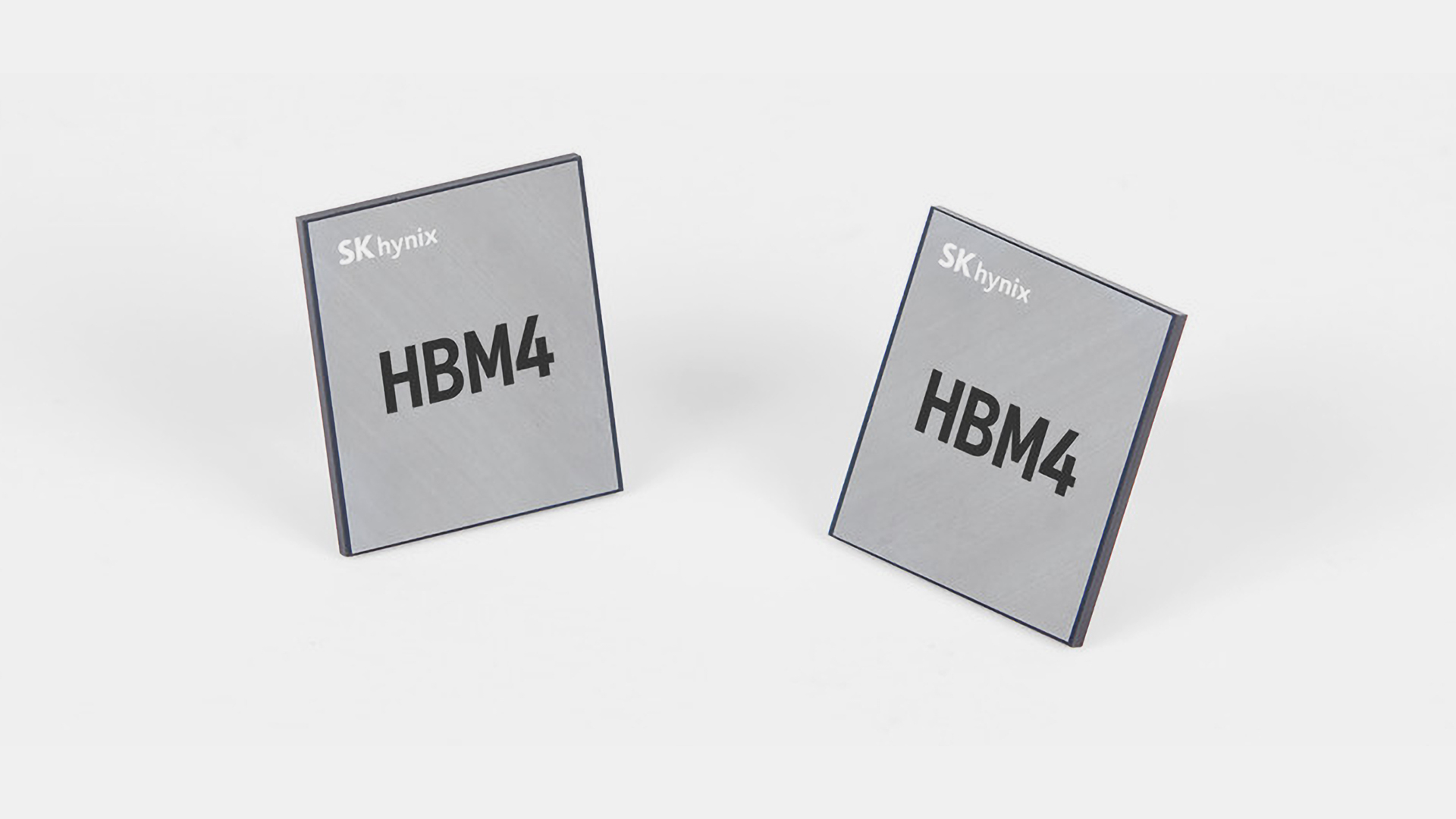
HBM solves this by stacking multiple DRAM dies vertically, connecting them through thousands of microscopic through-silicon vias, and mounting the entire stack directly on the same substrate as the processor using a technology called 2.5D packaging. The result is a memory chip that delivers bandwidth of up to 1.2 terabytes per second — roughly ten times what conventional DRAM can achieve — in a package small enough to sit beside an NVIDIA H100 or B200 GPU.
Every NVIDIA AI accelerator ships with HBM. Every Google TPU ships with HBM. Every Microsoft Maia 200, confirmed in January 2026 to use 216GB of HBM3E exclusively supplied by SK Hynix, ships with HBM. The AI infrastructure buildout — the $300 billion annual capex cycle that the hyperscalers have committed to — is, at its physical core, a massive order for SK Hynix's most advanced product.
The Numbers Behind the Dominance
SK Hynix's position in the HBM market is not a narrow lead. It is a structural advantage built over years of early investment that its competitors are still trying to close.
| Metric | SK Hynix | Samsung | Micron |
|---|---|---|---|
| HBM Revenue Share (Q3 2025) | 57% | 22% | ~11% |
| HBM Shipment Share (Q2 2025) | 62% | ~27% | ~11% |
| HBM4 Vera Rubin allocation | ~70% | ~30% | 0% |
| FY2025 Operating Margin | 49% | ~12% | ~22% |
| FY2025 Revenue Growth YoY | +47% | Declined | +61% |
Samsung's HBM3E yield problems — widely reported throughout 2024 and into 2025 — handed SK Hynix a window that it used to deepen its relationship with NVIDIA, Google, and Microsoft. By the time Samsung's quality issues were resolved, SK Hynix had locked in long-term supply agreements and begun mass production of HBM4, the next generation, ahead of schedule.
In September 2025, SK Hynix became the first company in the world to begin mass production of HBM4. In March 2026, NVIDIA confirmed that SK Hynix and Samsung — not Micron — would be the exclusive suppliers of HBM4 for the Vera Rubin platform, with SK Hynix receiving approximately 70 percent of the allocation. Micron, despite aggressive investment, was not invited.
The Supercycle Thesis
The memory industry has historically been cyclical — boom and bust, driven by oversupply. The bear case for SK Hynix is that this cycle will end as all cycles do, with prices collapsing when supply catches up to demand. It is a reasonable concern, and one that the company's own analysts acknowledge.
But there is a credible argument that this cycle is structurally different, and it rests on three pillars.
HBM supply cannot be ramped quickly
Unlike conventional DRAM, HBM requires advanced packaging — the CoWoS process from TSMC, or SK Hynix's own in-house packaging at its Cheongju M15X facility. The physical complexity of stacking eight or twelve DRAM dies, connecting them through thousands of vias, and mounting them on an interposer means that even a company that wanted to flood the market could not do so quickly. The lead time from investment decision to production capacity is measured in years, not months.
Demand is compounding
Bank of America, which named SK Hynix its global memory 'Top Pick' for 2026, forecasts the HBM market alone to reach $54.6 billion in 2026 — a 58 percent increase from the prior year. Goldman Sachs projects that HBM demand for custom ASIC-based AI chips will grow 82 percent, driven by the hyperscalers' move away from general-purpose GPUs toward proprietary silicon. Every major technology company — Google, Meta, Microsoft, Amazon — is now designing its own AI chip, and every one of those chips requires HBM.
The general DRAM market is tightening
As SK Hynix and Samsung divert capacity toward HBM — which is far more profitable — conventional DRAM supply is shrinking. Server DDR5 module prices are rising. SK Hynix completed its transition to the 1cnm process in 2025, giving it a cost and density advantage in conventional DRAM as well. The company developed the world's first 256GB DDR5 RDIMM, the highest-capacity server memory module available. Even the commodity business is becoming less commodity.
The Infrastructure Behind the Lead
What makes SK Hynix's position genuinely difficult to replicate is not just the technology — it is the infrastructure being built around it.
The Risks Are Real
No investment thesis is complete without an honest account of what could go wrong, and SK Hynix carries genuine risks.
The Verdict
SK Hynix is not a speculative bet on a technology that might work. It is the confirmed, contracted, mass-producing supplier of the component that every major AI system on earth requires — and it holds that position by a margin that took a decade of engineering discipline to build and will take years for any competitor to close.
The HBM market is forecast to grow from $17 billion in 2024 to $98 billion by 2030, a compound annual growth rate of approximately 34 percent. SK Hynix's share of that market has been running above 55 percent. Its operating margins are running near 50 percent.
The company that Hyundai built in a South Korean industrial park in 1983, that nearly went bankrupt in 2001, that was acquired for $3 billion in 2012, is now the indispensable plumber of the AI revolution. It does not get the headlines. It does not have a charismatic founder on stage at CES. It just makes the memory — and right now, the world cannot get enough of it.
- SK Hynix FY2025 Financial Results — news.skhynix.com, January 28, 2026
- 2026 Market Outlook: SK Hynix's HBM to Fuel AI Memory Boom — news.skhynix.com, January 5, 2026
- SK Hynix Secures 70% of Nvidia's HBM4 Orders — semicone.com
- Nvidia taps Samsung, SK Hynix as exclusive HBM4 suppliers for Vera Rubin — investing.com, March 2026
- SK Hynix to Exclusively Supply HBM to Microsoft's Maia 200 — businesskorea.co.kr, January 27, 2026
- SK Hynix invests $15.1B to build first fab plant at Yongin semiconductor cluster — Korea JoongAng Daily, February 25, 2026
- SK Hynix invests $10 billion in creating a US-based AI solutions company — Tom's Hardware, January 28, 2026
- US finalizes $458 million award to SK Hynix for US chips packaging facility — Reuters, December 19, 2024
- Why Micron and SK Hynix Could Quietly Become the Real AI Winners — The Motley Fool, November 24, 2025
- SK Hynix overtakes Samsung in annual profits for the first time — CNBC, January 28, 2026
- HBM Prices Reportedly Face Double-digit Drop Risks in 2026 — TrendForce, July 18, 2025
- SK Hynix Partners With TSMC to Strengthen HBM Technological Leadership — news.skhynix.com, April 2024
- SK Hynix expects AI memory market to grow 30% a year through 2030 — Reuters, August 11, 2025