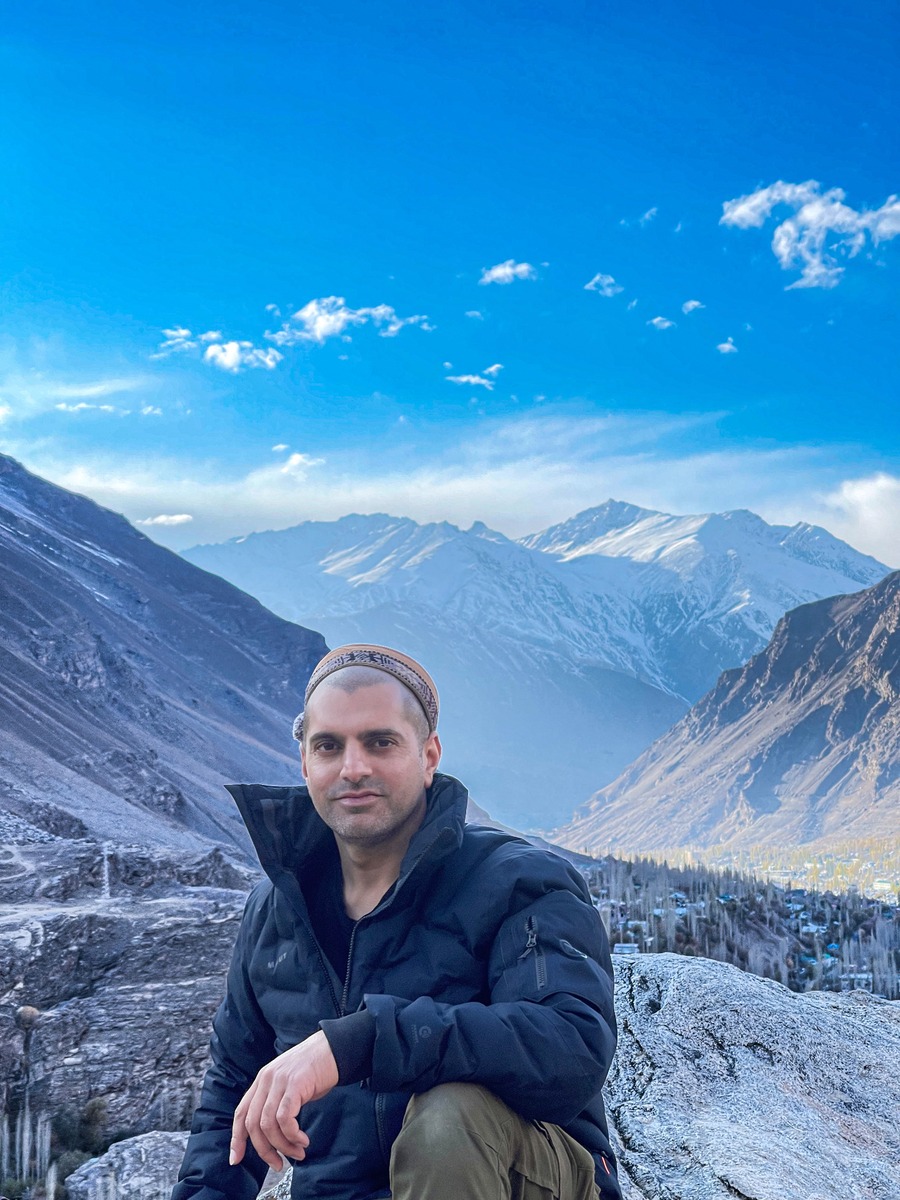
There is a moment that happens in every Empowered Filmmaker program, and Farhan Umedaly has watched it happen more than a hundred times. It comes on the third day, when the participants — people who arrived on Day One with no filmmaking experience, in some cases no particular belief that their story was worth telling — pick up a 4K gimbal camera for the first time and feel, for the first time, that it belongs in their hands.
"That moment," Farhan says, "is everything. Because once someone understands that they can hold a camera, they understand that they can tell their own story. And once that happens, nobody can take it away from them."
Farhan Umedaly is the founder of The Empowered Filmmaker, a free, travelling Indigenous-focused film school that has operated across British Columbia and Alberta since 2017. In that time, the program has visited more than 23 communities, produced 182 short films, and accumulated over 88,000 YouTube views — numbers that do not begin to capture what actually happens when a community watches its own story projected on a screen for the first time.
"Once someone understands that they can hold a camera, they understand that they can tell their own story. And once that happens, nobody can take it away from them."
A Scientist Who Became a Filmmaker
Farhan did not set out to be a filmmaker. He graduated from the University of British Columbia in 2005 with a BSc Honours in Biological Sciences, specialising in Neurobiology — a degree that speaks to a particular kind of mind: one that wants to understand how things work at their most fundamental level. He spent several years as a Project Coordinator at Natural Power Consultants, overseeing the technical and permitting processes for large-scale renewable energy projects. It was serious, important work. It was also, it turned out, not quite the right fit.
In November 2009, he founded VoVo Productions Inc. in West Vancouver — an integrated marketing and communications company built around high-end video production. He has been its Principal ever since, now more than sixteen years on. The company's work spans commercial production, branded content, and documentary filmmaking, and Farhan's reputation in the industry is straightforward: he is, as one collaborator put it, "a true professional and so easy to collaborate with — a great producer."
His film credits include work as Cinematographer and Co-Producer on Best F(r)iends: Volume 1 and Volume 2 (2017–2018), the cult films starring Tommy Wiseau and Greg Sestero — a project that required exactly the kind of calm, technically precise, slightly-amused-at-everything professionalism that Farhan brings to every set.
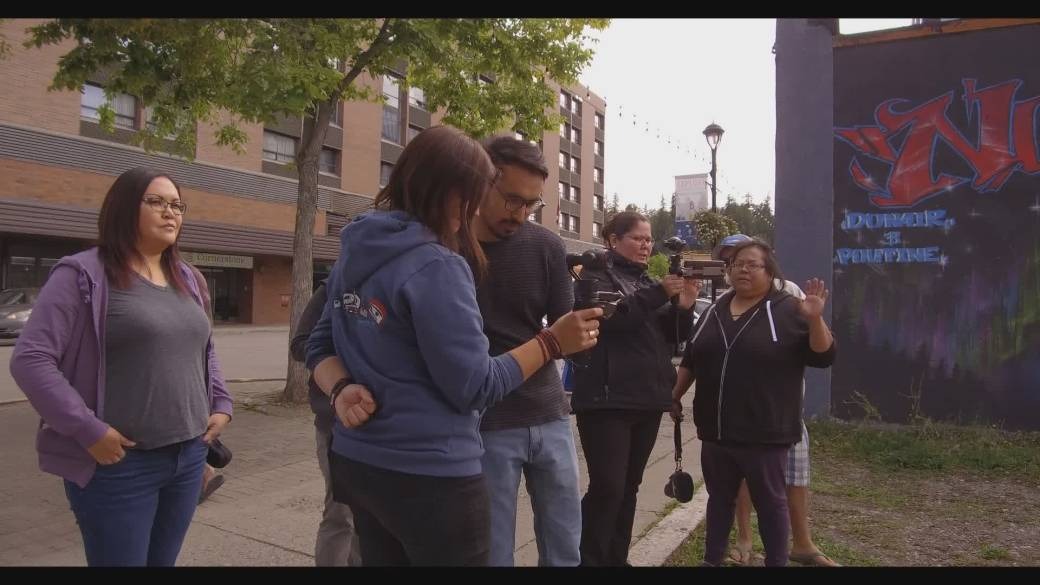
Farhan Umedaly with Empowered Filmmaker participants. The program takes students from concept to final edit in six intensive days.
The Empowered Filmmaker
The idea behind The Empowered Filmmaker is deceptively simple: take a group of people with no filmmaking experience, give them six days of intensive professional training, professional gear, and genuine creative freedom, and watch what happens. The program is free. It travels to the community, not the other way around. And it is specifically designed for Indigenous participants — people whose stories have historically been told by others, in other voices, from other perspectives.
The six-day curriculum moves from introductions and visual storytelling theory through to script and storyboard development, technical shooting with 4K gimbals, editing in Adobe Premiere, post-production, and finally a community screening — a film festival and awards ceremony held in the same hall where the participants gathered on Day One, not entirely sure why they had signed up.
The films that emerge from these six days are not student exercises. They are real films, made by real people about things that matter to them. Askiy, by Marie Jo Badger and Faithe McGuire. Dancing With Addiction, by Oceann Elsie. Healing through Horses, by Debbie Camille. No Trees without Roots, by Sammie Coates and Blaine Burgoyne. These are the titles that have accumulated on the Empowered Filmmaker YouTube channel — 182 films and counting, each one a voice that might otherwise never have been heard.
"The Empowered Filmmakers Masterclass Workshop with Farhan was absolutely necessary and valuable not only to me as an Indigenous woman and mother, to all those that attended but even more importantly to our peoples collectively."
MICHELLE JONES — Secwepemc & Syilx Nation
"We have a huge responsibility to preserve and engage in our culture to be passed to future generations, and by documenting our traditions we are taking a huge step towards just that."
ALIX GOETZINGER — Haida Nation
— Advertisement —
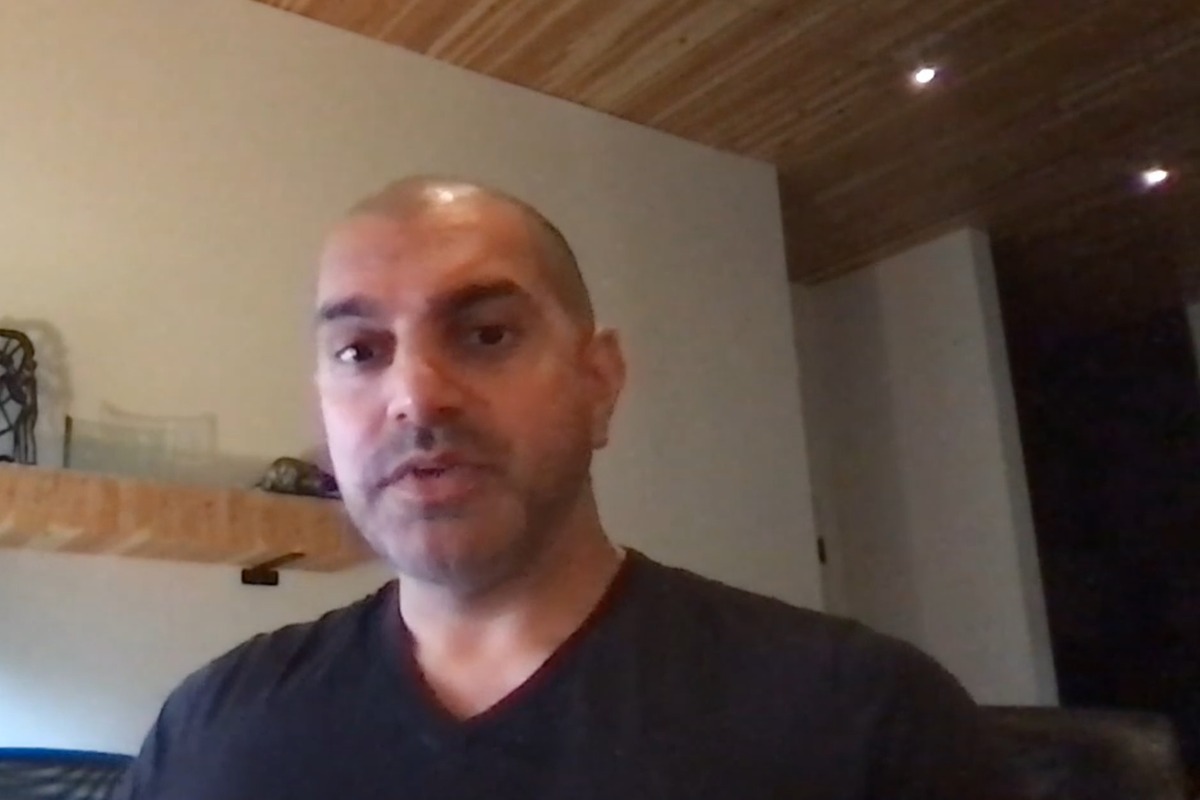
Farhan Umedaly at work — filmmaker, producer, and the man who has helped 23+ Indigenous communities tell their own stories.
The Films That Matter
Alongside the Empowered Filmmaker program, Farhan has built a body of documentary work that stands on its own. His film HA NII TOKXW: Our Food Table (2022) — forty minutes, produced with the Gitanyow Hereditary Chiefs and featuring David Suzuki — tells the story of the Gitanyow people's struggle to protect their traditional lands and food systems in Northern British Columbia against the pressures of climate change, industrialization, and colonization. The film won Best Documentary at the London Eco Film Festival, Best Documentary at the International Activism Film Festival, Best International Documentary at the Antakya International Film Festival, and placed in the Top 4 at the TVE Global Sustainability Film Awards. It has screened at twelve international festivals.
His earlier film A Last Stand for Lelu (2015), co-directed with Tamo Campos, documented the fight to protect Lelu Island near Prince Rupert — sacred Tsimshian territory threatened by a proposed LNG facility. And in a quieter but equally significant project, Farhan produced Lax Kw'alaams Traditional Harvesting, a seventeen-minute film documenting the Tsimshian people's annual return to Dundas Island (Lax Kwaxl) on BC's North Coast — a place where, every year, families come to harvest seaweed from the shoreline in the way their ancestors did. The film screened in the Lax Kw'alaams community gymnasium in September 2025, with Farhan present as a special guest.
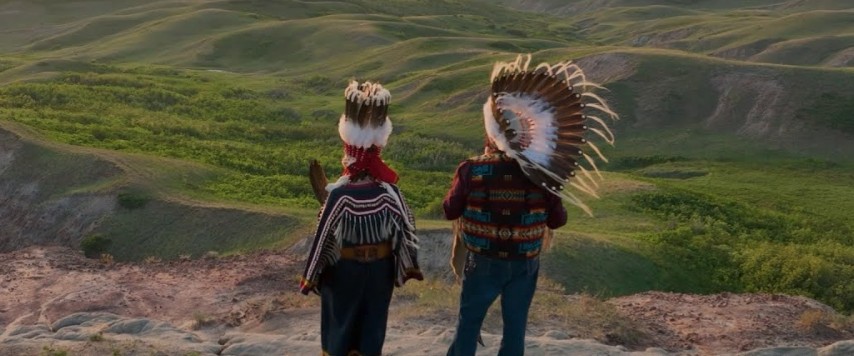
A still from A Message from White Buffalo Horn — made in five days by first-time Indigenous filmmakers in Lethbridge through the Empowered Filmmaker program. The Lethbridge badlands, seen from above. This is what the program produces.
The image above is from A Message from White Buffalo Horn, one of the films made through the Empowered Filmmaker program in Lethbridge. Two young people in traditional regalia stand at the edge of the badlands, looking out over a landscape that has belonged to their people for thousands of years. It was made in five days, by first-time filmmakers, with professional gear and Farhan's guidance. It is, by any measure, a real film.
A Family That Knows Something About New Beginnings
Farhan Umedaly grew up in West Vancouver, but the story of how his family came to be in British Columbia is one of the great diaspora narratives of the twentieth century. The Umedaly name belongs to the Ismaili Muslim community — a people with roots in Gujarat, India, who had built extraordinary lives across East Africa over the course of the nineteenth and early twentieth centuries. In Uganda, in particular, the Ismaili community had become woven into the fabric of the country's professional and commercial life.
On 4 August 1972, Ugandan dictator Idi Amin ordered the expulsion of all South Asians from the country, giving them ninety days to leave. Approximately 80,000 Ugandan Asians were affected by the order — among them the Umedaly family — and were forced to abandon everything they had built and start again. Canada, and British Columbia in particular, opened its doors. Thousands of Ugandan Ismailis arrived in Vancouver with almost nothing and rebuilt their lives with remarkable speed and grace. It is, by any measure, one of the most striking stories of resilience in Canadian history.
Farhan carries that history with him — not as a burden, but as a kind of context. He is the son of people who understood, at the most visceral level, what it means to have your story taken from you. And he has spent the better part of a decade giving other people the tools to make sure that does not happen to them.
Now a Father
This year, Farhan became a father. It is the kind of news that changes the way you see everything — the work you do, the stories you tell, the world you are leaving behind. For a man who has spent years helping other people understand the power of their own voice, there is something quietly profound about the arrival of a new voice in his own home.
The 2026 Empowered Filmmaker program is already scheduled: Revelstoke in May, Medicine Hat in May, Grande Prairie in June, Fort St. John in June. Four communities. Four more chances for someone to pick up a camera for the first time and feel, with some surprise, that it belongs in their hands.
"He is the son of people who understood what it means to have your story taken from you. And he has spent the better part of a decade giving other people the tools to make sure that does not happen to them."
A Note of Gratitude
This magazine exists because we believe that the best days of our lives are worth documenting. We believe that the stories of places and people — told with care, with specificity, with genuine affection — are worth preserving. Farhan Umedaly has spent sixteen years believing exactly the same thing, and then doing something about it.
To every student he has taught, every community he has visited, every film he has helped bring into existence: thank you for trusting him with your story. And to Farhan: thank you for understanding, long before most people did, that the most important camera in any room is the one in the hands of someone who has never held one before.
— Gerald
The Empowered Filmmaker — 2026 Program
The program is free and open to Indigenous participants with no prior filmmaking experience. Professional gear is provided. Applications are open for all four 2026 locations.