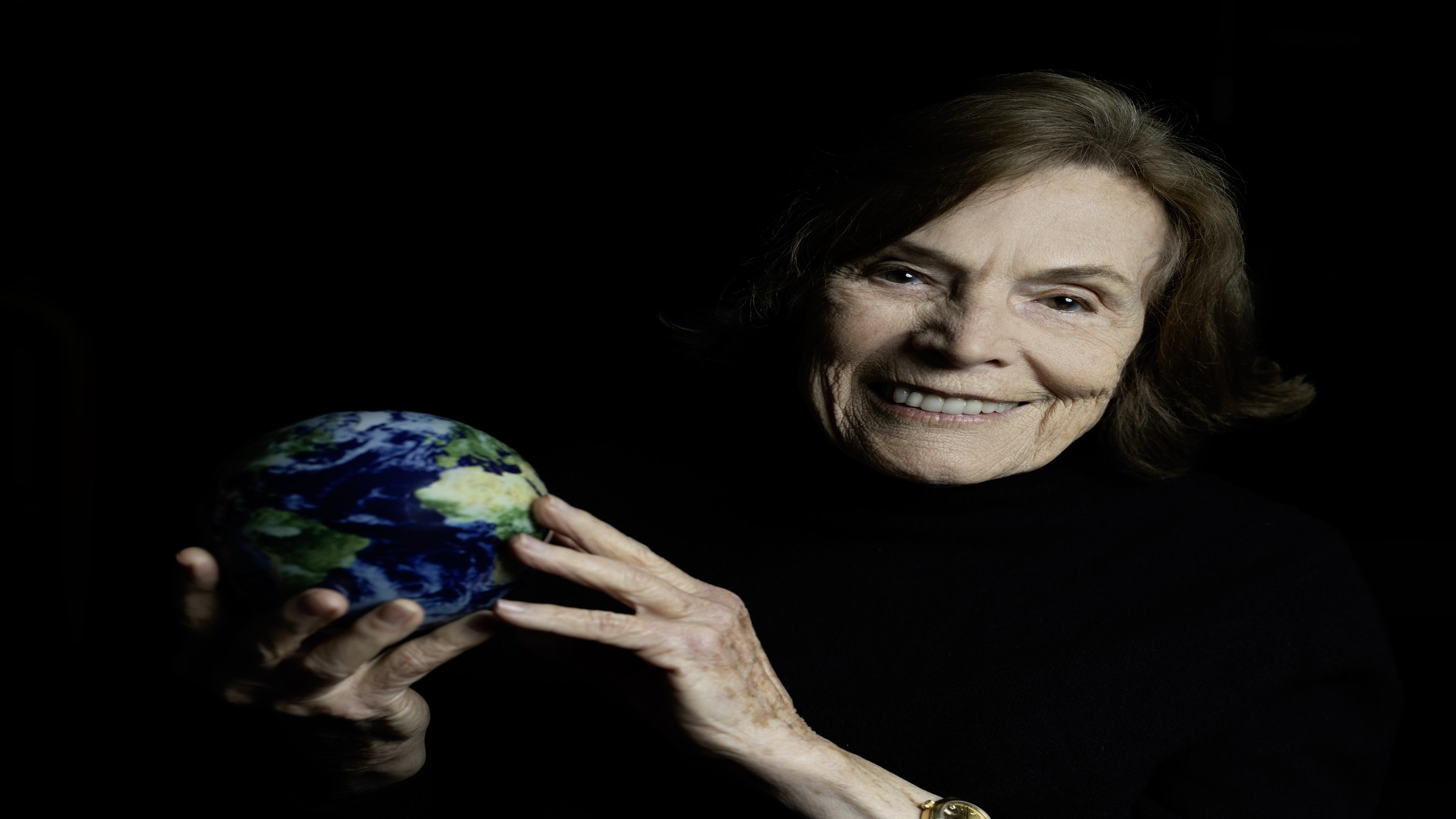
The photograph was taken at the DOER Marine workshop in Alameda, California — a vast converted aircraft hangar on the old naval air station, where the next generation of deep-sea submersibles is imagined and built. In it, Sylvia Earle holds a small globe of the Earth in her hands, turning it gently toward the camera. She is 90 years old. The photograph was taken in March 2026 by Christopher Michel. The globe is the size of a grapefruit. The smile is the same one she has been wearing since 1970.
It is a picture of two lives connected by family, and by the ocean that shaped them both.
Her Deepness
Sylvia Earle grew up on the Gulf Coast of Florida in the 1940s, in a family that spent its weekends on the water. She was 12 when a wave knocked her off her feet and she found herself looking up through the surface at the sky — and decided, in that moment, that she wanted to understand what lay below. She never really stopped.
She earned her doctorate in phycology — the study of algae — from Duke University in 1966, led the first team of women aquanauts to live underwater in the Tektite II project in 1970, and in 1979 set the world record for the deepest untethered solo dive — descending 381 metres (1,250 feet) to the floor of the Pacific Ocean off Oahu in a pressurised JIM suit, walking alone on the seabed in the dark. The record still stands.
In 1990, she became the first woman to serve as Chief Scientist of the U.S. National Oceanic and Atmospheric Administration. She has led more than 100 ocean expeditions, logged over 7,000 hours underwater, authored more than 190 scientific papers, and published 13 books. Time magazine named her its first Hero for the Planet in 1998. She has been called "Her Deepness" by the New Yorker and "the sturgeon general" by colleagues who admire her stubbornness.
In 1992, she founded Deep Ocean Exploration and Research — DOER Marine — to build the tools that would let scientists reach the parts of the ocean that no diver could. In 2009, at the age of 74, she founded Mission Blue, the organisation that has since designated more than 165 Hope Spots around the world: areas of ocean identified as scientifically critical, where marine protection can have the greatest impact.
The Builder
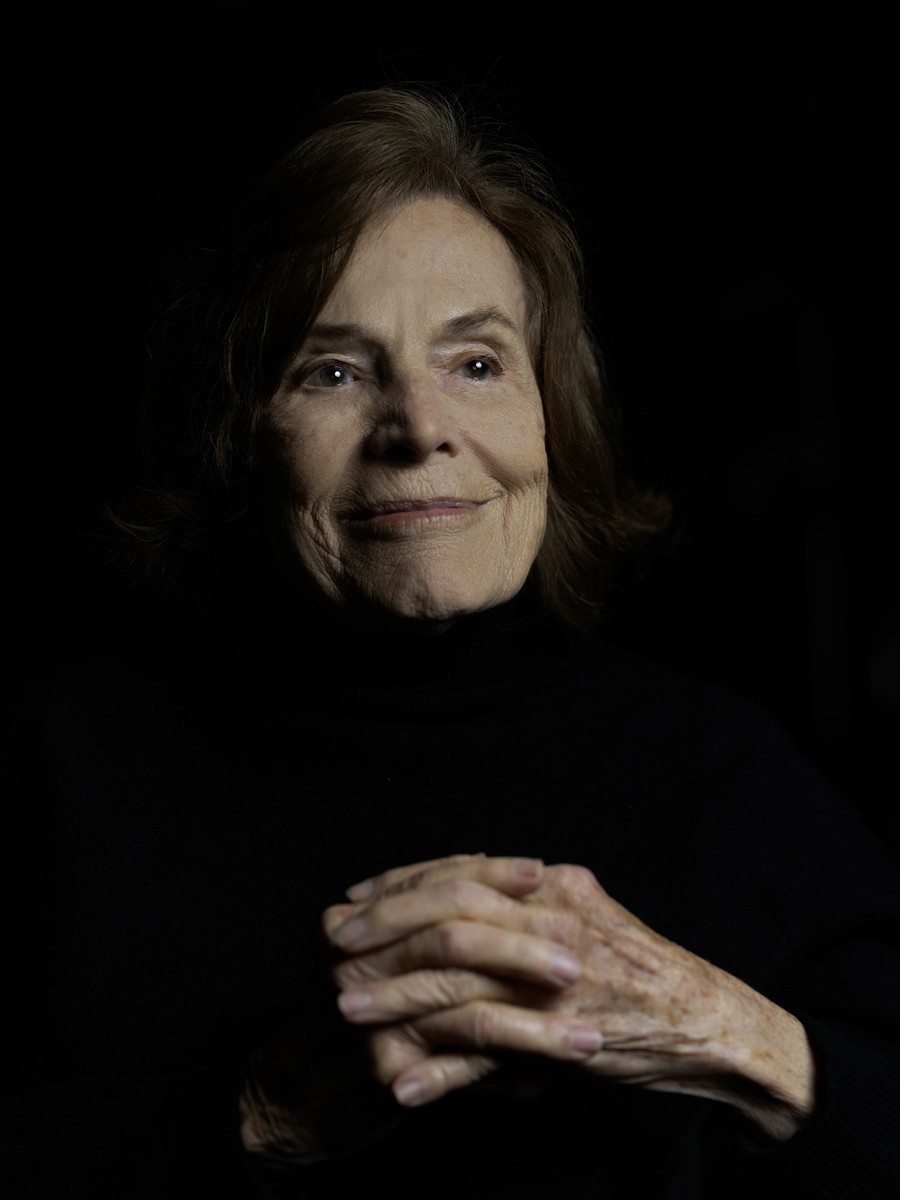
Liz Taylor was born in Dunedin, Florida, in 1960, the daughter of Sylvia Earle and invertebrate biologist Jack Taylor. She grew up on a farm on the Gulf Coast, with the sea always close. "We'd end up going out to the beach, getting on the boat, and interacting on the water," she told Alert Diver in 2023. "I enjoyed every opportunity to put on a mask and snorkel. How could you drag yourself away from those big meadows? There was so much diversity in the intersection of the mangroves and seagrass."
She received formal dive training at UNEXSO in the Bahamas at 13 — "I felt like I was getting Navy SEAL training. It was very rigorous — two weeks, eight hours a day" — and went on to study marine ornithology at UC Davis before creating an independent major at UC Berkeley that combined natural sciences, communications, and natural history.
In 1994, she took over as President of DOER Marine, the company her mother had founded two years earlier. Over the following three decades, she and her husband Ian Griffith grew it from a consulting firm into a full-service engineering solutions company, occupying the historic Hangar 41 at the former Alameda Naval Air Station. The company has assisted James Cameron's Deepsea Challenger expedition to the Mariana Trench, and performed critical infrastructure inspections of dams and bridges. It also collaborated with Google and the U.S. Navy on a three-year project to bring the ocean floor into Google Earth — a task that required rewriting Google's entire software to go below sea level.
In 2023, Taylor was inducted into the Women Divers Hall of Fame. She is, by her own description, an active listener and a problem-solver. She is also deeply frustrated by what she calls "data hoarding" — the tendency of research institutions to embargo ocean data for years, allowing irreplaceable records to deteriorate. "We don't have time," she says. "We have to figure out ways to incentivise this data."
Hope Spots
Mission Blue's Hope Spots programme now covers more than 165 locations around the world — from the Sargasso Sea to the Coral Triangle, from the waters off Patagonia to the seamounts of the mid-Atlantic. Each is designated because of its ecological significance: as a nursery, a migration corridor, a refuge for species under pressure, or a place where the ocean is still functioning as it should.
The programme grew out of Sylvia Earle's 2009 TED Prize wish — "I wish you would use all means at your disposal — films, expeditions, the web, new submarines — to ignite public support for a global network of marine protected areas, Hope Spots large enough to save and restore the blue heart of the planet." It remains one of the most ambitious conservation frameworks in existence, and one of the few that treats the ocean not as a resource to be managed but as a system to be understood.
Sylvia Earle turned 90 in August 2025. She was photographed that month exiting the wet porch of the Aquarius Reef Base, an underwater laboratory 15 metres beneath the surface of the Florida Keys. She is still diving.
— Advertisement —
Two Lives, One Ocean
What is remarkable about Sylvia Earle and Liz Taylor is not just what they have each accomplished individually — though the list is extraordinary — but the way their work has compounded across generations. Sylvia built the scientific case for ocean protection and the public language to communicate it. Liz built the machines that make the science possible. One explored the deep; the other made the deep accessible to others.
The ocean covers 71 percent of the planet's surface. Less than 20 percent of it has been mapped in detail. The creatures that live in its deepest trenches are largely unknown. The systems that regulate its temperature, chemistry, and currents are only partially understood. And yet the ocean absorbs roughly 30 percent of the carbon dioxide humans produce, generates more than half the oxygen in the atmosphere, and regulates the climate of every landmass on earth.
"Divers are so important because they are witnesses," Liz Taylor has said. "They see the marine trash and debris, the old fishing gear, and all this stuff. They can bring it back and say, 'Look, what are we doing?' Time is short. You can be impactful. Speak up. Care about the Earth's natural systems. That's the power we all have."
Her mother has been saying something similar for sixty years. The ocean, it seems, is patient with those who listen.