Pajarete
Jalisco, Mexico — at dawn, beside a cow
Raw milk, straight from the cow, mixed with tequila, coffee, and chocolate. Served warm, in a clay cup, at the side of the road, before the sun is fully up. This is Pajarete. This is a Best Day.
Photography: Benjamin Philip
"The milk is warm. The tequila is cold. The cow is right there. You drink it at dawn, in the dirt, in Jalisco, and you understand immediately that this is the best morning drink in the world."
— Gerald Shaffer
What Is Pajarete?
"Leche bronca — raw, unpasteurized milk, straight from the animal — mixed with high-proof spirits and a few pantry staples. Served warm. Served immediately. Served at dawn."
Pajarete is a tradition from the highlands of Jalisco and Michoacán that predates the modern food safety apparatus by several centuries. The name comes from pajarear — to bird-watch, to idle, to linger — and the drink is exactly that: something you linger over, in the early morning, while the world wakes up around you.
The base is leche bronca — raw, unpasteurized milk taken directly from the cow or goat. Not chilled. Not processed. Still warm from the animal. Into this goes a measure of high-proof tequila or mezcal, a shot of strong black coffee, a spoonful of chocolate or cocoa powder, and sometimes a pinch of cinnamon or sugar. The whole thing is stirred or shaken until it foams, then poured into a clay cup and handed to you while the cow is still standing three feet away.
It is not a cocktail. It is not a health drink. It is not a tourist attraction, though tourists have discovered it. It is a working drink — something the vaqueros and rancheros of Jalisco have been drinking before a day's work for generations. The alcohol warms you. The milk sustains you. The coffee wakes you. The chocolate makes it worth getting up for.
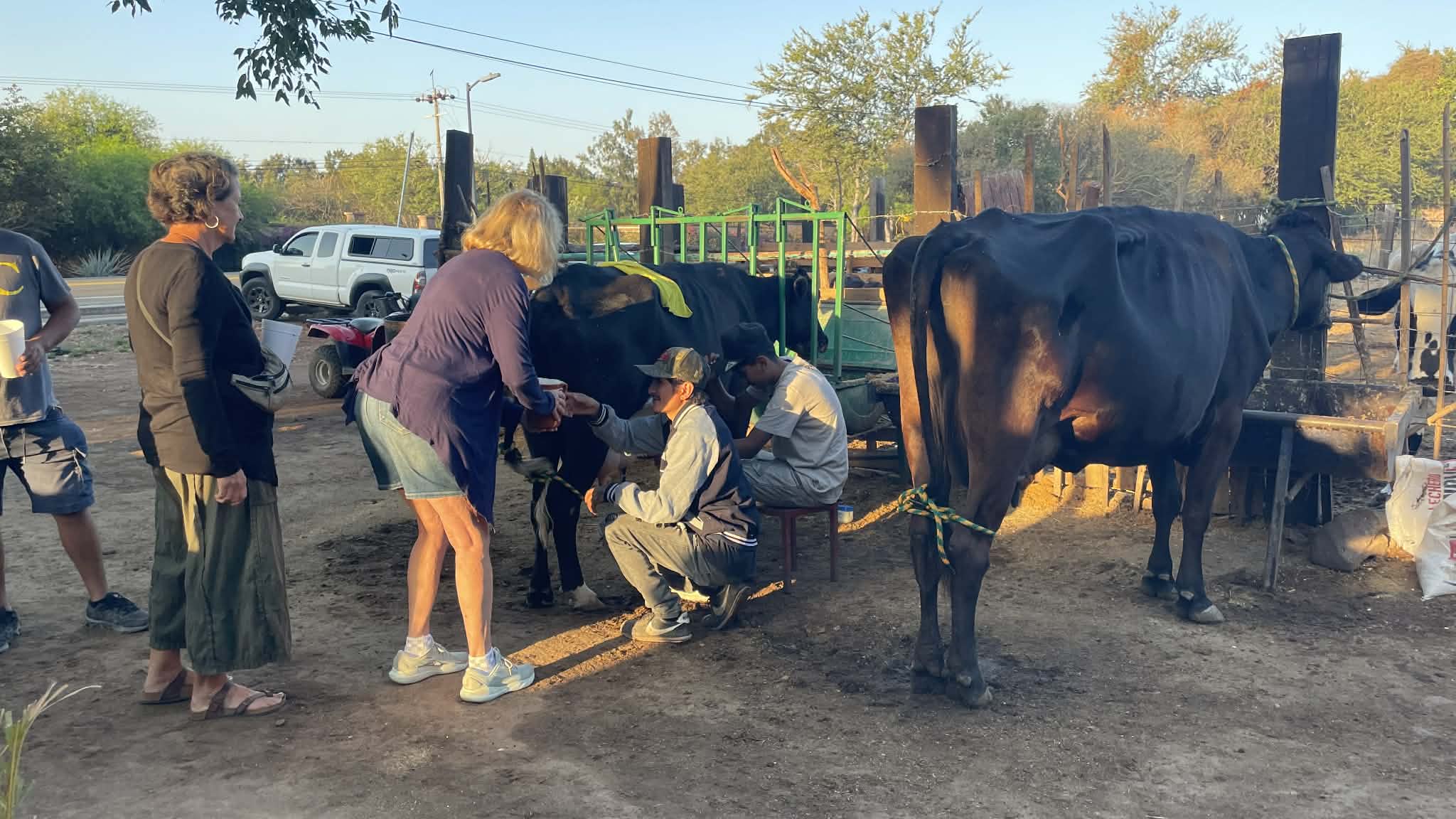
We arrived at the corral just after sunrise. The vendor had set up her wooden crate bar beside the road — bottles of tequila, jars of instant coffee, tubs of chocolate powder, a row of clay cups. The milker was already at work. A small crowd had gathered: locals who do this every Sunday, and a handful of visitors who had been tipped off. Nobody was performing. This was just breakfast.
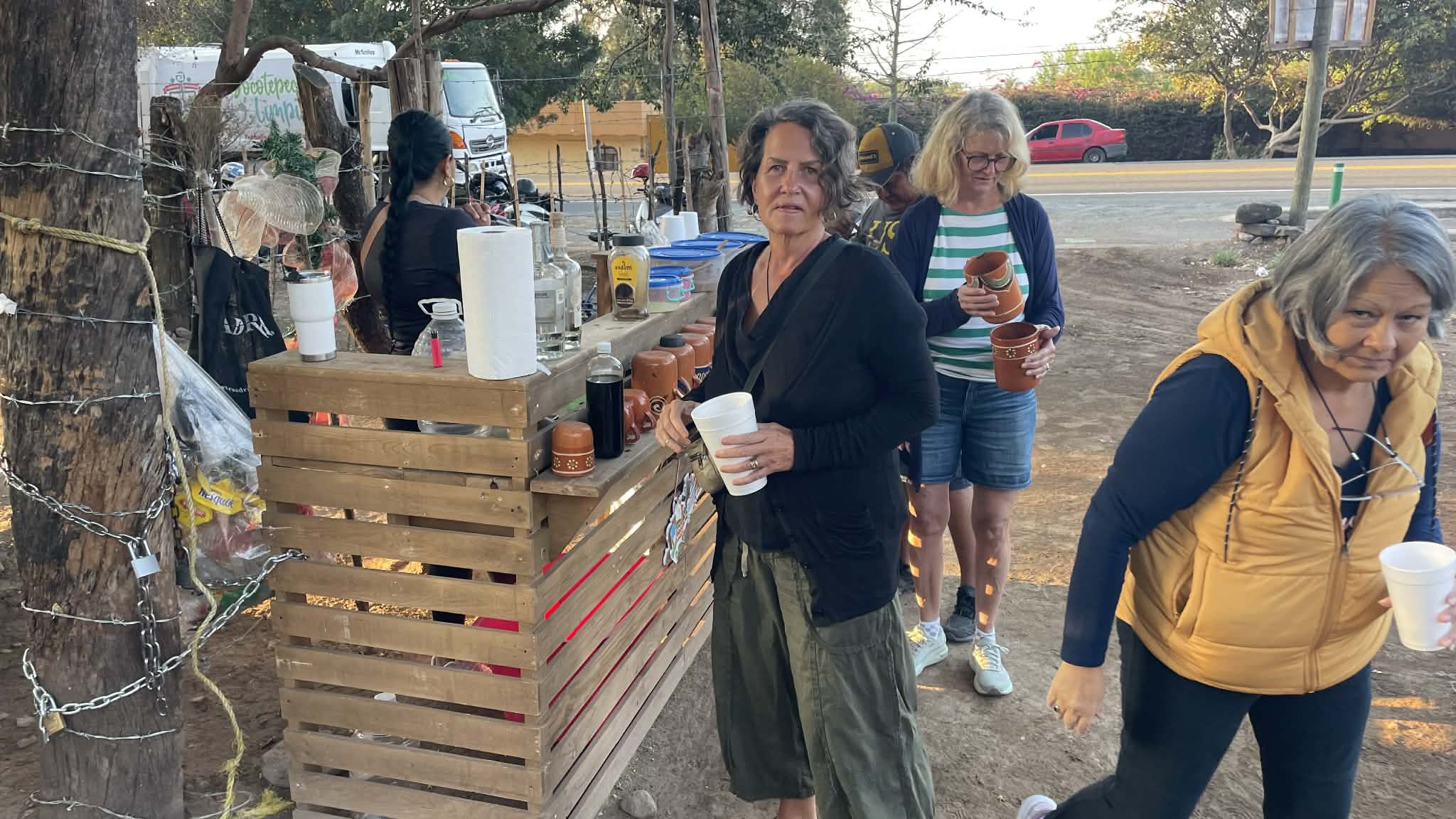
The bar — a wooden crate, tequila, clay cups, and the road behind it. Photo: Benjamin Philip
At the Corral
The milking — dawn light, Jalisco
The bar — crate, bottles, clay cups
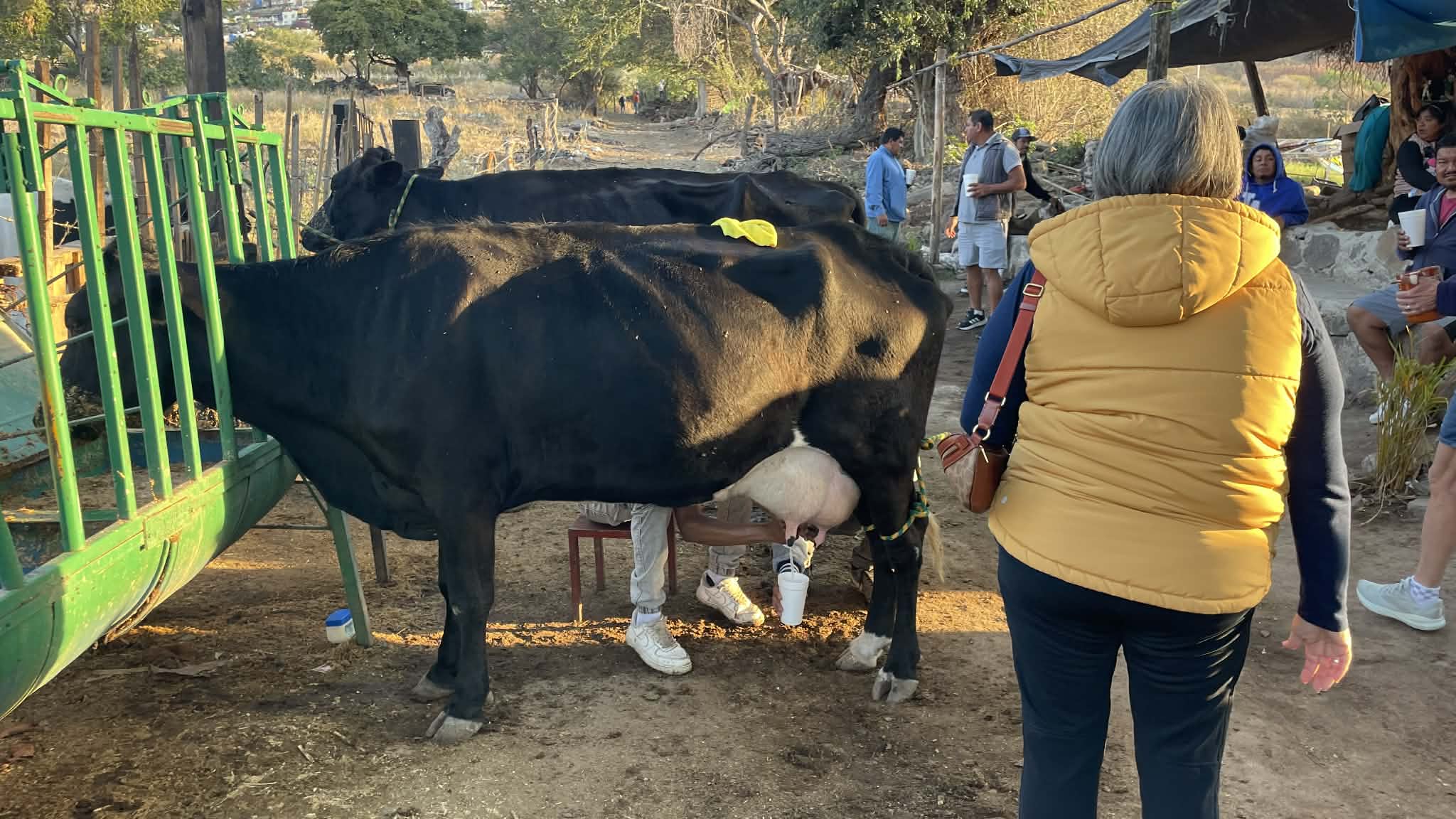
The source — no supply chain required
All photography: Benjamin Philip
The Recipe
What Goes In
- Leche bronca — Raw, unpasteurized milk — warm, straight from the animal. This is non-negotiable.
- Tequila or mezcal — High-proof. Blanco or reposado. Enough to warm you, not enough to floor you.
- Strong black coffee — A shot of espresso or strong instant. The caffeine is the point.
- Chocolate powder — Unsweetened cocoa or Mexican chocolate. A spoonful.
- Cinnamon (optional) — A pinch. Some vendors add it, some don't.
- Sugar (optional) — A small spoonful if you want it sweet. The chocolate usually handles this.
How It's Made
The milk comes out of the animal and goes directly into a container. No refrigeration. No pasteurization. No waiting. The vendor adds the tequila, the coffee, the chocolate, and any other additions, then stirs or shakes vigorously until the drink foams. It is poured into a clay cup — the clay matters, it affects the temperature and the flavour — and handed to you immediately.
You drink it warm. You drink it standing up. You drink it while the cow is still being milked three feet away. That is the correct way to drink Pajarete.
"The clay cup is not a detail. It is the point. The earthiness of the cup and the rawness of the milk and the smoke of the tequila are all part of the same thing."
Everyone Is In on the Same Morning
The woman in the black top at the bar was the vendor. She had the tequila, the coffee, the chocolate, and the clay cups arranged on the wooden crate with the efficiency of someone who has done this every Sunday morning for years. She did not explain anything. She just made the drink and handed it over.
The woman in the purple top was learning to milk. The man in the cap was showing her. The cow was patient. The woman in the yellow vest was watching all of it with the expression of someone who cannot quite believe this is a real thing that is happening, which is the correct expression to have.
In the background: a white pickup truck, a motorcycle, a road. Jalisco in the early morning. The light was gold. The air was cool. The drink was warm. Everything was exactly right.
"This is what a Best Day looks like. Not a restaurant. Not a reservation. Just a cow, a crate, and a cup of something you will spend the rest of your life trying to explain to people."
The source — no supply chain required. Photo: Benjamin Philip
Leche Bronca Is Not for Everyone
Raw, unpasteurized milk carries risks that pasteurized milk does not. In Mexico, where the tradition is established and the animals are healthy, the risk is considered acceptable by those who drink it. Elsewhere, and for those with compromised immune systems, it may not be. Just Gerald Magazine does not give medical advice. We do, however, give honest reviews. And the honest review is: Pajarete made with leche bronca is one of the most extraordinary things we have ever tasted. You make your own choices.
Gerald's Scorecard
Warm, foamy, faintly boozy, faintly sweet. The raw milk carries a richness that pasteurized milk cannot replicate. The tequila cuts through it. The coffee and chocolate round it out. It is unlike anything else.
A roadside corral in Jalisco at dawn. The cow is right there. The bar is a wooden crate. The cups are clay. The light is golden. There is no more authentic food experience available anywhere in Mexico.
You watch the milk come out of the cow and go directly into your cup. There is no supply chain. There is no packaging. There is no middleman. This is the most direct farm-to-glass experience on earth.
The vendor, the milker, the crowd of locals and bewildered tourists — everyone is in on the same joke, which is that this is the best morning drink in the world and most people will never know it exists.
A few pesos for a cup of warm raw milk mixed with tequila, served at dawn beside a cow. There is no better value in the world of food and drink. None.
Pajarete is a tradition that predates the modern food safety apparatus by several centuries. Drinking it is an act of trust — in the animal, the vendor, and the morning. That is worth something.
Overall
10 / 10
"The most honest drink in the world, made from the most honest ingredients, in the most honest setting. A perfect Best Day. No reservations required."
— Gerald Shaffer
Plan Your Morning
Where to Find It
Pajarete vendors operate in the highlands of Jalisco and Michoacán, typically on Sunday mornings near local corrals and ranches. The town of Tequila and its surrounding villages are a reliable starting point. Ask locals — anyone who knows will tell you exactly where to go and what time to arrive.
When to Go
Dawn. The milk is freshest immediately after milking, and the vendors set up early. By mid-morning, the best of it is gone. Set your alarm. The golden hour light is also, as Benjamin Philip's photographs demonstrate, exceptional.
What to Expect
A roadside corral. A wooden crate bar. A cow or goat being milked in front of you. A warm, foamy drink in a clay cup. A crowd of locals who have been doing this every Sunday for their entire lives. No menu. No wifi. No pretension. Just the drink and the morning.
Photography: Benjamin Philip, Mexico Correspondent · Words: Gerald Shaffer · Just Gerald Magazine