CLIMBING
MONT BLANC
Three days. Three ascents. The highest point in Western Europe. I've done it — and this is everything I wish someone had told me before I stepped off the Tramway du Mont Blanc at Nid d'Aigle and looked up at what I'd agreed to climb.
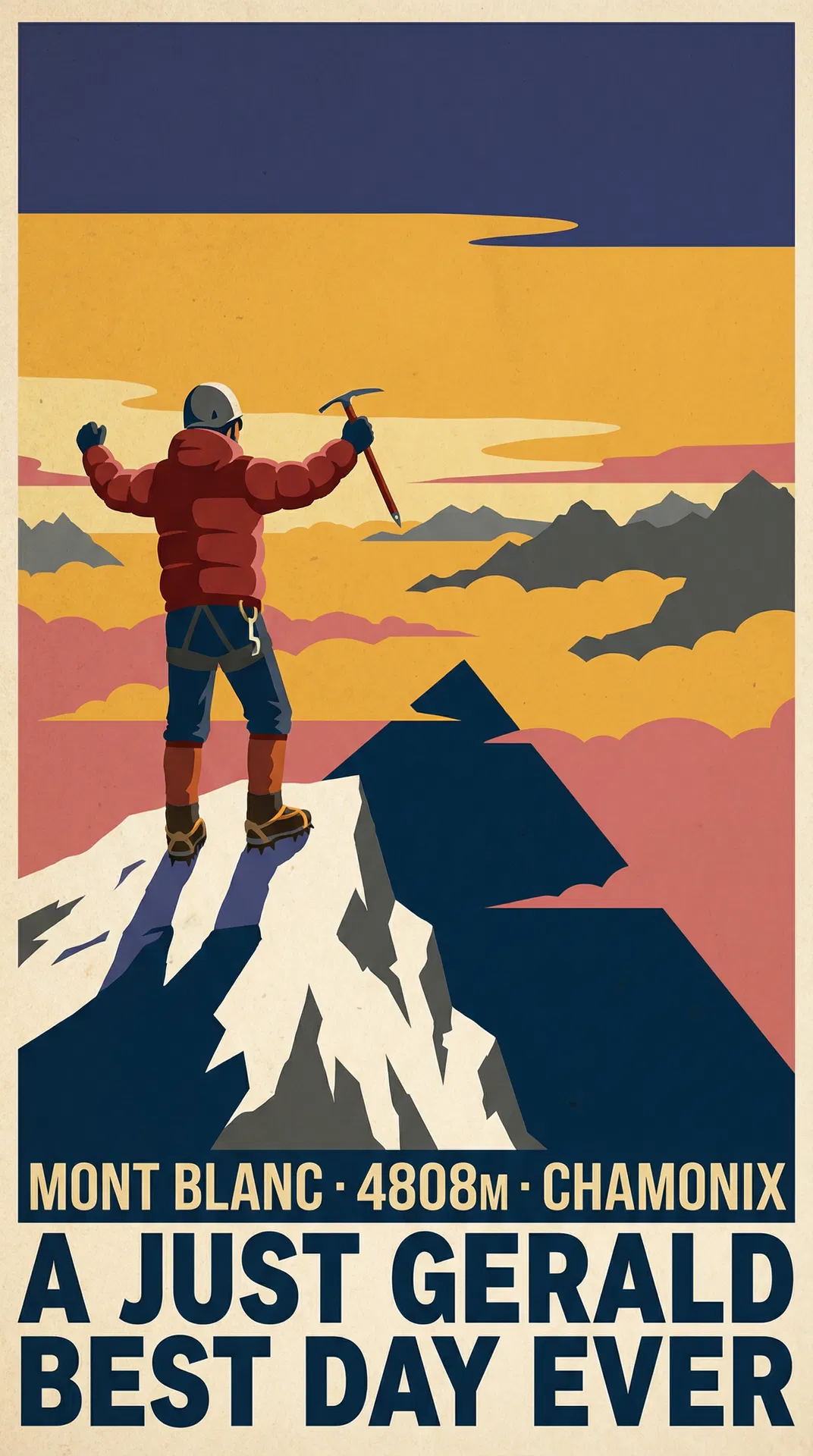
"At 4,808 metres, the world stops being complicated. There is only up, and then the summit, and then the long way down."
I arrived in Chamonix on a Tuesday afternoon in July. The town sits at 1,035 metres, which sounds like altitude until you look up and see Mont Blanc — a white mass that fills the entire eastern sky, impossibly large, impossibly close. The mountain is 3,773 metres above you. The summit is the highest point in Western Europe. And in three days, you are going to stand on it.
The Goûter Route — the Normal Route, the French Route, the route that 20,000 people attempt every year — is not technically difficult. It does not require advanced rock climbing or ice climbing skills. What it requires is fitness, acclimatisation, the right gear, a certified IFMGA mountain guide, and a willingness to wake up at 3:00 AM and walk into the dark with crampons on your boots and an ice axe in your hand.
The success rate is roughly 50 percent. Weather turns. Bodies fail. The mountain does not negotiate. But when the conditions are right and you have prepared properly, the summit of Mont Blanc is one of the most extraordinary places a human being can stand. The shadow of the mountain stretches west over France as a perfect dark triangle. Italy is below you to the right. Switzerland is behind you. The curvature of the earth is visible. The silence is absolute.
Here is how you do it in three days.
The Journey to Chamonix
Eurostar to Paris Gare du Nord, taxi to Gare de Lyon, TGV to Saint-Gervais-les-Bains-Le Fayet, Mont Blanc Express to Chamonix.
~6h30 totalTGV from Gare de Lyon to Saint-Gervais-les-Bains-Le Fayet (3h30), then the Mont Blanc Express narrow-gauge railway to Chamonix (40 min).
~4h10 totalBus or car via the A40 autoroute through the Mont Blanc tunnel approach. Alternatively, the Mont Blanc Express bus from Geneva Airport direct to Chamonix.
~1h15 totalThe Mont Blanc Express is one of the great railway journeys in the Alps — a narrow-gauge line that climbs from the valley floor through pine forests and past the Mer de Glace glacier. Take the window seat on the right side heading toward Chamonix for the best views of the massif. The train runs year-round and connects directly to the Tramway du Mont Blanc at Saint-Gervais.
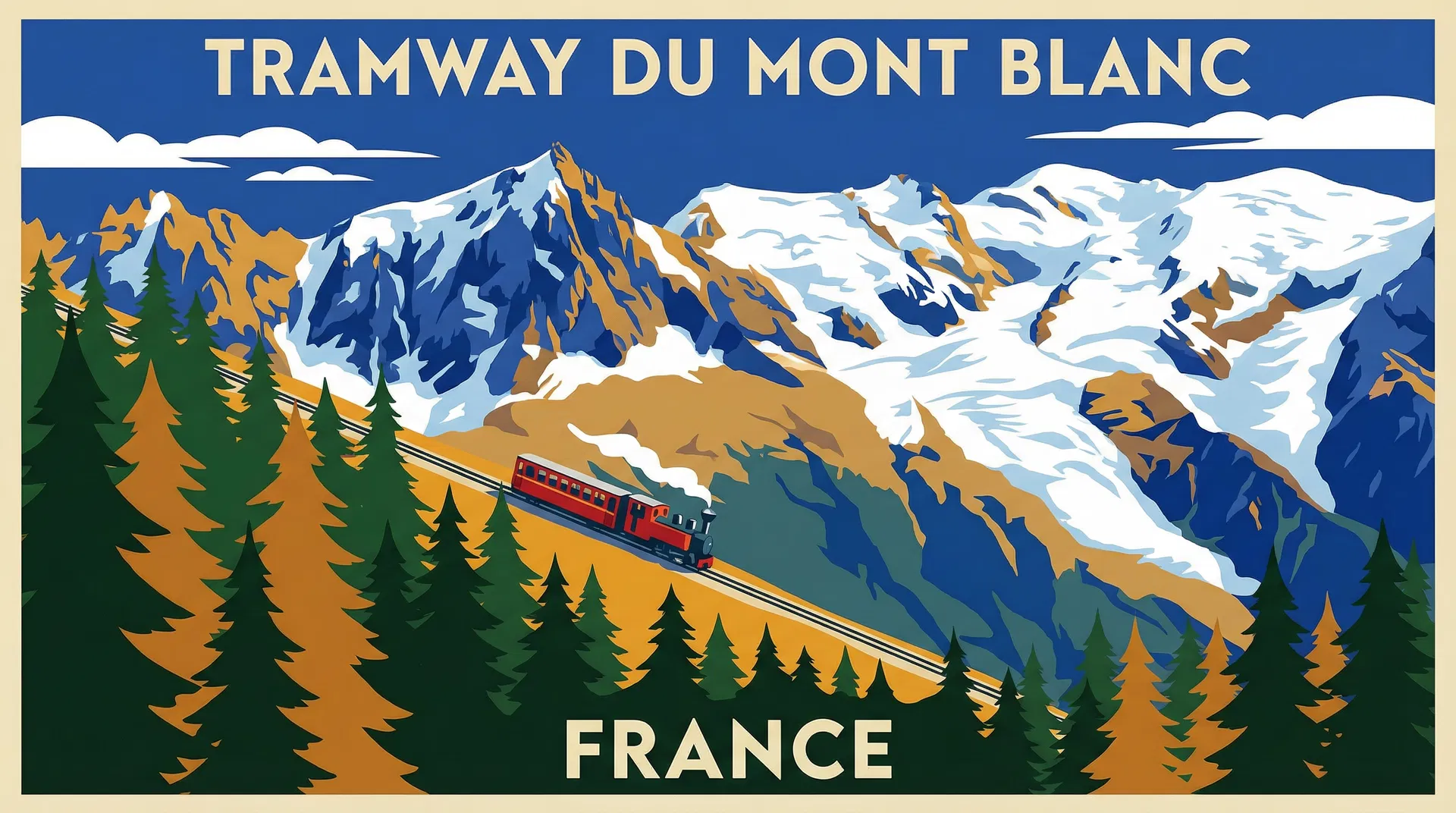
Tramway du Mont Blanc — opened 1909. Terminus: Nid d'Aigle, 2,372m.
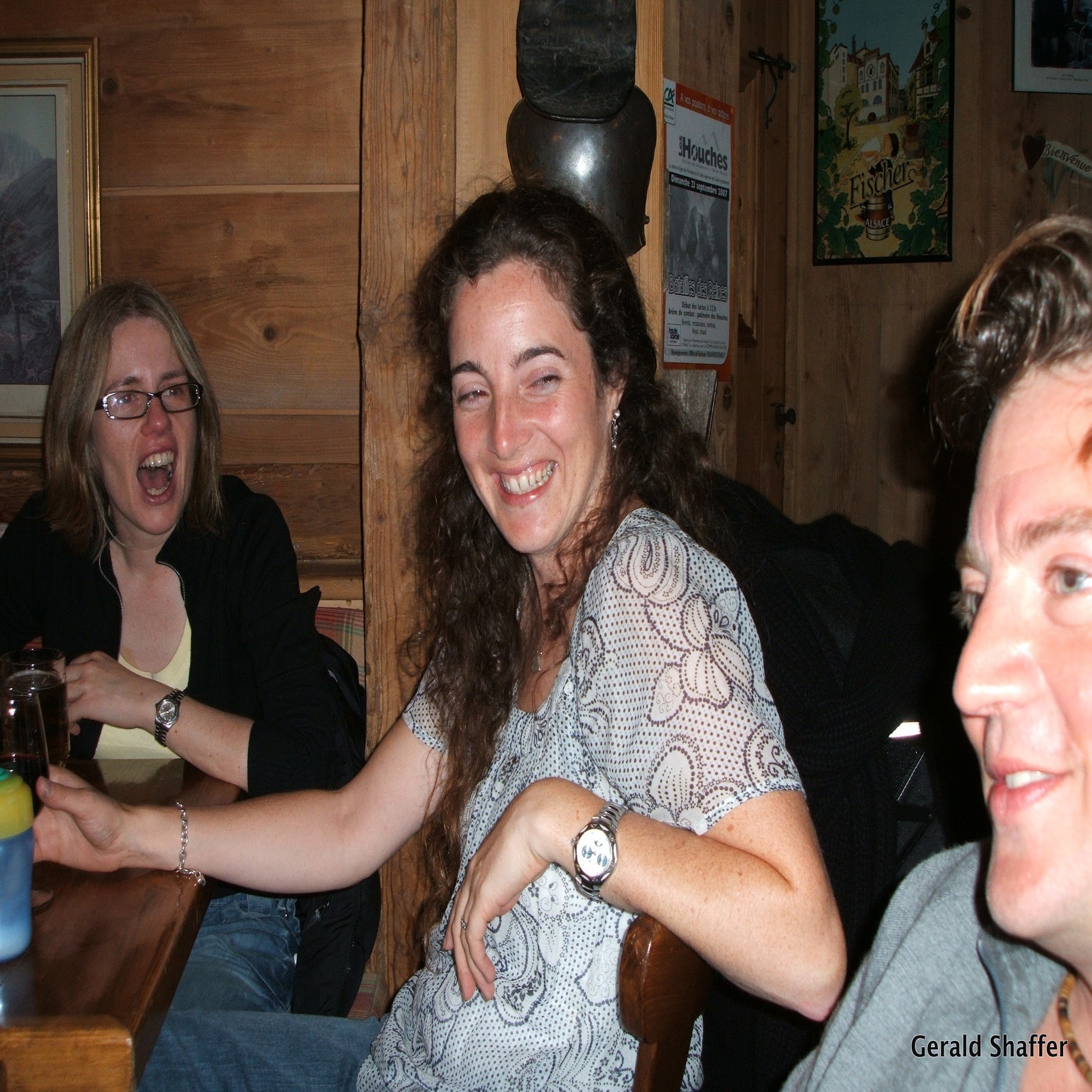
Pre-climb dinner in Les Houches — the night before the Tramway. Photo: Gerald Shaffer.
Arrival & Acclimatisation
Chamonix (1,035m) → Aiguille du Midi (3,842m) → Plan de l'Aiguille (2,317m)
Arrive in Chamonix by midday. Check in, eat something, and walk to the Aiguille du Midi cable car station in the town centre. You are going to 3,842 metres this afternoon — not to climb, but to let your body begin the process of understanding what altitude means.
The Aiguille du Midi is one of the highest cable car stations in the world. The two-stage ascent takes 20 minutes and gains 2,807 metres. At the top, step outside onto the terrace and breathe. The air is thin. The views are extraordinary — the entire Mont Blanc massif laid out before you, the Vallée Blanche glacier dropping away to the south, the Italian Alps visible on the horizon. You will feel the altitude within minutes: a slight headache, a shortness of breath on the stairs, a sense that your body is working harder than it should be. This is normal. This is acclimatisation.
Spend 90 minutes at the top. Walk the glass-floored "Step into the Void" installation if the queue is short. Then descend one stage to Plan de l'Aiguille (2,317m) and hike back to Chamonix — a 2-3 hour walk through alpine meadows with views of the Mer de Glace glacier. This is your first ascent: not dramatic, but essential. Your body is beginning to produce more red blood cells. By tomorrow morning, you will feel the difference.
Gerald's Note: Book the Aiguille du Midi cable car in advance — it sells out, especially in July and August. The first car of the day (around 8:00 AM) offers the best light and the fewest crowds. The afternoon light is also beautiful, but the terrace fills up. Timed entry is mandatory.
Evening in Chamonix: gear check with your guide. Lay everything out on the hotel bed. Check that your crampons fit your boots. Test your headlamp. Eat a proper dinner — pasta, protein, carbohydrates. Drink two litres of water before bed. Sleep by 9:00 PM. Tomorrow is the Tramway.
2,807m
Altitude Gained
Aiguille du Midi
Cable Car
1,035m
Sleep Altitude
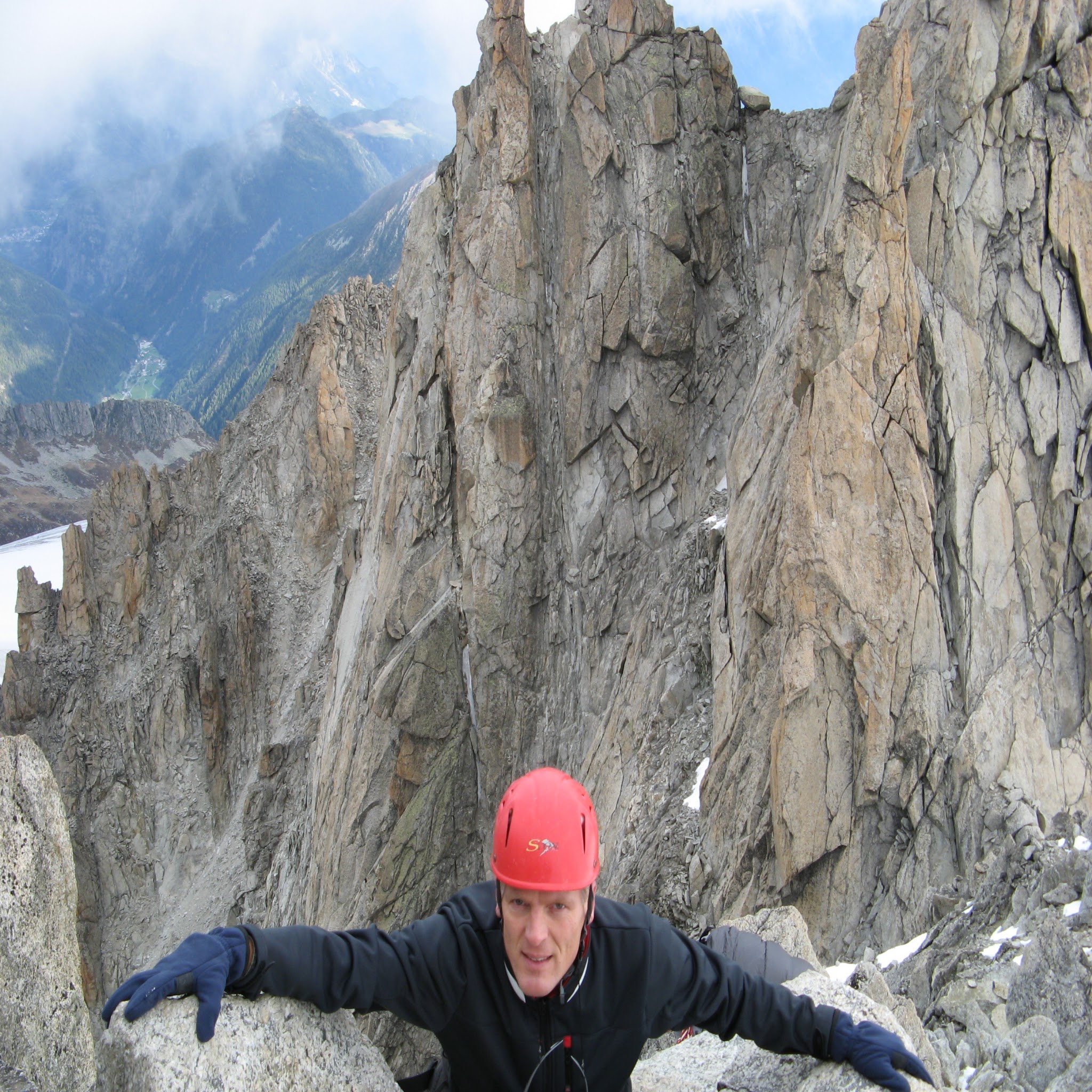
Day 1 acclimatisation climb above Chamonix. The red helmet is mandatory above the Grand Couloir. Photo: Gerald Shaffer.
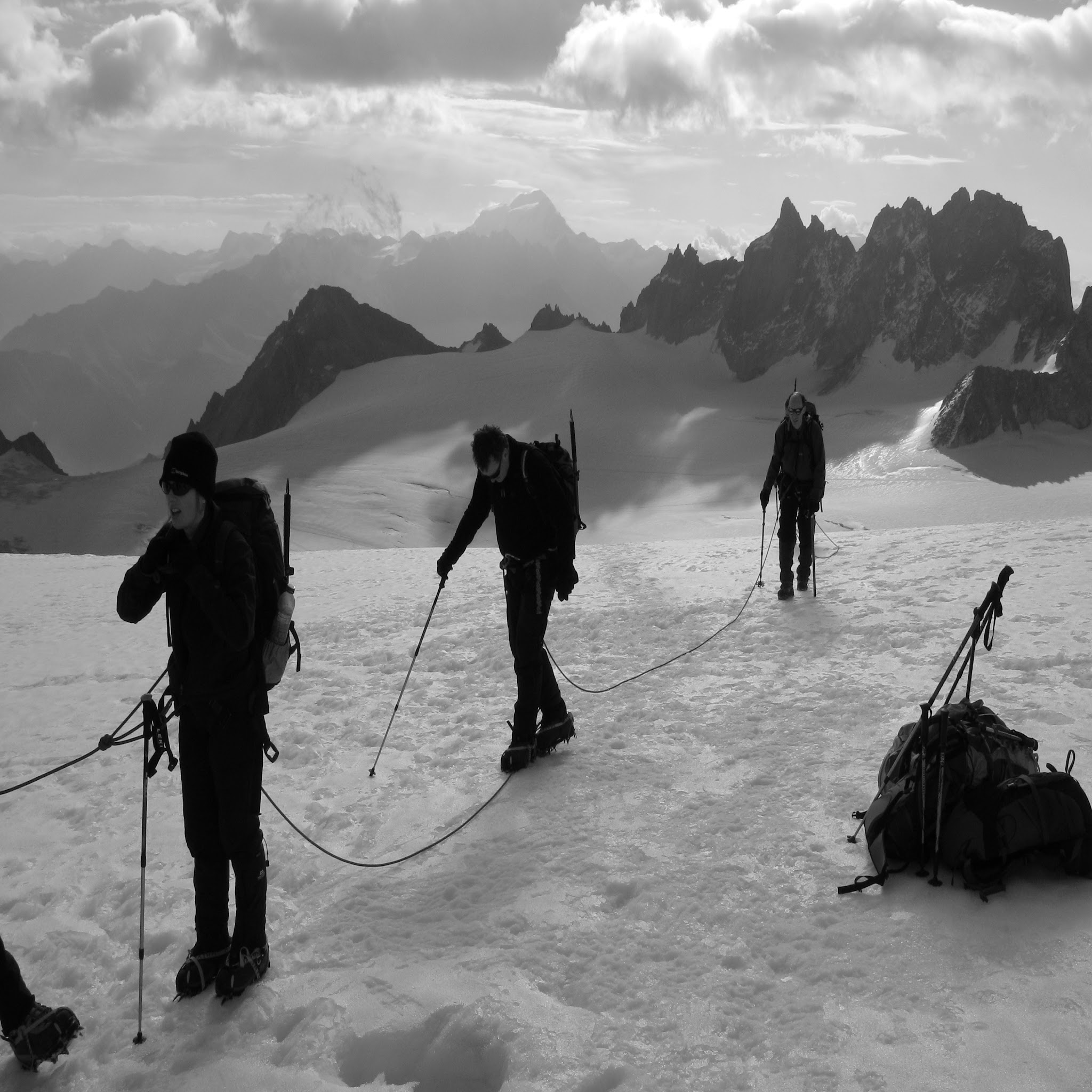
The glacier approach. Crevassed terrain demands crampons and a roped guide. Photo: Gerald Shaffer.
The Tramway & Tête Rousse
Saint-Gervais (820m) → Nid d'Aigle (2,372m) → Tête Rousse Hut (3,167m)
Drive or take the bus to Saint-Gervais-les-Bains (30 minutes from Chamonix) and board the Tramway du Mont Blanc at 7:30 AM. The Tramway is France's oldest mountain railway — opened in 1909, it was originally intended to reach the summit of Mont Blanc. It never did, but it reaches the Nid d'Aigle (Eagle's Nest) at 2,372 metres, which is where the Goûter Route begins.
The journey takes 75 minutes. The train climbs through pine forests, past waterfalls, and above the tree line into open alpine terrain. The Bionnassay Glacier is visible to the left — a vast river of ice that calves periodically with a sound like distant thunder. At Nid d'Aigle, the train stops and you step out into the mountain.
The hike from Nid d'Aigle to the Tête Rousse Hut takes 2-3 hours over well-marked trail. The terrain is rocky and moderately steep — no technical difficulty, but the altitude gain is real. You will feel it in your lungs. Drink water constantly. Eat before you feel hungry. The hut appears suddenly around a boulder field at 3,167 metres: a red-roofed refuge with 145 beds, hot meals, and a view of the Goûter Couloir above.
Afternoon at the hut: rest, eat, hydrate. Your guide will brief you on tomorrow's summit day — the 3:00 AM start, the Grand Couloir crossing, the route to Goûter, the Bosses Ridge. Listen carefully. Ask every question you have. Sleep by 7:00 PM. You will not feel like sleeping, but try.
Gerald's Note: Book the Tête Rousse Hut well in advance — reservations open in January and fill quickly for July and August. The FFCAM (French Alpine Club) booking system is online at montblanc.ffcam.fr. Book both the Tête Rousse and Goûter huts in the same transaction to save on booking fees.
2,347m
Altitude Gained
2–3 hrs
Hike Duration
3,167m
Sleep Altitude
The Summit
Tête Rousse (3,167m) → Grand Couloir → Goûter Hut (3,835m) → Dôme du Goûter (4,304m) → Bosses Ridge → Summit (4,808m)
3:00 AM. The hut wakes before dawn. You eat breakfast in silence — bread, jam, hot tea — and pull on every layer you own. Crampons on outside. Ice axe in hand. Headlamp on. Your guide checks your harness and your rope connection. Then you step out into the dark.
The first challenge is the Grand Couloir — a steep gully of loose rock and ice that funnels rockfall from the cliffs above. You cross it fast, in a single push, before the sun rises and loosens the frozen debris. Your guide sets the pace. Do not stop in the couloir. Move through it and do not look up.
Above the couloir, the terrain opens onto the snowfields below the Goûter Hut. The hut appears at 3,835 metres — the highest hut in France, an award-winning egg-shaped structure opened in 2013, solar-powered, with 120 beds and a dining room that serves the best hot chocolate you will ever drink at 3,835 metres. Stop here. Eat. Drink. Rest for 20 minutes. Then continue.
From Goûter, the route climbs to the Dôme du Goûter (4,304 metres) — a broad, gently-angled snowfield that looks easy and is not. The altitude is working against you now. Every step costs more than it should. Your breathing is laboured. Your legs are heavy. This is normal. Keep moving.
The Bosses Ridge is the final section — two humps of snow and ice at 4,513 and 4,547 metres, with the summit visible above. The ridge is narrow. On a clear day, France is below you on the left and Italy on the right. The exposure is total. The views are absolute. Your guide keeps you roped. You keep moving.
The summit of Mont Blanc is a small snow plateau at 4,808 metres. There is no cairn, no cross, no marker — just snow and sky and the knowledge that you are standing on the highest point in Western Europe. The shadow of the mountain stretches west over France as a perfect dark triangle. The silence is unlike anything else. You have about 20 minutes before the cold and the altitude demand that you descend.
Use every one of them.
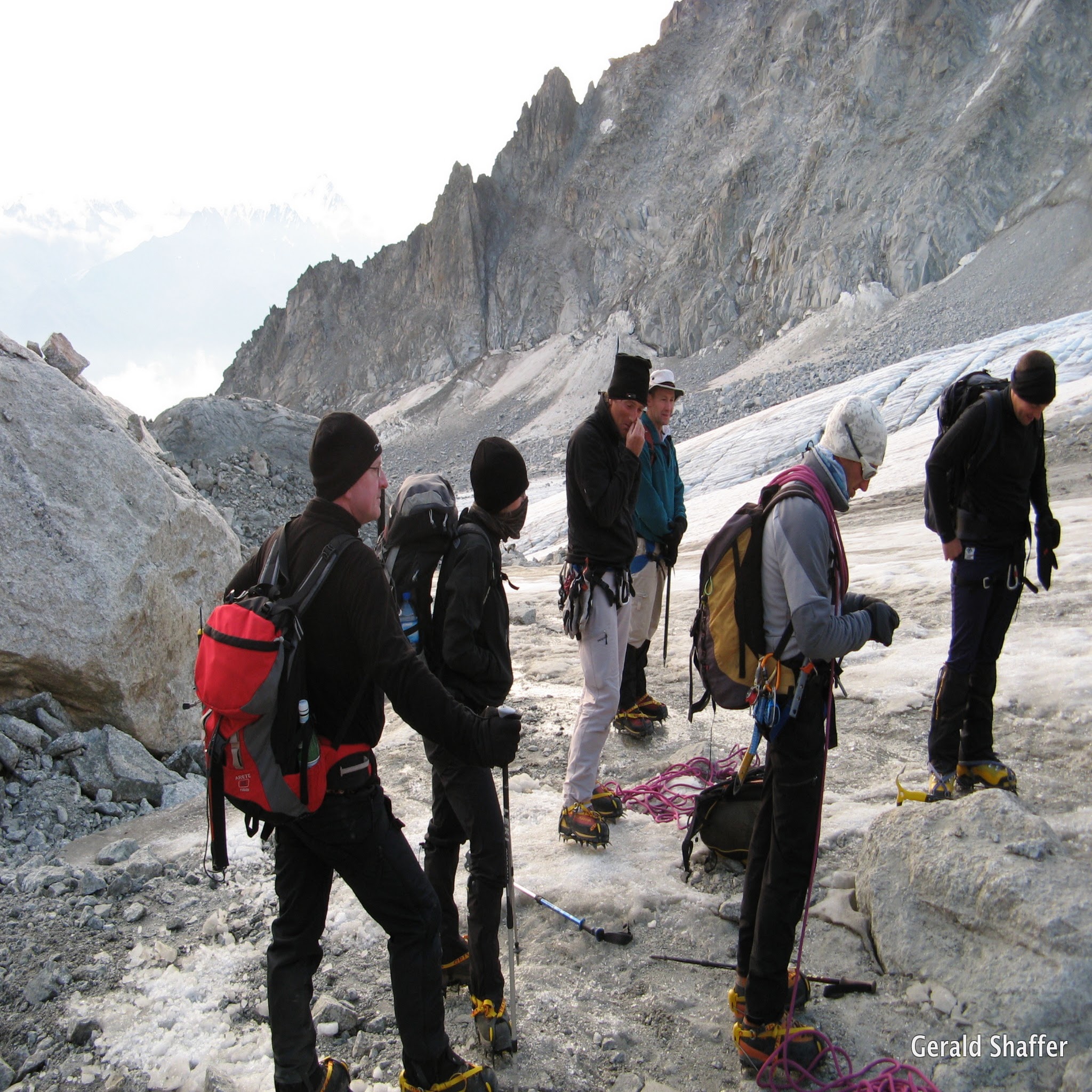
Roping up on the glacier — Grand Couloir approach. Photo: Gerald Shaffer.
3:00 AM. Headlamps on. The summit push begins. Photo: Gerald Shaffer.
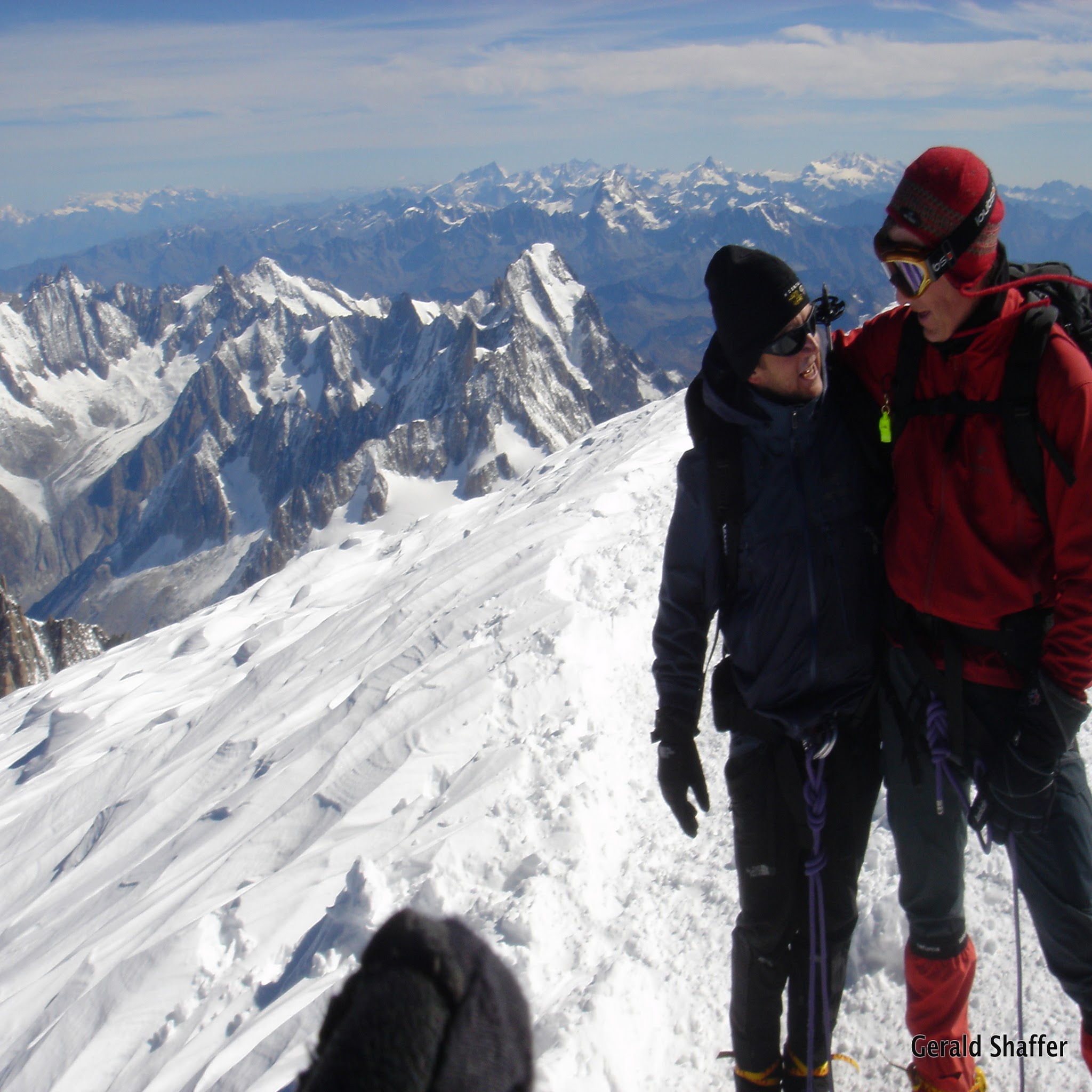
The Bosses Ridge at ~4,500m — France to the left, Italy to the right. The summit is 300 metres above. Photo: Gerald Shaffer.
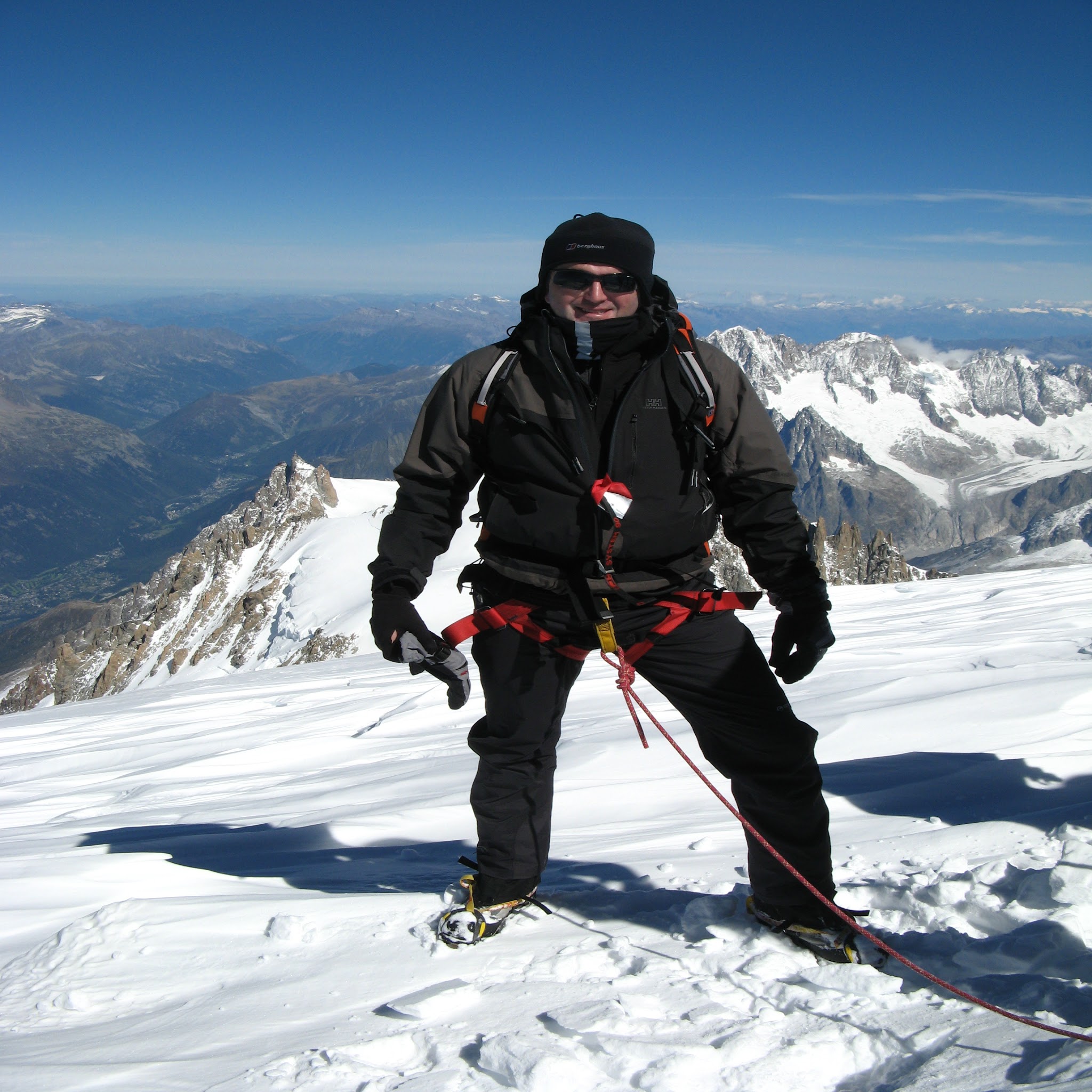
Gerald Shaffer on the summit of Mont Blanc, 4,808m. September 2007. Photo: Gerald Shaffer.
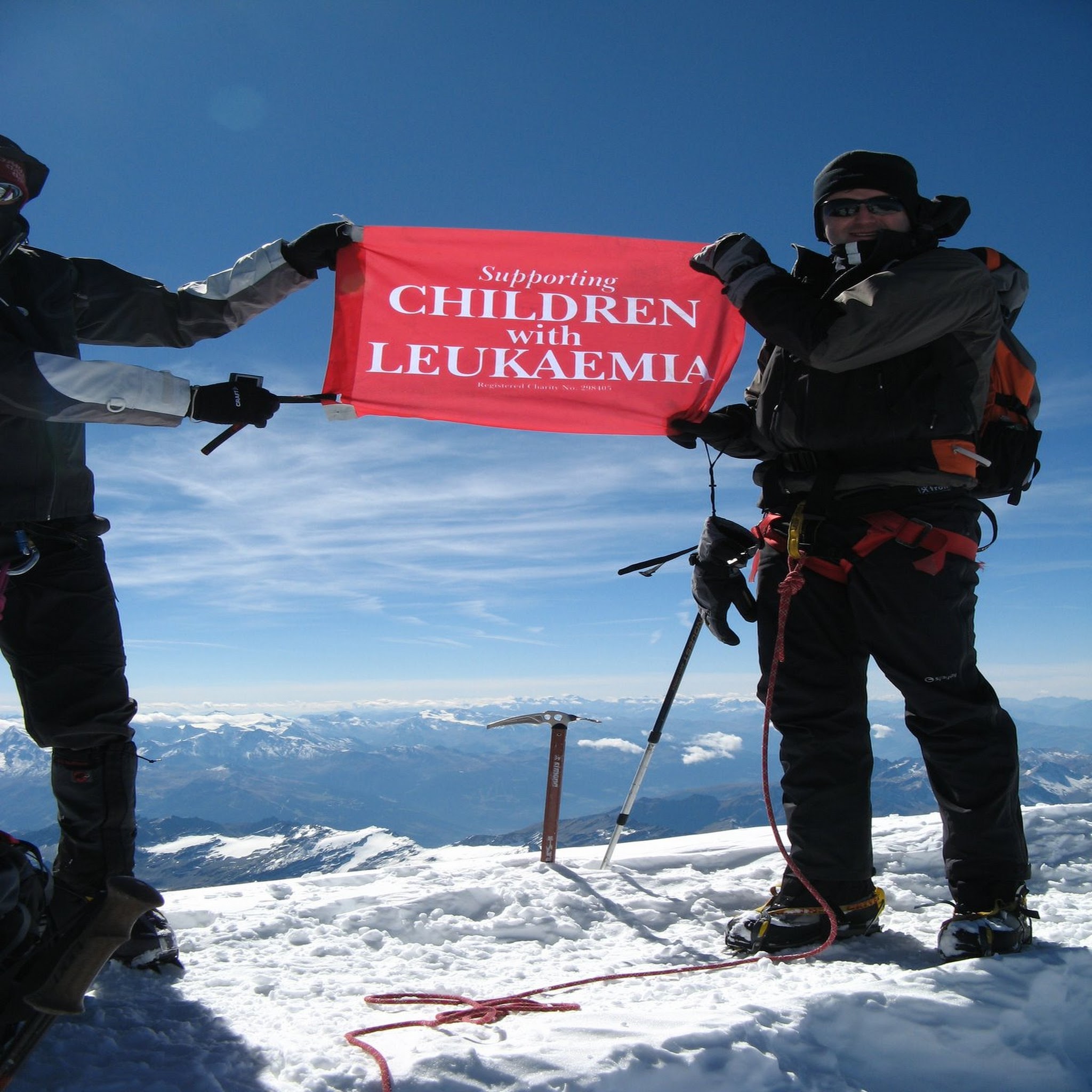
The summit moment. Supporting Children with Leukaemia — the reason for the climb. Photo: Gerald Shaffer.
Where You Sleep on the Mountain
Refuge de la Tête Rousse
3,167m| Capacity | 145 beds |
| Cost | ~€70–80/night incl. dinner & breakfast |
| Booking | FFCAM booking system (montblanc.ffcam.fr) — opens January each year |
The lower hut. Dormitory beds, hot meals, basic facilities. The view of the Grand Couloir from the terrace is both beautiful and sobering.
Refuge du Goûter
3,835m — highest hut in France| Capacity | 120 beds |
| Cost | ~€85–100/night incl. dinner & breakfast (2026: breakfast €21, dinner €52.20) |
| Booking | MANDATORY — alpinists without a booking are turned away at the door |
Opened 2013. Award-winning egg-shaped design. Solar-powered. The most important booking you will make for this climb.
What You Actually Need
Crampons, ice axe, and harness can be rented in Chamonix (Snell Sports, Elevation, Au Vieux Campeur). Everything else you bring. Do not cut corners on boots — they must be stiff-soled and crampon-compatible, and you must break them in before you arrive.
Clothing
| Hardshell jacket & trousers | Waterproof, windproof. Gore-Tex or equivalent. Non-negotiable above 3,000m. |
| Down jacket | For the summit push and hut evenings. 700-fill minimum. |
| Fleece mid-layer | Polartec or equivalent. Worn under the hardshell on the ascent. |
| Thermal base layers | Two sets. Merino wool preferred — it manages odour over multi-day use. |
| Glacier goggles | UV400 protection. Category 4. The sun at 4,000m will damage your eyes without them. |
| Gloves | Liner gloves plus waterproof outer mitts. Bring both — you will use both. |
| Warm hat + balaclava | The balaclava is for the Bosses Ridge. Trust this. |
| Mountaineering boots | Stiff-soled, crampon-compatible. Break them in before you arrive. |
| Gaiters | Essential for the Grand Couloir and any post-holing in soft snow. |
Technical Equipment
| 12-point crampons | Must be compatible with your boots. Rent in Chamonix if needed (Snell Sports, Elevation). |
| Ice axe | Hybrid/mountaineering axe. 60-65cm for most heights. You will use the spike on the descent. |
| Climbing harness | Alpine harness — light, minimal. You will be roped to your guide on the Bosses Ridge. |
| Helmet | Mandatory above the Grand Couloir. Rockfall is real and unpredictable. |
| Headlamp + spare batteries | 3:00 AM start means headlamp for the first 2-3 hours. Lithium batteries in cold weather. |
| Trekking poles | Collapsible. Invaluable on the descent from Goûter. |
Essentials
| Sunscreen SPF 50+ | Reapply every 90 minutes above 3,000m. The UV intensity at altitude is extreme. |
| Lip balm SPF 30+ | Your lips will crack at altitude without it. |
| Water (2L minimum per leg) | Nalgene wide-mouth bottles. Hydration is the single most important factor in summit success. |
| High-energy snacks | Energy bars, nuts, chocolate, dried fruit. Eat before you feel hungry. |
| Emergency bivouac bag | Weighs 200g. Has saved lives. Carry it. |
What the Mountain Requires of You
Altitude sickness is not a sign of weakness — it is a physiological response to reduced oxygen. Above 3,000 metres, most people experience some symptoms: headache, fatigue, shortness of breath, disrupted sleep. These are normal and manageable. The rule is simple: if symptoms worsen or you develop confusion, loss of coordination, or fluid in the lungs, descend immediately. The mountain will still be there next year.
The Grand Couloir is the most objectively dangerous section of the Goûter Route. Rockfall from the cliffs above is unpredictable and can be lethal. You cross it at dawn, when the rock is still frozen and the risk is lowest. Your guide will time the crossing. Do not linger.
An IFMGA-certified mountain guide is not optional — it is the difference between a managed risk and an unmanaged one. The Compagnie des Guides de Chamonix (the oldest mountain guide company in the world, founded 1821) offers guided ascents from €900 per person for a 3-day programme. Book months in advance for July and August.
Gerald's Note: The 50 percent summit success rate is not a reason to be discouraged. It is a reason to prepare properly. Fitness, acclimatisation, the right gear, and a certified guide are the four variables you control. The weather is the one you don't. Check the forecast obsessively in the days before your attempt. A bad weather window is not a failed climb — it is a postponed one.
Where to Stay & Eat Before the Climb
Hotels
Restaurants
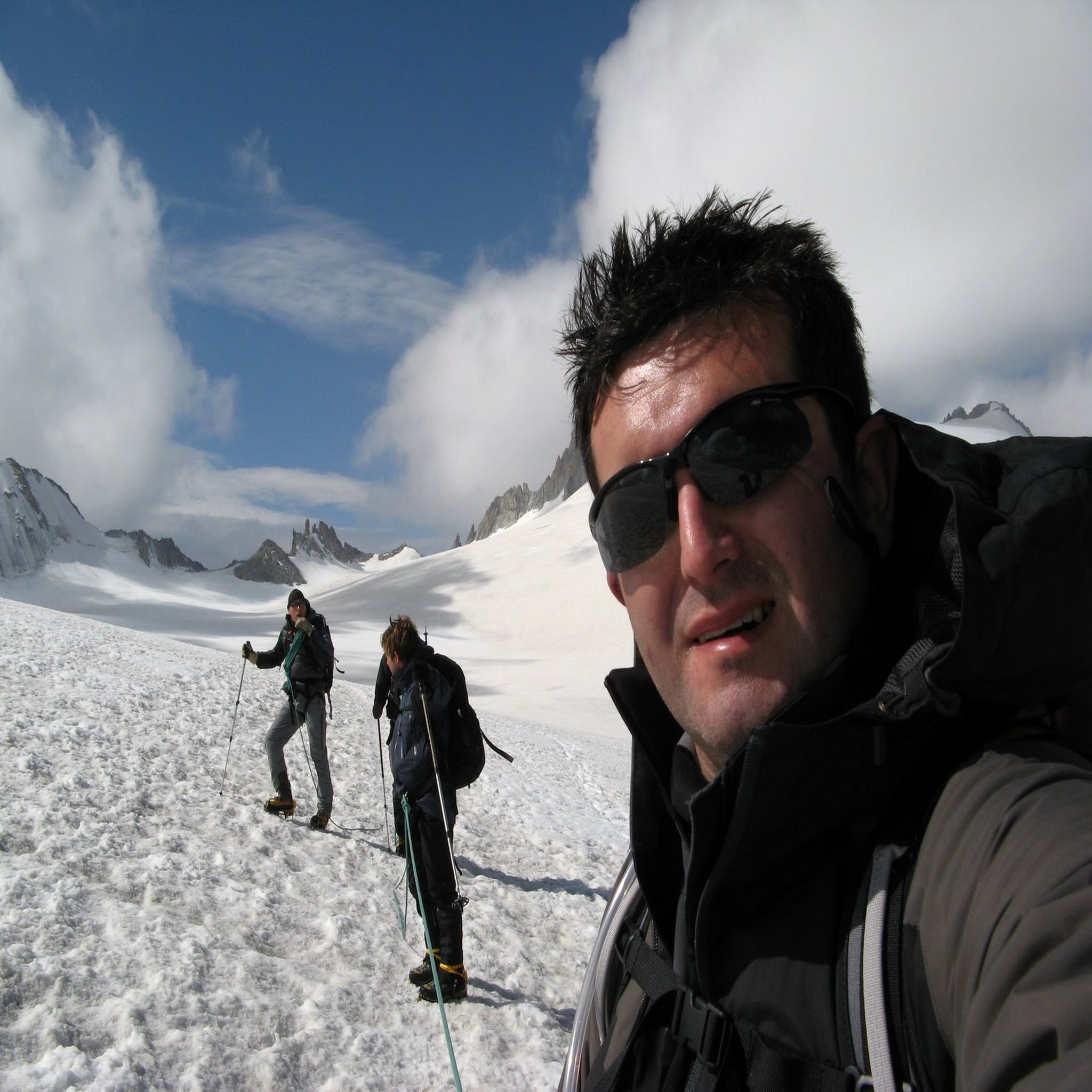
The glacier panorama from the approach route. Photo: Gerald Shaffer.
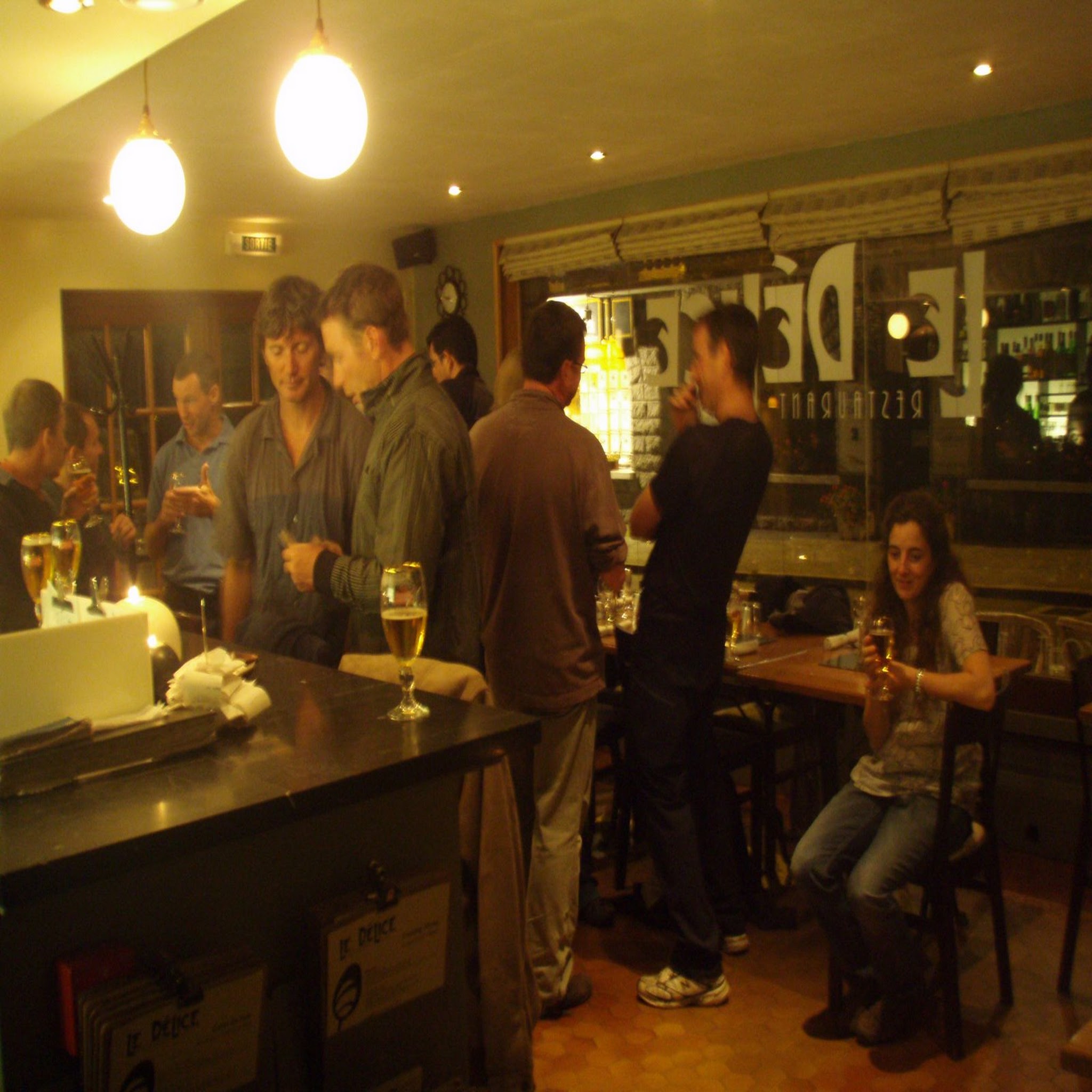
Post-summit. Chamonix. The best beer you will ever drink. Photo: Gerald Shaffer.